You may also like
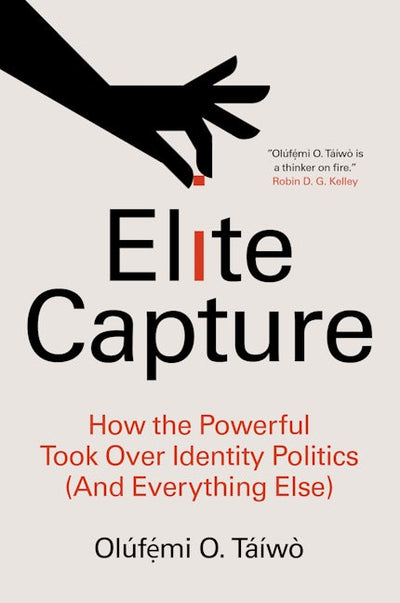
Elite Capture
Regular price $16.95 Save $-16.95“Identity politics” is everywhere, polarizing discourse from the campaign trail to the classroom and amplifying antagonisms in the media, both online and off. But the compulsively referenced phrase bears little resemblance to the concept as first introduced by the radical Black feminist Combahee River Collective. While the Collective articulated a political viewpoint grounded in their own position as Black lesbians with the explicit aim of building solidarity across lines of difference, identity politics is now frequently weaponized as a means of closing ranks around ever-narrower conceptions of group interests.
But the trouble, Olúfẹ́mi O. Táíwò deftly argues, is not with identity politics itself. Through a substantive engagement with the global Black radical tradition and a critical understanding of racial capitalism, Táíwò identifies the process by which a radical concept can be stripped of its political substance and liberatory potential by becoming the victim of elite capture—deployed by political, social, and economic elites in the service of their own interests.
Táíwò’s crucial intervention both elucidates this complex process and helps us move beyond a binary of “class” vs. “race.” By rejecting elitist identity politics in favor of a constructive politics of radical solidarity, he advances the possibility of organizing across our differences in the urgent struggle for a better world.
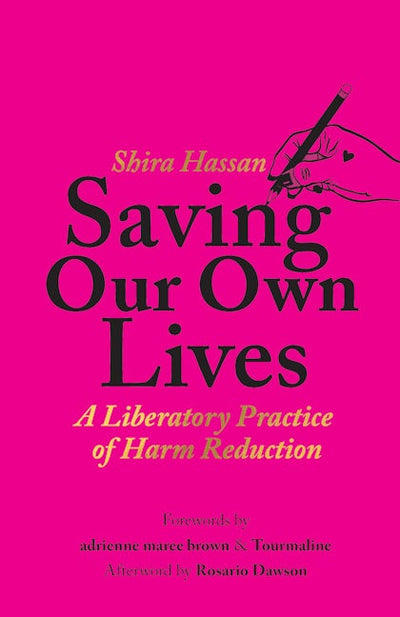
Saving Our Own Lives
Regular price $24.95 Save $-24.95At a political moment when Liberatory Harm Reduction and mutual aid are more important than ever, this book serves as an inspiration and a catalyst for radical transformation of our world.
We Are Each Other's Liberation
Regular price $24.95 Save $-24.95A major anthology that illuminates historical and contemporary solidarities between Black and Asian feminists.
A collaborative project between Black Women Radicals and the Asian American Feminist Collective, We Are Each Other's Liberation envisions a cross-racial and internationalist politics that explicitly addresses solidarity between Black and Asian feminists. Bringing together organizers, artists, journalists, poets, novelists, and more, this collection introduces readers to new ways of understanding and reflecting on race and feminism.
Drawing out lessons from the revolutionary work of movement forebearers—including the Combahee River Collective, Claudia Jones, Grace Lee Boggs, Yuri Kochiyama, and Third World Women’s Alliance as well as struggles today—We Are Each Other’s Liberation offers an urgent call for the just future we might build together.
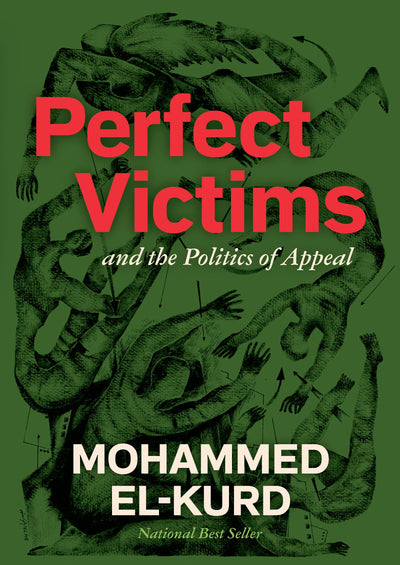
Perfect Victims
Regular price $17.95 Save $-17.95NEW YORK TIMES BESTSELLER
“Mohammed El-Kurd has written a new Discourse on Colonialism for the twenty-first century.”
—Robin D. G. Kelley
Perfect Victims is an urgent affirmation of the Palestinian condition of resistance and refusal―an ode to the steadfastness of a nation.
Palestine is a microcosm of the world: on fire, stubborn, fragmented, dignified. While a settler colonial state continues to inflict devastating violence, fundamental truths are deliberately obscured—the perpetrators are coddled while the victims are blamed and placed on trial.
Why must Palestinians prove their humanity? And what are the implications of such an infuriatingly impossible task? With fearless prose and lyrical precision, Mohammed El-Kurd refuses a life spent in cross-examination. Rather than asking the oppressed to perform a perfect victimhood, El-Kurd asks friends and foes alike to look Palestinians in the eye, forgoing both deference and condemnation.
How we see Palestine reveals how we see each other; how we see everything else. Masterfully combining candid testimony, history, and reportage, Perfect Victims presents a powerfully simple demand: dignity for the Palestinian.
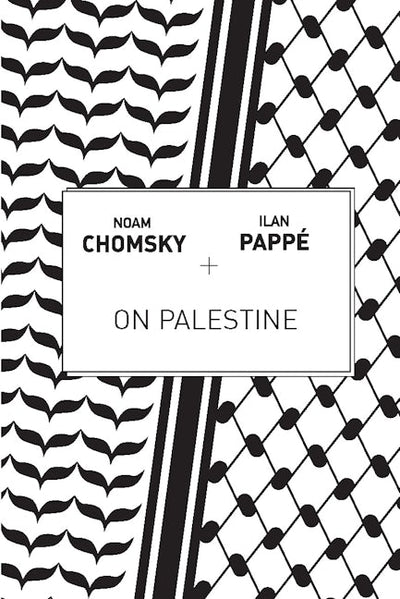
On Palestine
Regular price $16.95 Save $-16.95Noam Chomsky is widely regarded to be one of the foremost critics of US foreign policy in the world. He has published numerous groundbreaking books, articles, and essays on global politics, history, and linguistics. Since 2003 he has written a monthly column for the New York Times syndicate. His recent books include Masters of Mankind and Hopes and Prospects. Haymarket Books recently released updated editions of twelve of his classic books.
Ilan Pappé is the bestselling author of The Ethnic Cleansing of Palestine: A History of Modern Palestine and The Israel/Palestine Question.
Frank Barat is a human rights activist and author. He was the coordinator of the Russell Tribunal on Palestine and is now the president of the Palestine Legal Action Network. His books include Freedom is a Constant Struggle, Gaza in Crisis, Corporate Complicity in Israel's Occupation, and On Palestine.
The Responsibility of Intellectuals in the Age of Fascism and Genocide
Regular price $19.95 Save $-19.95The Responsibility of Intellectuals in the Age of Fascism and Genocide is Boston Review’s 50th anniversary issue. This milestone issue features many of our longtime contributors, including Robin D. G. Kelley, Vivian Gornick, and Elaine Scarry, and celebrates classics from our archive. In this issue, historian and Boston Review contributing editor Robin D. G. Kelley revisits Noam Chomsky’s landmark 1967 essay, “The Responsibility of Intellectuals,” published near the height of the Vietnam War. The essay’s dissident injunction—that those in privileged positions have a duty to “speak the truth and expose lies”—remains a powerful call to conscience, Kelley argues, but the anti-fascist and anti-colonial struggles of even earlier decades reveal its limits, and they show how to refuse and resist complicity in our own age of fascism and genocide. Political philosopher Martin O’Neill, Palestinian human rights lawyer Jennifer Zacharia, and historian David Waldstreicher expand on what this moment requires—of intellectuals, of journalists, and of us all.
Also in the issue, Vivian Gornick reviews Shulamith Firestone’s Airless Spaces, Elaine Scarry challenges the wisdom that Plato banished the poets, Brandon M. Terry interviews political scientist Cathy Cohen about social movements and the future of Black politics, Joelle M. Abi-Rached exposes the contradictions of the liberal international order over Gaza, Samuel Hayim Brody reviews three memoirs on the Arab Jewish world destroyed by colonialism, David Austin Walsh explains what Zohran Mamdani’s triumph means for the future of the Democratic Party, and Sandeep Vaheesan looks to the New Deal to assess the “abundance” agenda.
Plus, seven writers reflect on notable essays from our archive in a special anniversary feature:
- Susan Faludi on Vivian Gornick and anti-feminism
- Naomi Klein on William Callison + Quinn Slobodian and the global right
- Jay Caspian Kang on Olúfẹ́mi O. Táíwò and identity politics
- Ryu Spaeth on Merve Emre and the personal essay
- Lea Ypi on Joseph Carens and amnesty
- Nathan J. Robinson on Noam Chomsky and U.S. foreign policy
- Rick Perlstein on Elaine Scarry and democracy after 9/11