


Some error occured while loading the Quick View. Please close the Quick View and try reloading the page.
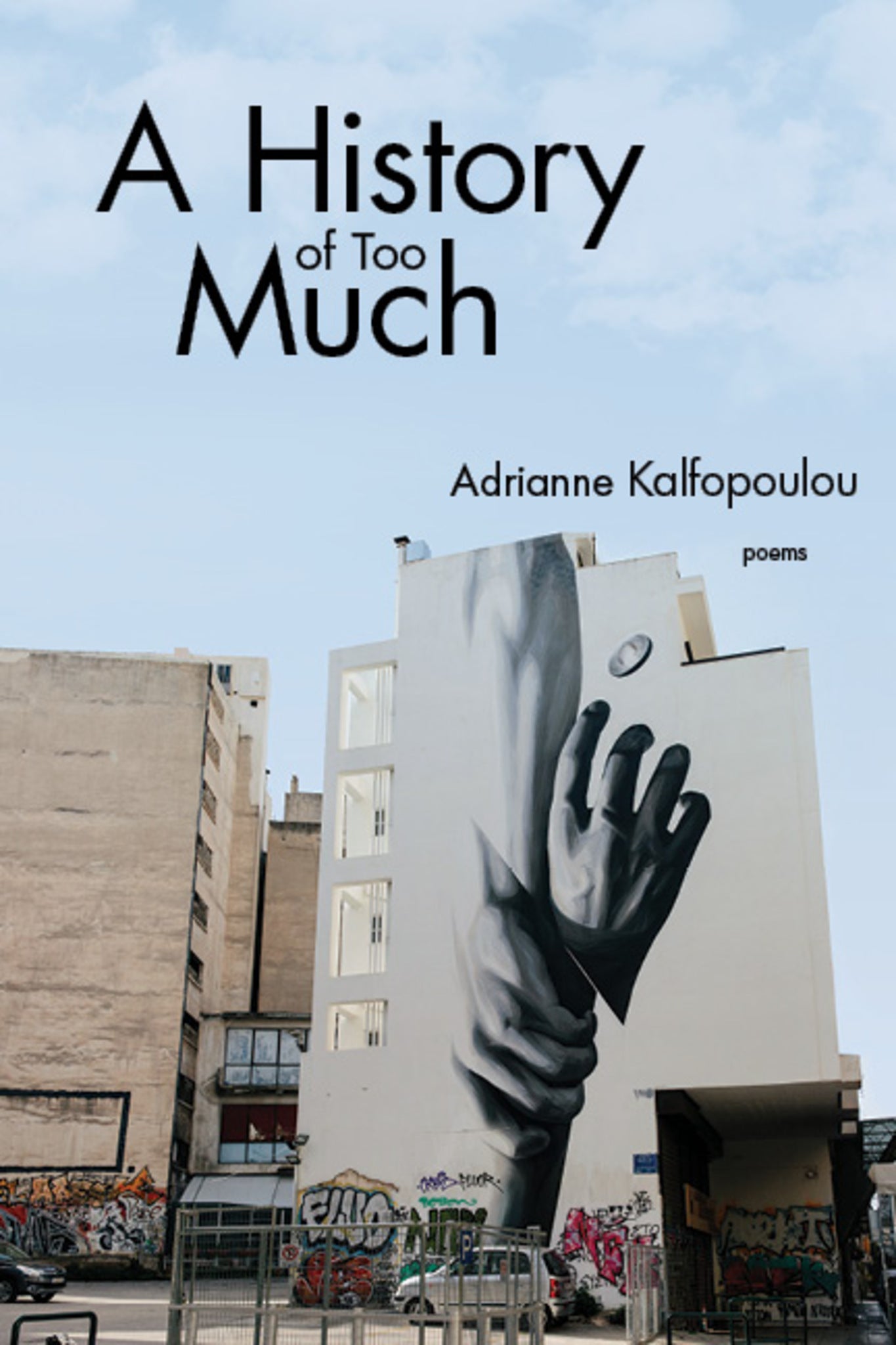
A History of Too Much begins with poems that address an Athens undergoing the first ravages of political and financial crisis; the inhabitants of these poems voice extravagant losses and the unpredictable, are often torn between a desire “to flee, but flee where?” The gods and goddesses will still be called upon, but Demeter is nonplussed in her mourning, Alexander the Great drunk, and the statues of antiquity exposed to the anarchies of spray-painted slogans and thrown Molotovs. If history’s excesses are exhausted they are also reinvented in the idiom of the contemporary moment; here where “the costumes were all off” and “the actors overplayed their parts,” there is a story to tell: “The light was almost gone, / the road now dark.”

Price: $17.95
Pages: 104
Publisher: Red Hen Press
Imprint: Red Hen Press
Publication Date:
23 April 2018
Trim Size: 9.00 X 6.00 in
ISBN: 9781597096126
Format: Paperback
BISACs:
POETRY / Subjects & Themes / Places, POETRY / European / General, POETRY / Women Authors

When I sit down to read Adrianne Kalfopoulou’s poems or essays, I find myself sitting up straighter, more awake and attentive to the words in front of me, to the world. Her most recent book, A History of Too Much, responds to the Greek Euro crisis with tenderness, ferocity, and urgency that startles and dazzles. The images evoked and questions posed haven’t left me—just as was the case with her essay “Transitional Object, a Grammar for Letting Go” that we had the honor of publishing. Adrianne was kind enough to chat with me via email about her creative process, working across genres, and the complex bittersweetness of her work. —Ashley Farmer