


Some error occured while loading the Quick View. Please close the Quick View and try reloading the page.
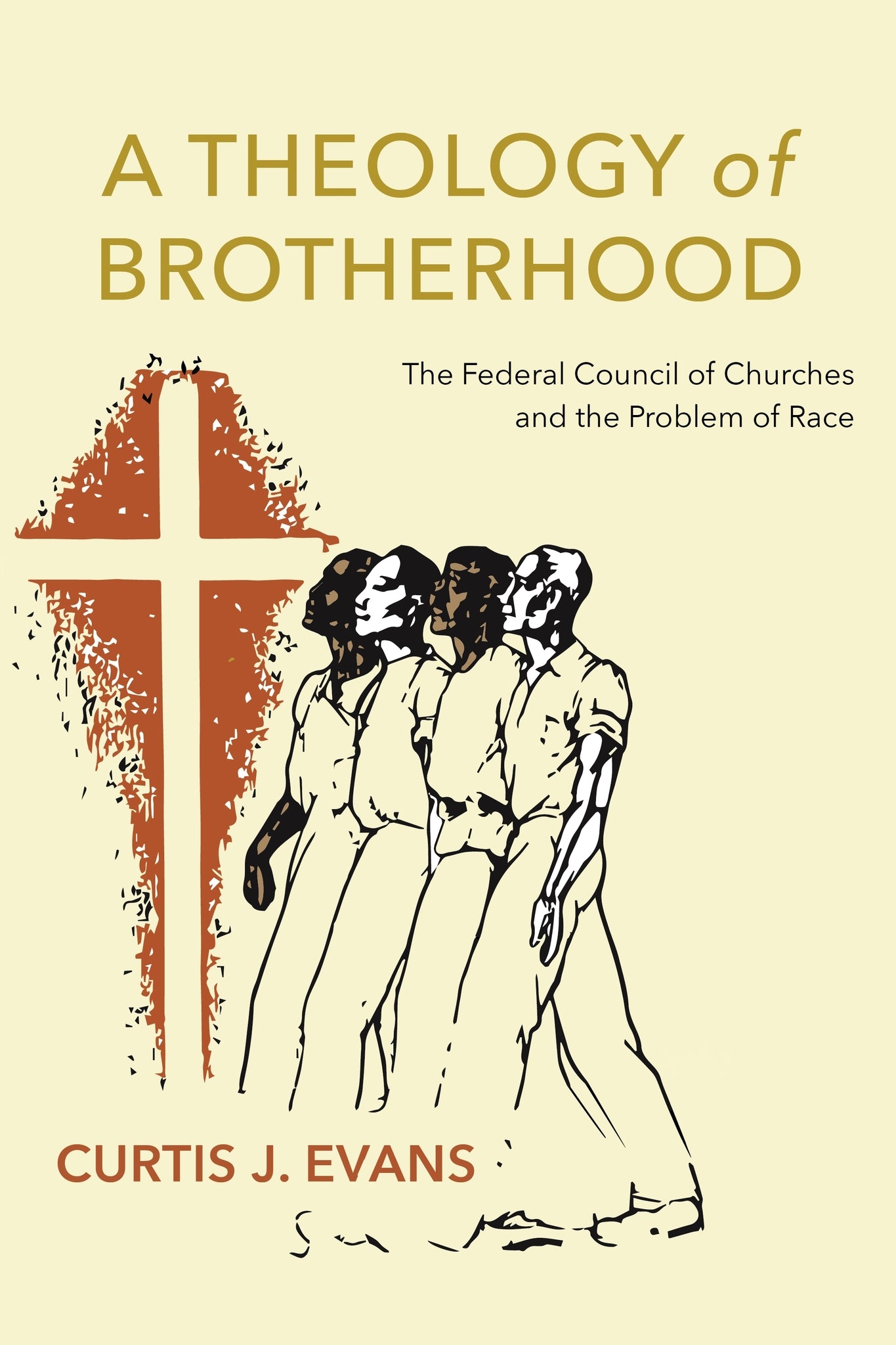
Examines the influence of the Federal Council of Churches’ Department of Race Relations
A Theology of Brotherhood explores how the national umbrella Christian organization, the Federal Council of Churches, acted as a crucial conduit and organizational force for the dissemination of “progressive” views on race in the first half of the twentieth century.
Drawing on years of archival research, Curtis J. Evans shows that the Council’s theological approach to race, and in particular its anti-lynching campaign, were responsible for meaningful progress in some white Protestant churches on racial issues. The book highlights the contributions that their religious vision made in expanding and propagating a civic nationalist tradition that was grounded in a “universal brotherhood” and belief in the equality of all human beings, over against a racial nationalist ideology that conceived of America in ethno-racial terms.
Evans makes the case that this predominantly white religious organization contributed a distinctive religious voice to visions of a pluralistic democracy, racial and ethnic diversity, and social and political reform. The volume adds a missing voice to the literature on lynching in the early twentieth century, which tends to focus primarily on the NAACP and other secular organizations.


— Matthew S. Hedstrom, University of Virginia
A unique examination of mainline Protestantism as a significant force in twentieth-century American history, one that should be examined not merely for its decline into irrelevancy but instead for its fundamental contribution to American ideas of diversity, equity, and justice.
— Paul Harvey, author of? Martin Luther King: A Religious Life
A Theology of Brotherhood will become the definitive book on the FCC and race. This deeply researched and well-written work offers a wealth of information about liberal Protestantism, the FCC, anti-lynching campaigns, and George Edmund Haynes—the FCC’s Department of Race Relations executive secretary, scholar, and former director of Negro Economics at the Department of Labor.
[Theology of Brotherhood] is not a critique of a liberal Protestant organization but an honest assessment [of] people doing the best they could with the tools they had in the time they lived...I am grateful for Evans’s humbling and essential reminder that we often learn more when we start with a charitable posture toward our sources. This would be a powerful text to assign in a range of classes on American religion, race, and politics.
Evans’s work is thoroughly researched, cogently written, and warmly recommended for any interested reader.