


Some error occured while loading the Quick View. Please close the Quick View and try reloading the page.
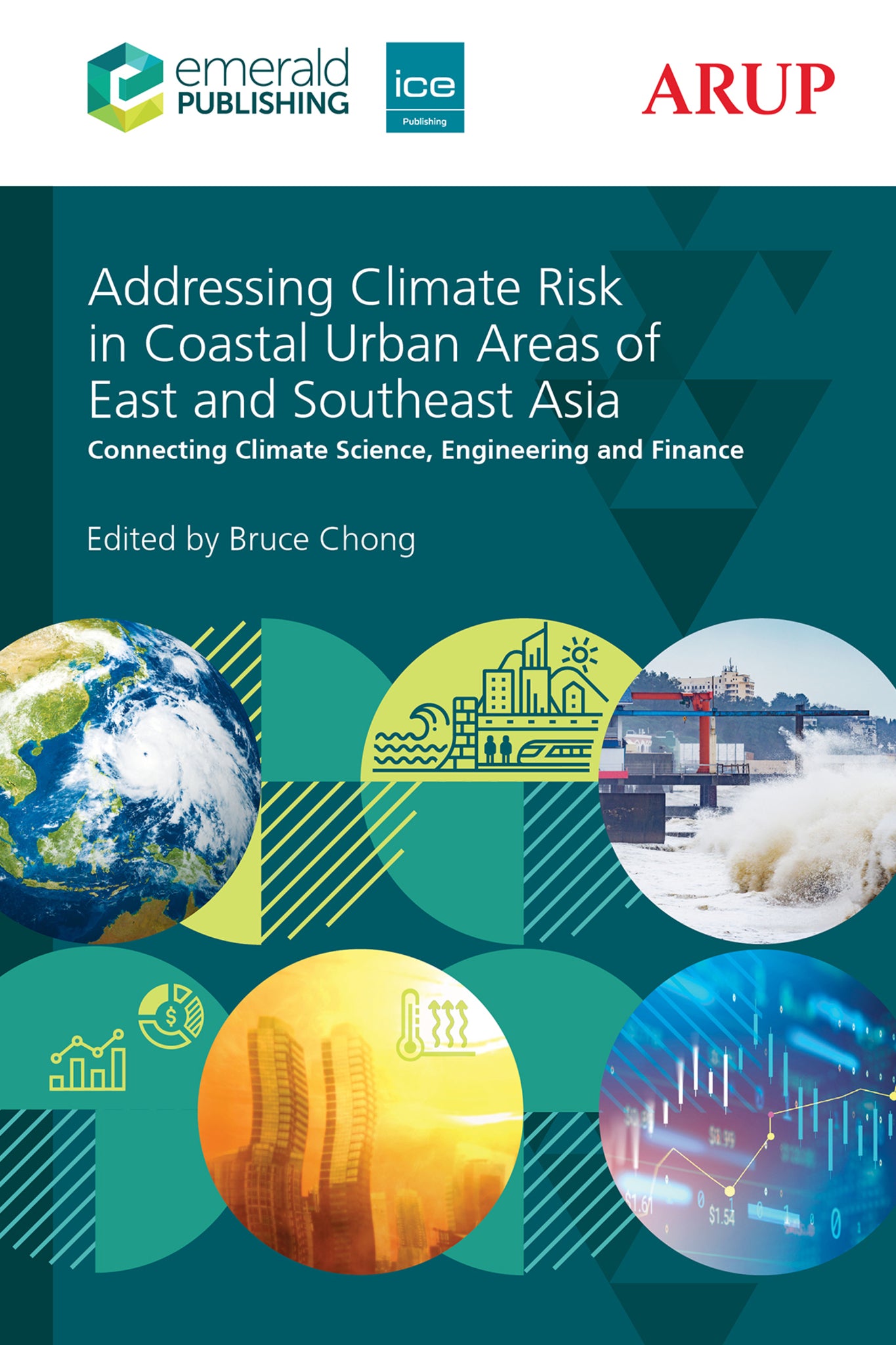
Addressing Climate Risk in Coastal Urban Areas of East and Southeast Asia provides an in-depth exploration of the multifaceted challenges posed by climate hazards in coastal urban areas of East and Southeast Asia. It addresses interconnections between climate science, physical climate threats, engineering solutions, financial impacts and strategies for resilience. With contributions from leading experts, the book presents a collaborative and multidisciplinary approach for tackling physical climate risk, combining scientific knowledge with practical solutions.
The book is divided into three parts, covering:
- analysis of key issues and pain points in tackling physical climate risk from the perspectives of meteorological, engineering and financial sectors
- a methodology integrating principles of resilience, climate change science and financial risk assessment to provide a comprehensive framework for enhancing resilience
- a range of case studies that offer practical examples of state-of-the-art approaches, demonstrating how theoretical concepts can be applied in real-world situations.
This book is a must-read for anyone interested in understanding and tackling the complex challenges posed by climate hazards in East and Southeast Asia’s coastal urban areas. It serves as a valuable resource for researchers, practitioners and decision-makers in each sector, helping them to plan, design, operate, and manage their assets under uncertainty.


Apart from providing practical methodology and cases, the uniqueness of this book is to emphasize the critical importance of collaboration between climate scientists, engineers, and finance experts to develop comprehensive strategies for enhancing infrastructure resilience against extreme climate.
Dr Bruce Chong is a Fellow and Director of Climate & Sustainability at Arup.
Foreword
Preface
About Arup
Editors
Contributing authors
Acknowledgements
Glossary
Abbreviations
Part I – Climate change trends and challenges
1 Introduction
2 The climate science, engineering and finance landscape
Part II – An integrated approach to addressing climate risk
3 Overall methodology
4 Background to climate models and their use in making localised future projection
5 Selecting GCMs to improve accuracy of projections – for the case of tropical cyclone landfalling activity in East Asia
6 Standard method for assessing infrastructure climate risk and resilience for tropical cyclones and other extreme weather events
7 Extended and deep-dive method for assessing tropical cyclones and wind hazards in the western North Pacific (WNP) basin
8 Enhancing infrastructure resilience
9 Assessing financial risk and identifying opportunities for climate-resilient infrastructure
Part III – Case studies: climate science, engineering and infrastructure
10 Identifying and evaluating critical infrastructure for climate hazard adaptation
11 Integrating and upgrading flood management systems for climate hazards
12 Integrating climate adaptation into planning, design and management of coastal infrastructure
13 Designing buildings and infrastructure for wind hazards
14 Managing landslide risk
15 Using climate modelling to develop engineering design parameters for building services systems
16 Designing for extreme heat resilience in urban settings
Part IV – Case studies: infrastructure and finance
17 Quantifying damage and identifying opportunities for adaptive investment
18 Financial regulatory guidelines for climate risk management and related analytical tools
Part V – Summary
Index