


Some error occured while loading the Quick View. Please close the Quick View and try reloading the page.
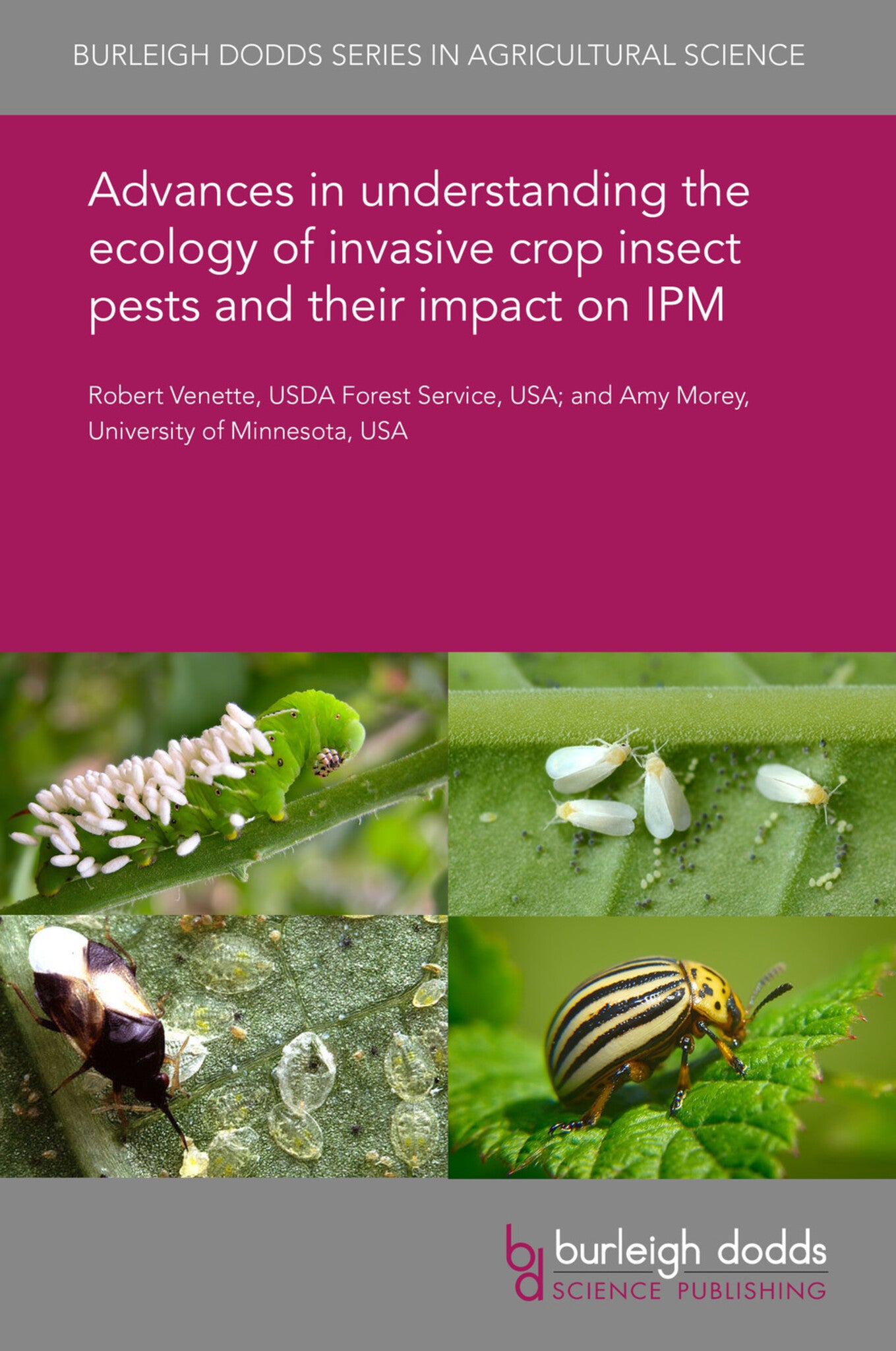
Invasive species represent one of the greatest threats to agriculture and commercial forestry, worldwide. Examples of invasive pests continue to increase with increasing world trade and human transport, but all biological invasions progress through similar stages of arrival, establishment, spread and impact. This chapter reviews how management strategies change as invasions progress. As problems from invasive species increase, some scientists and decision-makers question if species-by-species research and farm-by-farm management are the optimum ways to address the problem. Here, the authors address two more fundamental questions: can the various approaches to invasive species management still be considered integrated pest management, and why does it matter if they can or cannot? Lastly, the authors describe invasive species as a ‘wicked problem’, for policy-makers, researchers and stakeholders. Great achievements can be made if the problem is tamed, but research and management efforts may be jeopardized if it is not.

Price: $32.50
Publisher: Burleigh Dodds Science Publishing
Imprint: Burleigh Dodds Science Publishing
Series: Burleigh Dodds Series in Agricultural Science
Publication Date:
28 October 2019
ISBN: 9781838799403
Format: eBook

1 Introduction 2 Ecology of invasive species 3 Invasive species management strategies 4 Relationship of invasive species management to IPM 5 Future trends 6 Acknowledgements 7 Where to look for further information 8 References