


Some error occured while loading the Quick View. Please close the Quick View and try reloading the page.
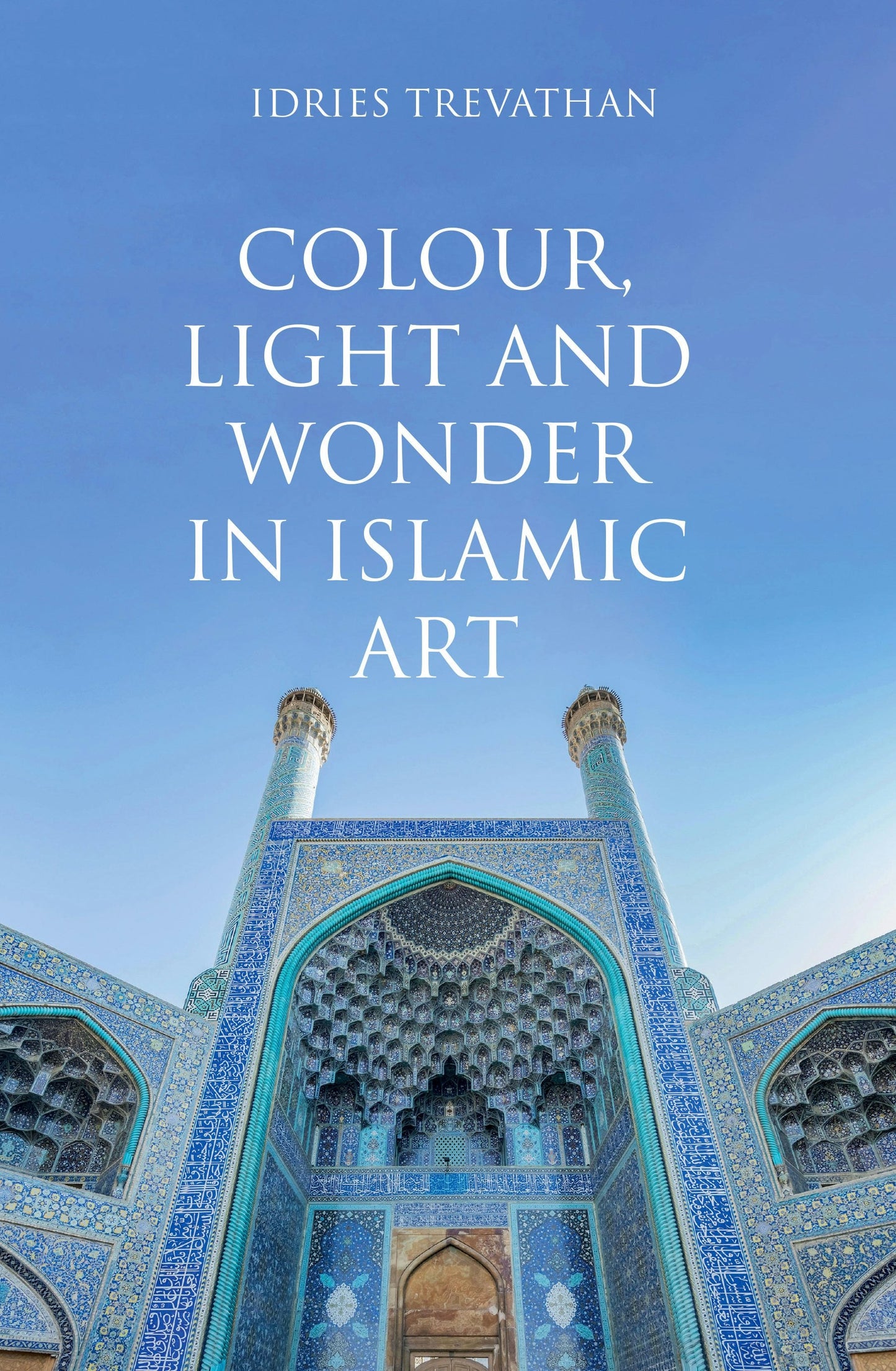
The experience of colour in Islamic visual culture has historically been overlooked. In his approach to the study of colour in Islamic art, Trevathan creates meaningful dialogue between artistic production, artistic media, and the intellectual, aesthetic and philosophical concepts relating to the subject. Here, he proposes an enlightened new approach to the way we consider colour in Islamic art and architecture. Examining works in relation to their aesthetic contexts, he reveals the relevance of choice colours used in artworks, which in turn provides insights into the pre-modern Muslim experience of colour and aesthetics.
The seventeenth-century Masjid-i Shah mosque in Isfahan, Iran, represents one of the finest examples of colour-use on a grand scale. The building of Masjid-i Shah emerged alongside, or as a result of, a culmination of writings on light and colour by some of the most important scholars in Islamic and Persian history. Trevathan examines the philosophical and mystical traditions that formed the backdrop of the Masjid-i Shah, revealing the differences in how such artworks were conceptualized at the time of creation and how they are received today.
Through addressing the artistic production of this masterpiece of Islamic architecture, Trevathan shows that the careful combination of colour and design proportions in Islamic patterns expresses knowledge beyond those perceived in the corporeal world. This includes how the experience of bright and luminous colours may have served an epistemological function leading towards a noetic understanding of God. This suggests that a broader consideration of Islamic aesthetics is required, one that encompasses the potential for sensual experience to prompt a journey beyond sentient knowledge.
The seventeenth-century Masjid-i Shah mosque in Isfahan, Iran, represents one of the finest examples of colour-use on a grand scale. The building of Masjid-i Shah emerged alongside, or as a result of, a culmination of writings on light and colour by some of the most important scholars in Islamic and Persian history. Trevathan examines the philosophical and mystical traditions that formed the backdrop of the Masjid-i Shah, revealing the differences in how such artworks were conceptualized at the time of creation and how they are received today.
Through addressing the artistic production of this masterpiece of Islamic architecture, Trevathan shows that the careful combination of colour and design proportions in Islamic patterns expresses knowledge beyond those perceived in the corporeal world. This includes how the experience of bright and luminous colours may have served an epistemological function leading towards a noetic understanding of God. This suggests that a broader consideration of Islamic aesthetics is required, one that encompasses the potential for sensual experience to prompt a journey beyond sentient knowledge.

Price: $69.95
Pages: 288
Publisher: Saqi Books
Imprint: Saqi Books
Publication Date:
08 December 2020
Trim Size: 9.20 X 6.00 in
ISBN: 9780863561450
Format: Hardcover
BISACs:
ART / Middle Eastern, RELIGION / Islam / General, ART / Museum Studies, ART / Techniques / General, ART / General

INTRODUCTION
Scope versus limitations
Chapter outline
CHAPTER ONE. CONTEXTUAL REVIEW
Art Historical Approach
Perennialism and the Symbolism of colour
Aesthetics and new directions in Islamic art history
Summary of Contextual Review
CHAPTER TWO. THE WORK OF ART: MASJID-I SHAH
Brief Review of Current Conceptions of the Safavid Context
The Building Project: Transformation of Isfahan and the Maydan
The Building Itself: Masjid-i Shah and Its Decoration
The Building: Personalities, the Architects, Engineers and Planners
Colour in the Building: Haft Rang (Seven Colours)
CHAPTER THREE. COLOUR SYSTEMS
Colour in the Qur’an
Implicit and Explicit Colours in the Qur’an
Qur’an, Colour and Interpretation
Colour Theory
Colour Mixtures in Contemporary Texts
A Value Based Colour System: Recent Scholarship
CHAPTER FOUR. THE AESTHETICS OF COLOUR
The “Quantitative” Aesthetics of Proportion
The “Qualitative” Aesthetics of Light and Colour
The Contemplative Gaze
Summary and Conclusions
CHAPTER FIVE. LIGHT, LUSTRE AND LUMINOSITY
Descriptions of Colour and Light: Reception of Materials
The Peacock’s Plumage and the Colours of Abu Qalamun
Pearls, Precious Stones and Light
Dark and Light: Marble, Onyx, and Alabaster in Buildings
Materials, Light, Colour and Perception
Colour, Light and Wonder
Creating Sensations of Light
Artists, Materials, Wonder and Transformations
Summary and conclusion
CHAPTER SIX. COLOUR AND THE JOURNEY OF THE MYSTIC
Colour Theophany and Emanationism
Colour and the Process of Transformation
The Kubrawiyya Order and the Hermeneutic of Colour
Nizami and the Haft Paykar
Summary and conclusion
CHAPTER SEVEN. COLOUR AND SPIRITUALITY AT THE TIME OF THE SAFAVIDS
Development of the School of Isfahan and the Safavid Understanding of Colour
Sheikh Baha’i: Chief Architect of the Masjid-i Shah, Founder of the School of Isfahan
The Influence of Suhrawardi and Hikmat al Ishraq
Mir Damad and the Revival of Hikmat at the School of Isfahan
Mulla Sadra and the ‘Imaginal world’
“The World of the Imagination” and Art and Colour
Artists and the Subtle World
Kirmani and a “Phenomenology of Colour”
Kirmani and Seven Colours (Haft rang)
Summary and conclusion
CONCLUSION
Masjid-i Shah Revisited
Al-Haytham’s Visual Perception and the Masjid-i Shah
Awe, Colour, Light and Luminosity
Colour, Light, Lustre, and Pattern
Colour in Operation: The Continuing Process of Perception
Reconsidering Materials: Paying Attention to Materials and Associations
Depicting the Transcendent: ‘alam al-Mithal
Methodology
Areas for Further Development
Final Thoughts
BIBLIOGRAPHY
Scope versus limitations
Chapter outline
CHAPTER ONE. CONTEXTUAL REVIEW
Art Historical Approach
Perennialism and the Symbolism of colour
Aesthetics and new directions in Islamic art history
Summary of Contextual Review
CHAPTER TWO. THE WORK OF ART: MASJID-I SHAH
Brief Review of Current Conceptions of the Safavid Context
The Building Project: Transformation of Isfahan and the Maydan
The Building Itself: Masjid-i Shah and Its Decoration
The Building: Personalities, the Architects, Engineers and Planners
Colour in the Building: Haft Rang (Seven Colours)
CHAPTER THREE. COLOUR SYSTEMS
Colour in the Qur’an
Implicit and Explicit Colours in the Qur’an
Qur’an, Colour and Interpretation
Colour Theory
Colour Mixtures in Contemporary Texts
A Value Based Colour System: Recent Scholarship
CHAPTER FOUR. THE AESTHETICS OF COLOUR
The “Quantitative” Aesthetics of Proportion
The “Qualitative” Aesthetics of Light and Colour
The Contemplative Gaze
Summary and Conclusions
CHAPTER FIVE. LIGHT, LUSTRE AND LUMINOSITY
Descriptions of Colour and Light: Reception of Materials
The Peacock’s Plumage and the Colours of Abu Qalamun
Pearls, Precious Stones and Light
Dark and Light: Marble, Onyx, and Alabaster in Buildings
Materials, Light, Colour and Perception
Colour, Light and Wonder
Creating Sensations of Light
Artists, Materials, Wonder and Transformations
Summary and conclusion
CHAPTER SIX. COLOUR AND THE JOURNEY OF THE MYSTIC
Colour Theophany and Emanationism
Colour and the Process of Transformation
The Kubrawiyya Order and the Hermeneutic of Colour
Nizami and the Haft Paykar
Summary and conclusion
CHAPTER SEVEN. COLOUR AND SPIRITUALITY AT THE TIME OF THE SAFAVIDS
Development of the School of Isfahan and the Safavid Understanding of Colour
Sheikh Baha’i: Chief Architect of the Masjid-i Shah, Founder of the School of Isfahan
The Influence of Suhrawardi and Hikmat al Ishraq
Mir Damad and the Revival of Hikmat at the School of Isfahan
Mulla Sadra and the ‘Imaginal world’
“The World of the Imagination” and Art and Colour
Artists and the Subtle World
Kirmani and a “Phenomenology of Colour”
Kirmani and Seven Colours (Haft rang)
Summary and conclusion
CONCLUSION
Masjid-i Shah Revisited
Al-Haytham’s Visual Perception and the Masjid-i Shah
Awe, Colour, Light and Luminosity
Colour, Light, Lustre, and Pattern
Colour in Operation: The Continuing Process of Perception
Reconsidering Materials: Paying Attention to Materials and Associations
Depicting the Transcendent: ‘alam al-Mithal
Methodology
Areas for Further Development
Final Thoughts
BIBLIOGRAPHY