


Some error occured while loading the Quick View. Please close the Quick View and try reloading the page.
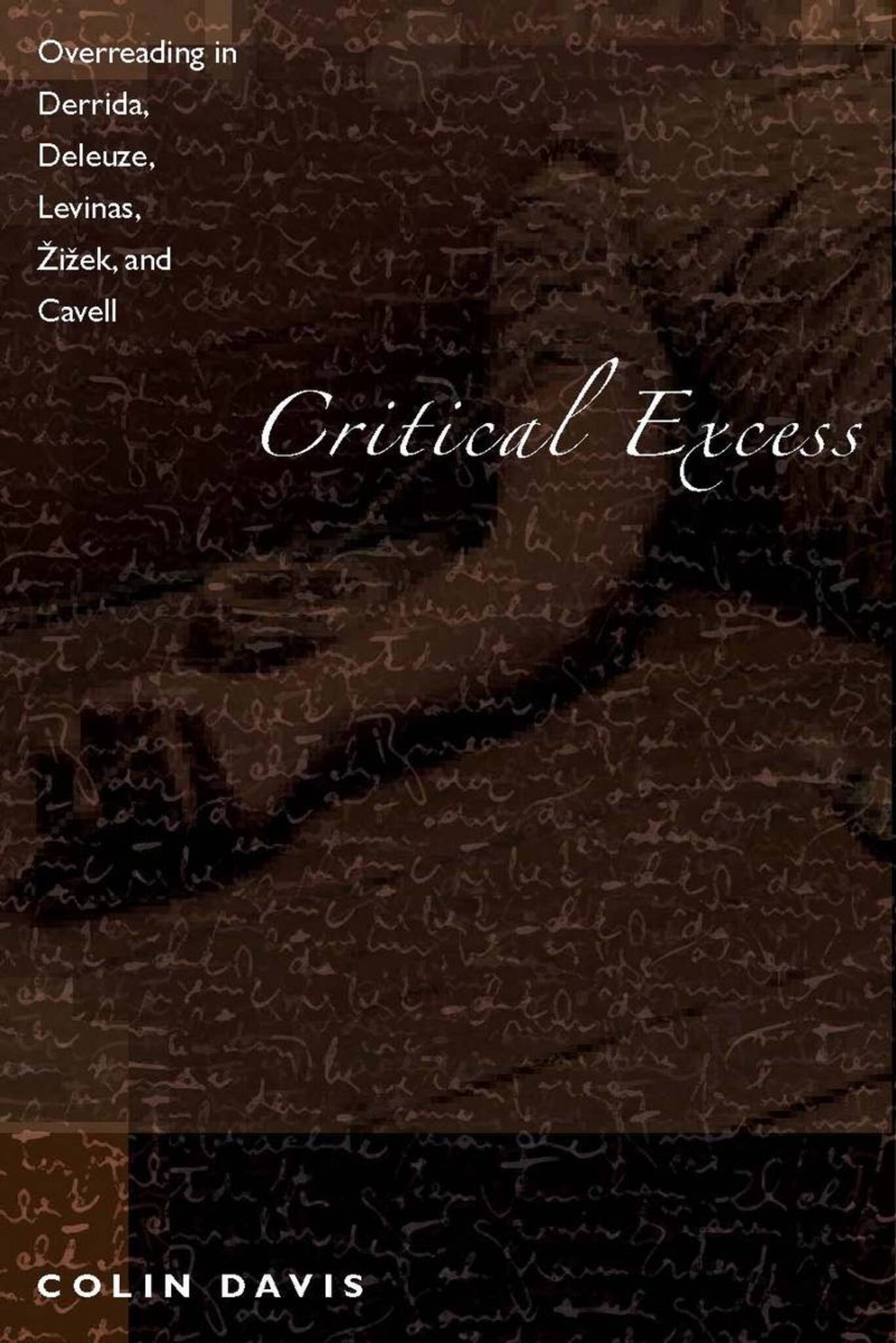
The "ancient quarrel" between philosophy and literature seems to have been resolved once and for all with the recognition that philosophy and the arts may be allies instead of enemies. Critical Excess examines in detail the work of five thinkers who have had a huge, ongoing impact on the study of literature and film: Jacques Derrida, Gilles Deleuze, Emmanuel Levinas, Slavoj Žižek, and Stanley Cavell. Their approaches are very different from one another, but they each make unexpected interpretive leaps that render their readings exhilarating and unnerving.
But do they go too far? Does a scribbled note left behind by Nietzsche really tell us about the nature of textuality? Can Hitchcock truly tell you "everything you always wanted to know about Lacan"? Does the blanket hung up in a motel room invoke the Kantian divide between the knowable phenomenal world and the unknowable things in themselves? Contextualizing the work of the five thinkers in the intellectual debates to which they contribute, this book analyzes the stakes and advantages of "overreading."


— Gerald Bruns
"A superb book, at once lucid and passionate, arguing the case for the wise folly of willful, outrageous, and unconventional critical thinking, thanks to which we might learn new and valuable things about the world we live in. Davis is a friendly, learned, and judicious guide, and his commitment to the ethical possibilities of adventurous critical thought is nothing short of inspirational. Read!, he exhorts us, Watch!, and Think!—who knows what you might find out?"
— Martin Crowley
"Critical Excess is an important book . . . Throughout Critical Excess, Davis choose interesting texts, not always the most obvious ones, in which to explore the given critics' practice . . . Colin Davis' examination of these radically divergent critical practices has much to teach us, or remind us, about the value of and necessity for over-reading or over-interpretation."
— Clint Burnham
"This is an admirable book. Davis writes beautifully, and his readings are models of clarity and precision. They are also narrowly focused, and this is a strength rather than a weakness. Rather than surveying entire bodies of work, Davis examines just a few texts by each thinker—often texts that are not well known. The result is a study which is wide-ranging but not superficial."
— Robert Piercey
"Davis's book demonstrates, in exemplary fashion, the extent to which practices of overreading have come to constitute one of the key techniques of the philosophical thinking that has emerged in the wake of the closure or deconstruction of metaphysics . . . Davis has produced a work of highly original and important literary theory that draws on the more modest techniques and scholarly protocols of what he rather self-deprecatingly dubs the 'pedestrian critic'. Yet, in so doing, he has demonstrated the extent to which the techniques of literary criticism and scholarship can make indispensable contributions to contemporary and philosophical debate."
— Ian James
"These readings in praise of overreading are detailed, patient, and rewarding. At its core, Davis's overreading is an openness to the uncanny potential for works of art to be familiar and strange, far removed from a hermeneutics of suspicion, feeding and feeding on art's—and criticism's—capacity for surprise. In this excess lies criticism's chance to be interesting."
— Mark Robson