


Some error occured while loading the Quick View. Please close the Quick View and try reloading the page.
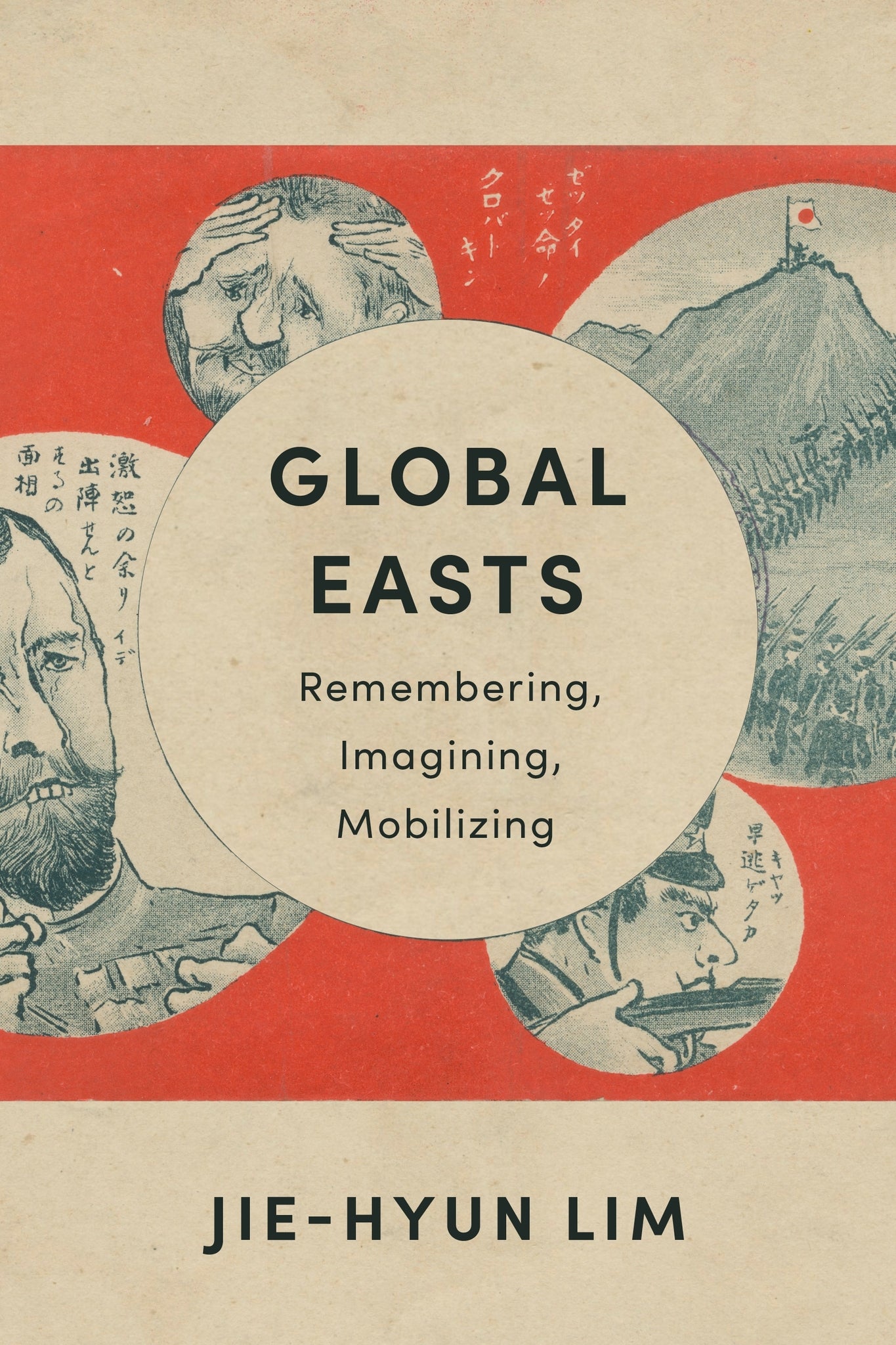
South Korean historian Jie-Hyun Lim, raised under an anticommunist dictatorship, turned to Marxian thought to explain his country’s development, even as he came to struggle with its Eurocentrism. As a transnational scholar working in postcommunist Poland, Lim recognized striking similarities between Korean and Polish history and politics. One realization stood out: Both Korea and Poland—at once the “West” for Asia yet “Eastern” Europe—had been assigned the role of “East.”
This book explores entangled Easts to reconsider global history from the margins. Examining the politics of history and memory, Lim reveals the affinities linking Eastern Europe and East Asia. He draws out commonalities in their experiences of modernity, in their transitions from dictatorship to democracy, and in the shaping of collective memory. Ranging across Poland, Germany, Israel, Japan, and Korea, Lim traces the global history of how notions of victimhood have become central to nationalism. He criticizes mass dictatorships of right and left in the Global Easts, considering Nazi jurist Carl Schmitt’s notion of sovereign dictatorship and the concept of decisionist democracy. Lim argues that nationalism is inherently transnational, critiquing how the nationalist imagination of the Global East has influenced countries across borders.
Theoretically sophisticated and conceptually innovative, this book sheds new light on the transnational complexity of historical memory and imagination, the boundaries between democracy and mass dictatorship, and the fluidity of East and West.


Few books have the range and ambition of Global Easts. Lim offers wide-roaming essays written from original spaces to make surprising connections. He finds links between Polish and Korean history, brings comfort women trials in Batavia into conversation with community activists in California, and connects Anne Frank’s reception in Japan to Australian indigenous politics—to name just a few. This is a bold collection of essays. We need more works like it.
— Andre Schmid, author of Korea Between Empires, 1895-1919
Jie-Hyun Lim is one of the most original and innovative historians of his generation, wonderfully knowledgeable across Western and East Asian history alike. The connections he draws linking the history of Poland and East-Central Europe with Korea and East Asia are always thought-provoking and provide fresh insights about being ‘on the margins.’ Anyone interested in questions of memory, modernity, democracy, and dictatorship in the global twentieth century will come away inspired from this important book.
— Stefan Berger, author of History and Identity: How Historical Theory Shapes Historical Practice
While demonstrating that 'East' and 'West' are relational categories produced through the logic of historicism, Lim juxtaposes 'Global Easts' in Europe and Asia to produce a brilliant and effective cognitive remapping of global history and memory – in the process disrupting the facile binaries through which we imagine we know our world. A must read.
— Takashi Fujitani, author of Race for Empire: Koreans as Japanese and Japanese as Americans During World War II
Theoretically sophisticated and empirically rich...this is a thought-provoking book that will be of interest to anyone
studying the role of history and memory in international relations.
Readers will come away certainly stimulated.
This book will unsettle your framework and compel you to rethink and re-engage with questions that you might have satisfactorily set aside as completed projects.
Acknowledgments
Introduction: Between Two Global Easts
Part I. Remembering
1. Victimhood Nationalism: National Mourning and Global Accountability
2. The Second World War in Global Memory Space
3. Postcolonial Reflections on the Mnemonic Confluence of the Holocaust, Stalinist Crimes, and Colonialism
Part II. Imagining
4. A Postcolonial Reading of Sonderwege: Marxist Historicism Revisited
5. Imagining Easts: Cofiguration of Orient and Occident in the Global Chain of National Histories
6 World History as a Nationalist Rationale: How the National Appropriated the Transnational in East Asian Historiography
7. Nationalist Phenomenology in East Asian History Textbook: On the Antagonistic Complicity of Nationalisms
8. Nationalist Messages in Socialist Code: On the Party Historiography in People’s Poland and North Korea
Part III. Mobilizing
9. Mapping Mass Dictatorship: Toward a Transnational History of Twentieth-Century Dictatorship
10. Nationalizing the Bolshevik Revolution Transnationally: In Search of Non-Western Modernization Among “Proletarian” Nations
Epilogue: Blurring Dichotomy of Global Easts and Wests in the Age of Neopopulism
Index