


Some error occured while loading the Quick View. Please close the Quick View and try reloading the page.
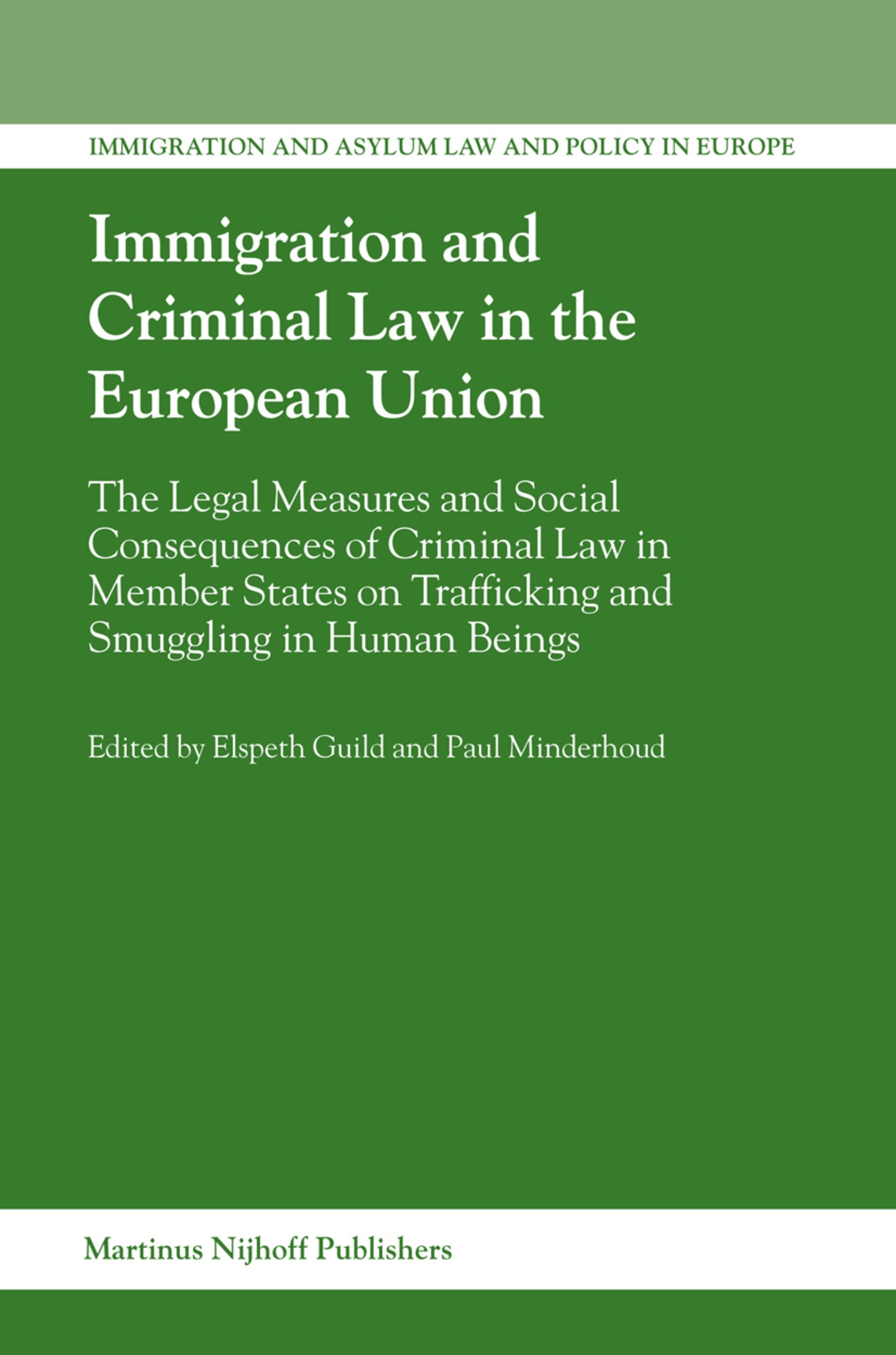
This is a study of the legal framework on criminal measures on trafficking and/or smuggling and facilitating illegal entry in six Member States: France, Germany, Italy, the Netherlands, Spain and the UK, and the European Union. This issue is at the nexus of migration and criminal law. The system of criminal law in the Member States is a central part of the balance of the powers of the authorities and the rights of the citizen. The way in which civil liberties of the individual are weighed in comparison with public protection duties by the authorities is in essence a constitutional issue. The treatment of foreigners, in particular as regards their entry onto the territory and residence is not part of the constitutional settlements, but a field governed by state discretion and exceptionalism. The rules and administrative measures regarding entry, residence and expulsion of foreigners is not subject to the same civil liberties guarantees of due process as apply in criminal law.
This comparative study examines how, in each Member State, the insertion of immigration into criminal law takes place. Do the rules of criminal law in respect of due process take precedence over the lower evidential and procedural requirements which are applied in the field of immigration? How does the criminal justice system deal with this new field where central constitutional issues are not present? There are two levels on which the insertion of immigration into criminal law takes place – the legal and the social. This book deals with both. On the one hand it looks at the laws and the court decisions on criminal trials in respect of immigrants for immigration related offences, on the other hand it looks at how the society (political actors, media, interest groups etc) discuss and develop this issue.
This book is designed for policymakers, academics, students and activists concerned about the European Union.
This comparative study examines how, in each Member State, the insertion of immigration into criminal law takes place. Do the rules of criminal law in respect of due process take precedence over the lower evidential and procedural requirements which are applied in the field of immigration? How does the criminal justice system deal with this new field where central constitutional issues are not present? There are two levels on which the insertion of immigration into criminal law takes place – the legal and the social. This book deals with both. On the one hand it looks at the laws and the court decisions on criminal trials in respect of immigrants for immigration related offences, on the other hand it looks at how the society (political actors, media, interest groups etc) discuss and develop this issue.
This book is designed for policymakers, academics, students and activists concerned about the European Union.

Price: $261.00
Pages: 430
Publisher: Brill
Imprint: Brill | Nijhoff
Publication Date:
29 May 2006
ISBN: 9789004150645
Format: Hardcover

‘Overall, the book offers a useful insight into how similar Member States are responding legally and politically to the issue of trafficking.’
Sandhya Drew, Common Market Law Review 44-3, 2007.
Sandhya Drew, Common Market Law Review 44-3, 2007.
Elspeth Guild is Professor of European Migration Law at the Radboud University, Nijmegen and a partner at the London law firm Kingsley Napley. She is co-editor of the European Journal of Migration and Law and the Immigration and Asylum Law and Policy in Europe book Series.
Paul Minderhoud is a Senior Researcher at the Centre for Migration Law of the Radboud University, Nijmegen. He is co-editor of the European Journal of Migration and Law.
Paul Minderhoud is a Senior Researcher at the Centre for Migration Law of the Radboud University, Nijmegen. He is co-editor of the European Journal of Migration and Law.