


Some error occured while loading the Quick View. Please close the Quick View and try reloading the page.
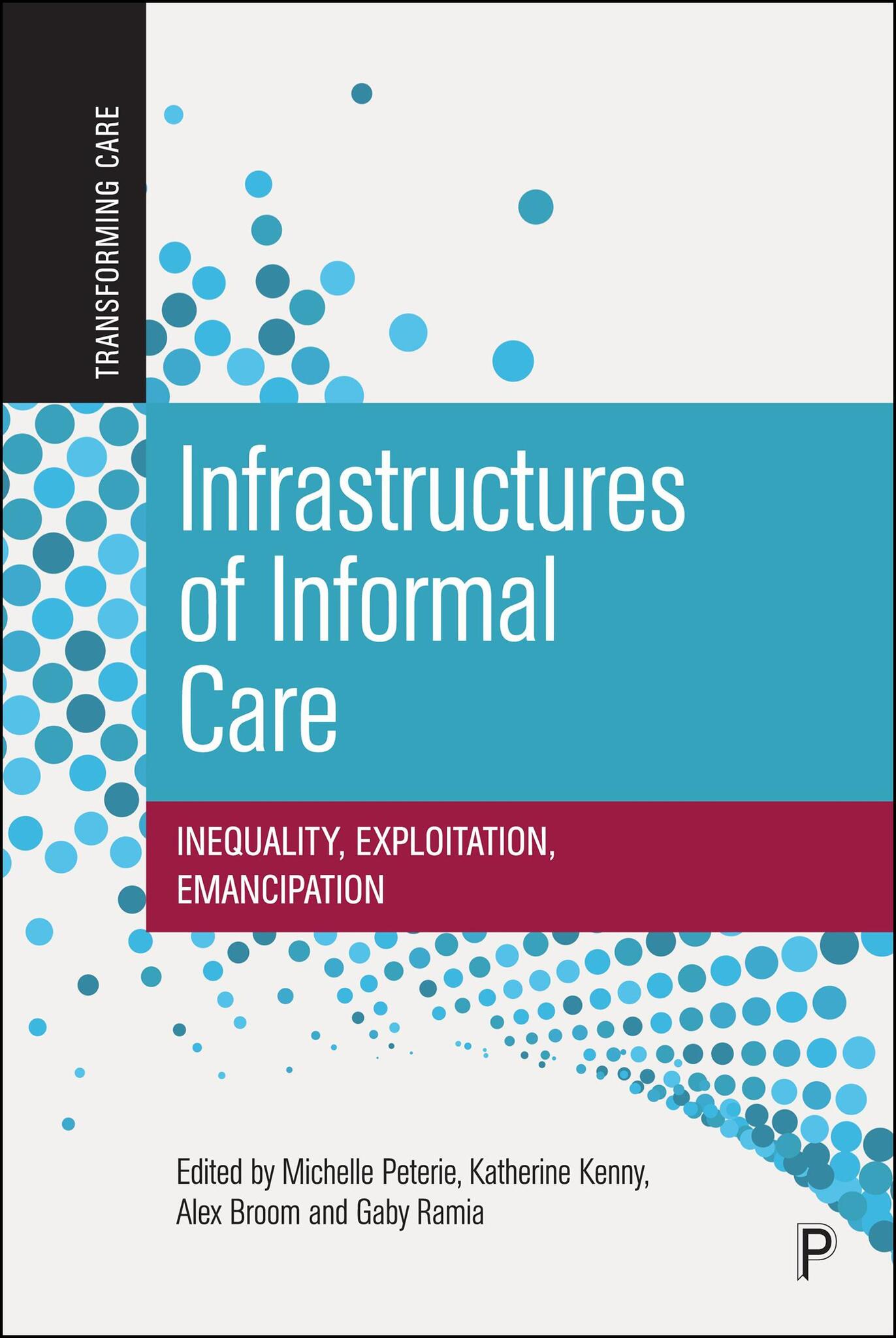
Care is fundamental to our individual and collective well-being, but it is also deeply implicated in historical and present-day injustices.
Taking seriously the darker potentialities of care as a relation of exploitation and domination, this edited collection interrogates the social and governance infrastructures that variously shape, expropriate, necessitate and unravel care at the ‘private’ interpersonal level.
Combining rich empirical analysis and theoretical rigour, the chapters reveal:
• entrenched inequalities in informal care responsibilities and the resources needed to undertake them;
• the intimate relationship between care, exploitation and expropriation, including their frequent embeddedness in colonial power structures; and
• the urgency of reforming, resourcing and valuing informal care at the infrastructural level.
Invaluable reading for scholars and students of health and social care and social policy, this book offers a critical framework for reimagining care in the service of more just and equitable societies.


“At a time when hostility and contempt have come to play a prominent role in political life, this volume offers a timely intervention. The editors and contributors argue that care – both as a practice and as a value embedded in institutions – is a vital condition for the functioning of societies. With intellectual precision and moral clarity, they show how practices and institutions shaped by histories of coloniality and exclusion can be reimagined as a transformative and just foundation for collective life in the 21st century.” Barbara Prainsack, University of Vienna
“Infrastructures of Informal Care brings together a range of incisive analysis that reveals the various ways contemporary underlying structures and resources shape, extend, deepen and constrain informal relations of care. The collected volume importantly offers a range of examples, drawing out the significance of social infrastructures that are relational and socio-technical, distilling the depth, complexity and renewal of informal care relations that sustain our social worlds across time.” Karen Soldatic, Toronto Metropolitan University
Michelle Peterie is ARC DECRA Senior Research Fellow in the Sydney Centre for Healthy Societies at The University of Sydney.
Katherine Kenny is Associate Professor of Sociology, Deputy Director of the Sydney Centre for Healthy Societies and ARC DECRA Principal Research Fellow at The University of Sydney.
Alex Broom is Professor of Sociology and Director of the Sydney Centre for Healthy Societies at The University of Sydney.
Gaby Ramia is Professor of Policy and Society and Chair of the Discipline of Government and International Relations at The University of Sydney.
Introduction: Infrastructures of Informal Care – Michelle Peterie, Katherine Kenny, Alex Broom and Gaby Ramia
Part I: Inequalities of Care
1. Researching Care Infrastructures in the Shadows of the Welfare State – Emma Mitchell, Emma R. Power, Ilan Wiesel and Kathleen Mee
2. On the Need for New Infrastructures: Practices of Care for Families Multiple – kylie valentine, Sally Robinson, Jala Burton and Amy Marshall
3. Understanding Family Financial Assistance with Home Ownership as Private Infrastructure of Care – Julia Cook
4. Formal Care on Informal Time: Australia’s Disability Care Infrastructure – Morag Kelly and Michelle Peterie
Part II: Care, Exploitation and Expropriation
5. Coloniality and Care – Elise Klein
6. Infrastructures of the Heart: Thinking-Feeling with Non-Innocent Care – Lisa Slater
7. Creating Communities of Statelessness: Testimonies of Belonging and Care – Jordana Silverstein
Part III: Valuing (Emancipatory) Care
8. Food Security During Covid-19: Manifesting a Migrant Ethics of Care – Sukhmani Khorana
9. Who Cares for the Carer? Formal and Informal Supports for Carer Well-Being and Identity – Amy Conley Wright
10. Infrastructures of Governance: Understanding (the Inadequacies of) Care for International Students – Gaby Ramia
11. Exploring the Dynamic Between an Ethic of Care and the Paid Work Ethic in Australian Society – Greg Marston
12. Contesting the Changing Politics of Care – Ben Spies-Butcher
Conclusion: Considering the Future of Care – Katherine Kenny, Michelle Peterie, Alex Broom and Gaby Ramia