


Some error occured while loading the Quick View. Please close the Quick View and try reloading the page.
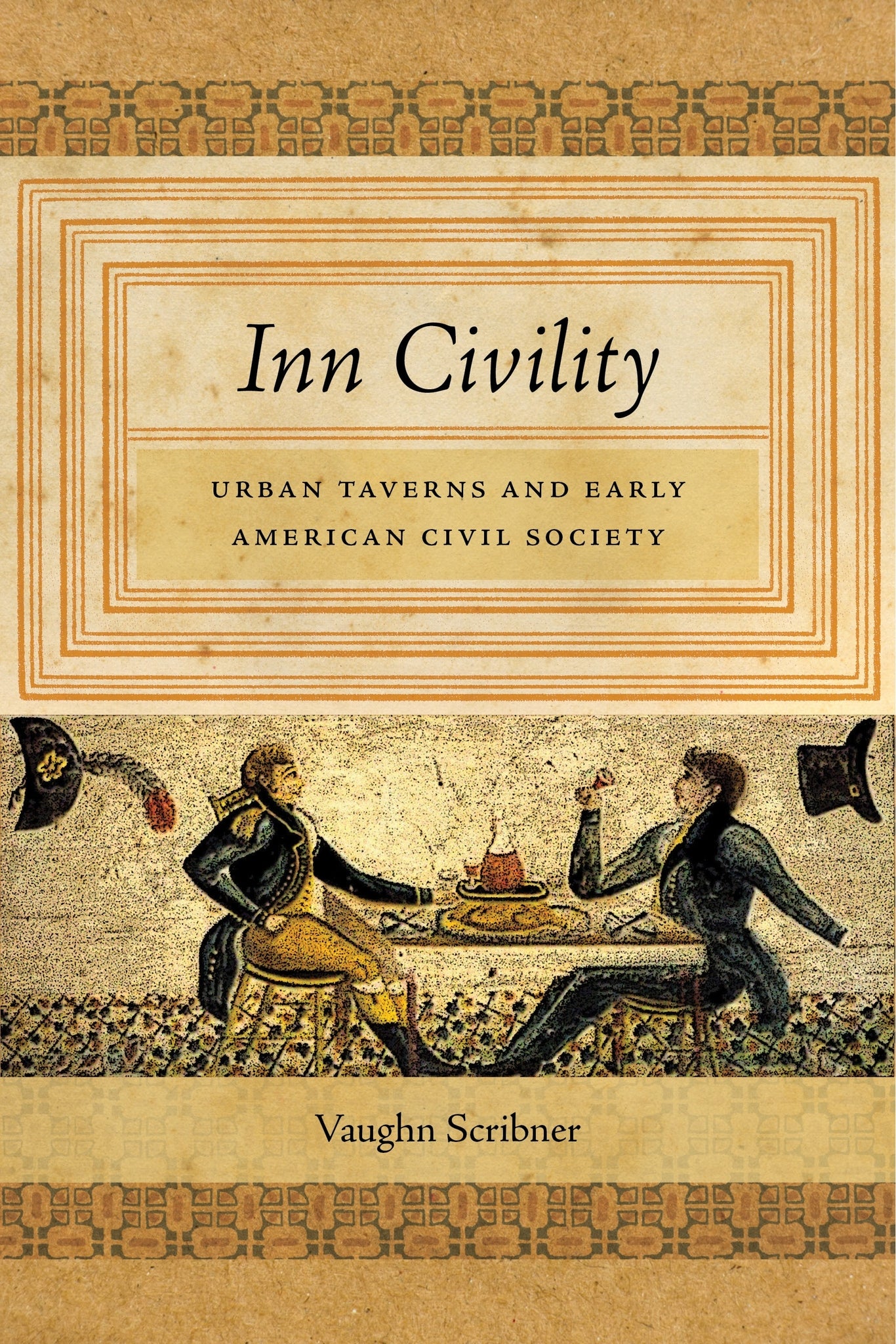
Examines the critical role of urban taverns in the social and political life of colonial and revolutionary America
From exclusive “city taverns” to seedy “disorderly houses,” urban taverns were wholly engrained in the diverse web of British American life. By the mid-eighteenth century, urban taverns emerged as the most popular, numerous, and accessible public spaces in British America. These shared spaces, which hosted individuals from a broad swath of socioeconomic backgrounds, eliminated the notion of “civilized” and “wild” individuals, and dismayed the elite colonists who hoped to impose a British-style social order upon their local community. More importantly, urban taverns served as critical arenas through which diverse colonists engaged in an ongoing act of societal negotiation.
Inn Civility exhibits how colonists’ struggles to emulate their British homeland ultimately impelled the creation of an American republic. This unique insight demonstrates the messy, often contradictory nature of British American society building. In striving to create a monarchical society based upon tenets of civility, order, and liberty, colonists inadvertently created a political society that the founders would rely upon for their visions of a republican America. The elitist colonists’ futile efforts at realizing a civil society are crucial for understanding America’s controversial beginnings and the fitful development of American republicanism.


Interdisciplinary historians will find much to learn and much more to ponder in this splendidly playful, deeply serious, and unfailingly delightful work.
Scribner is keen to demonstrate how America’s revolutionary ideals—in his view, republicanism, liberty, and civil society—emerged from a colonial world made interdependent through commerce, manners, and an acceptance of hierarchy ... Taking a fresh look [at taverns] requires the presentation of a new interpretive frame. Inn Civility makes a bold bid to do just that by deemphasizing contestation in favor of outcome. Folding the types of taverns (and their patrons) that interest Scribner into the cresting literature on civil society in colonial America is an audacious and promising move presented here with conviction.
Scribner makes an important contribution to our understanding of how political and social ideologies of the colonial and early national period actually played out for both elite and common tavern-goers. Notions of civility, politeness, and proper behavior were not simply beliefs that the wealthy claimed to profess, but standards they attempted to live by—and to compel their inferiors to live by as well. As Scribner illustrates, elites’ efforts to “transplant their visions from the page to the pavement” were complex and, often, contradictory, and they had unanticipated outcomes when met with the realities of the Revolutionary War ... Inn Civility would be a welcome addition to college courses on the social history of the American Revolution. Readers interested in the built environment of revolutionary cities will also find much to admire in this engaging book.
This vivid and engaging study delves into intellectual currents, institutional cultures, consumer goods, as well as architecture, masculinities, and politics, making it an intriguing choice for introducing the revolutionary era to undergraduates.