


Some error occured while loading the Quick View. Please close the Quick View and try reloading the page.
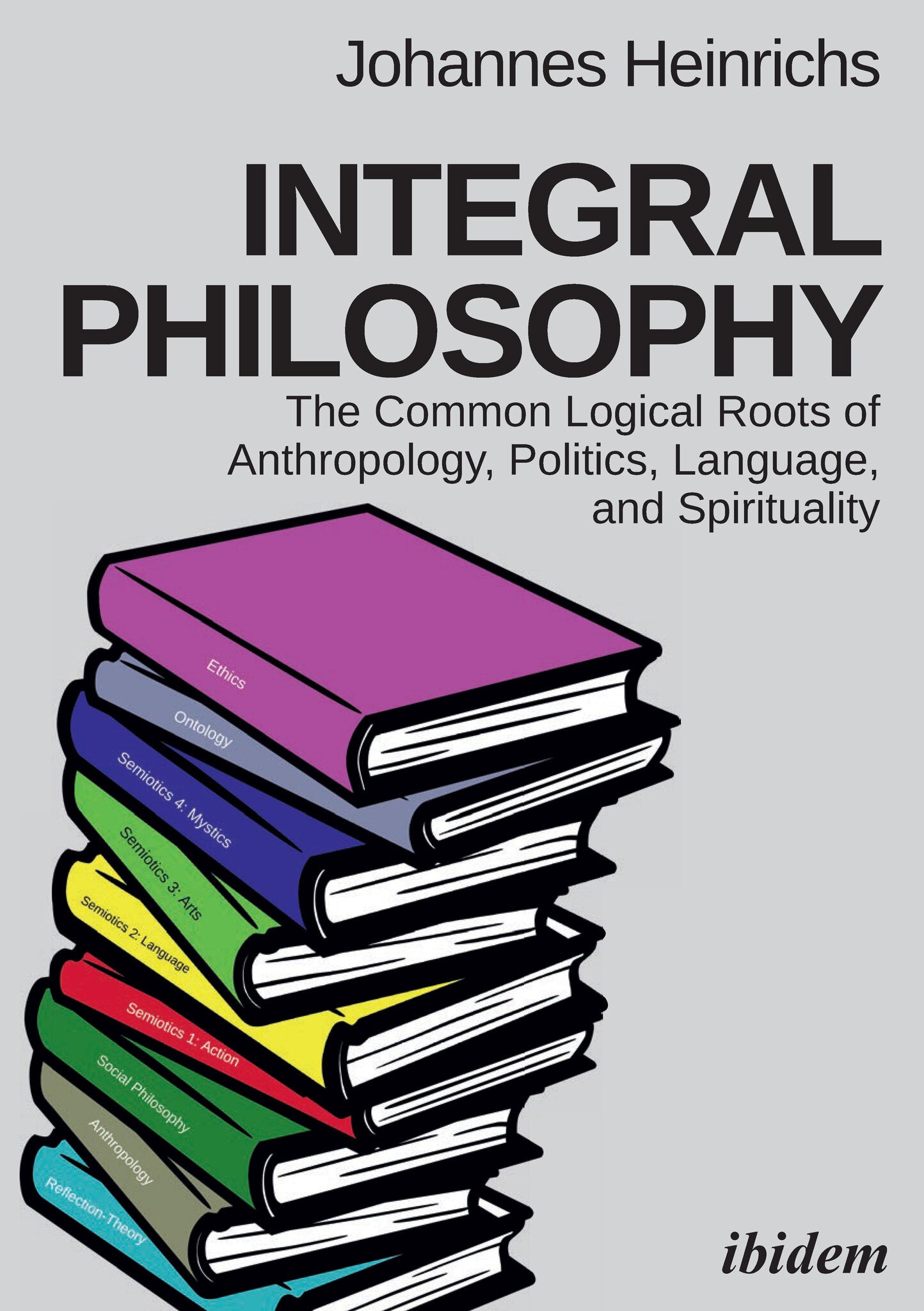
This cumulative course on Johannes Heinrichs’s philosophical works presents the essence of his previous publications: a rich, consistent, and novel monolithic system defying temptations by the zeitgeist. Starting with an emphasis on reflection as the basis of epistemology, Heinrichs also covers the mind-body dualism in an anthropology chapter, moves on to presenting summaries of his theory of democracy as well as his philosophical semiotics, followed by an outline of structural and integral ontology. An overview of ethical positions in the final chapter proves the fertility of Heinrichs’s theoretical-reflection methods.
Heinrichs (born 1942 in Duisburg/Rhine, Germany) developed a “reflection system theory” which is an original up-to-date development of German idealism, inspired by the multi-value logic of Gotthard Günther. His reflection theory of language presents an alternative to the current language analysis as well as to Chomsky’s way of universal grammar. By his systematic approach, he opposes the mere historicism of most Western philosophers, also by the spiritual character of his very methodical philosophy. In spiritual respects, he is near to Sri Aurobindo.


— Xavier Tilliette, Institut catholique de Paris
Johannes Heinrichs distills in this tour-de-force Integral Philosophy a lifetime of reflections on politics, philosophy, theology, language, and art. Combining both European, especially German, thought and Indian wisdom into a unique synthesis, Heinrichs offers an alternative system on self-reflexive conscience to Ken Wilber’s which will be of perennial value and at the same time is distinctly appropriate for the political situation of our time. With this work, Heinrichs earns a solid place among the foremost thinkers of the world today.
— Peter Phan, Ignacio Ellacuría Chair of Catholic Social Thought, Georgetown University
Johannes Heinrichs ranks among the world’s greatest systematic thinkers and this book shows why. Employing the best of European and Eastern philosophical traditions, the book provides the intellectual, spiritual, and ethical framework for human self-organization. At its core is the model of value-based, effective democracy. I have not found a better remedy for overcoming the moral and political predicament of our time.
— Klaus Bosselmann, chair of World Commission on Environmental Law (IUCN), University of Auckland