


Some error occured while loading the Quick View. Please close the Quick View and try reloading the page.
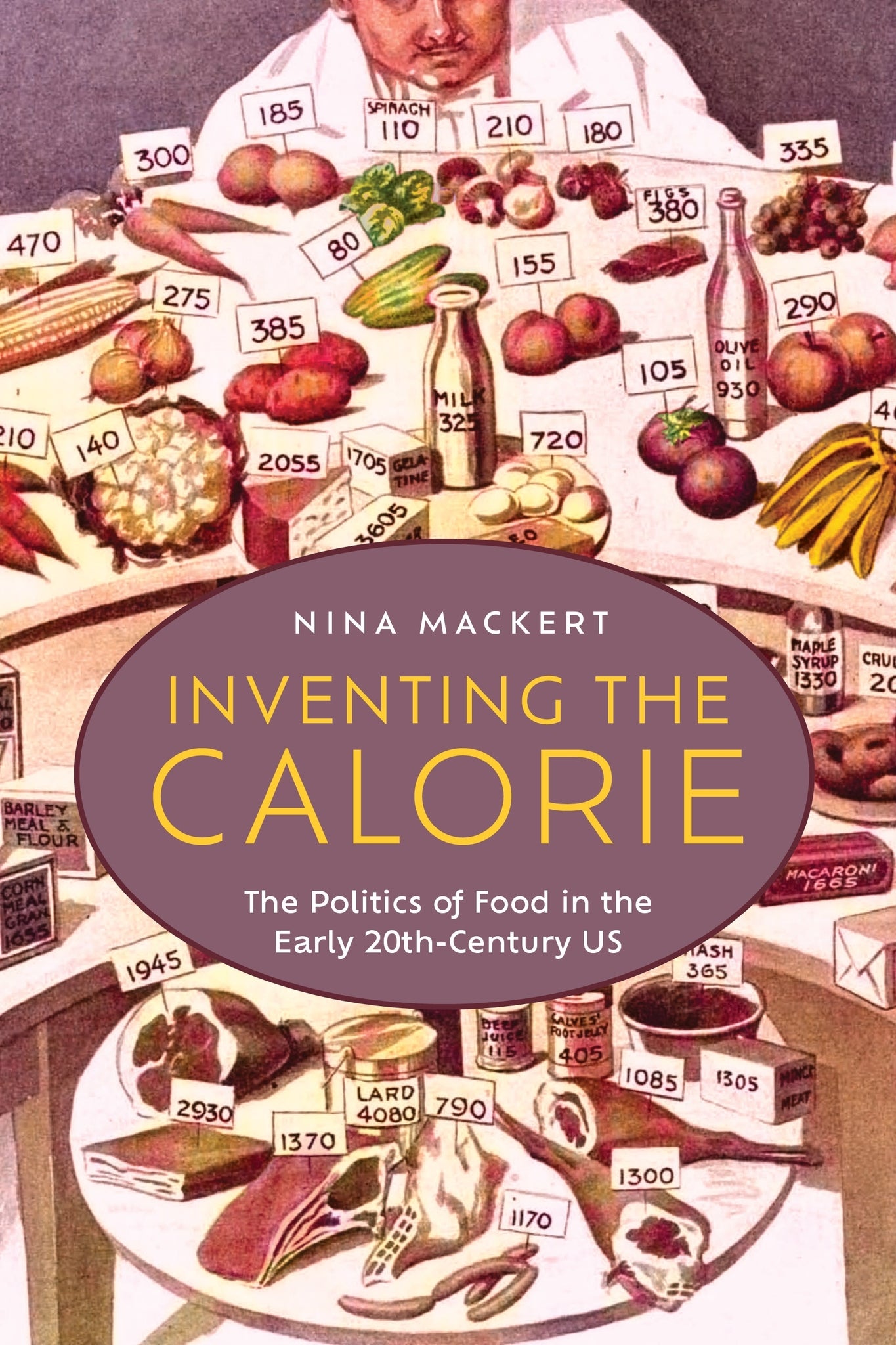
Traces how the calorie became America’s way to quantify food, police bodies, and moralize behavior
From packaged foods, to lifestyle magazines, and public health discussions, calories are deeply woven into the fabric of everyday life. Promoted as a neutral scientific unit of measurement, they have come to measure more than food energy: from food value, to health, lifestyle, and even personal conduct.
Inventing the Calorie provides the first comprehensive history of the food calorie in the United States. Spanning the late 1880s to the 1930s, the book traces the calorie’s journey through labor disputes, scientific laboratories, wartime rationing, European food aid, and the rise of consumer culture, ending with the emergence of dieting as a popular practice. Nina Mackert explores how the calorie became regarded as not only a unit of measurement, but also a way of creating social differences as it translates to individual bodies and populations. It could address industrial productivity, racial improvement, colonial management, public health, and the anxieties of abundance.
By making food, bodies, and work measurable, the calorie offered a seemingly objective language for negotiating conflicts over the needs of workers, women, Black Americans, and aid recipients. In doing so, the calorie helped define the “consumer citizen” as responsible for managing diet, weight, and health—an ideal that fueled fat shaming and moralized body size while not challenging consumer capitalism. Shedding new light on the history of one of the most popular tools for dieting, Inventing the Calorie reveals how one small number transformed the way Americans think about food, bodies, health and citizenship, and why its legacy still shapes our most personal choices today.


— Amy Bentley, author of Inventing Baby Food: Taste, Health, and the Industrialization of the American Diet
"An outstanding piece of scholarship that starts with great questions. In refusing to take the calorie for granted, Mackert thoroughly denaturalizes the ubiquitous measure of food value, revealing it as an unstable and yet remarkably useful construct with a history and function that is inseparable from politics."
— Charlotte Biltekoff, author of Eating Right in America: The Cultural Politics of Food and Health
"Rigorously researched and endlessly engaging, Nina Mackert’s book introduces a new and forceful historical actor to American history– the calorie. She also showcases a new genre– the career of a concept. Like the best biographers, Mackert digs into where the calorie came from, and how it transformed its world and remade how people looked at bodies, numbers, policies, and what was on their plates. This is a must-read and instant food studies classic."
— Bryant Simon, author of For Customers Only: Public Bathrooms and the Making of American Inequality
"Nina Mackert’s study reveals the outsize impact calories have had on American culture and society, one that far outweighs their diminutive size. Her research is prodigious. Who knew that early scientists isolated their human subjects in calorimetric chambers with calorimeter “bombs”? Inventing the Calorie is a lively and important book."
— Darra Goldstein, Editor in Chief, The Oxford Research Encyclopedia of Food Studies