


Some error occured while loading the Quick View. Please close the Quick View and try reloading the page.
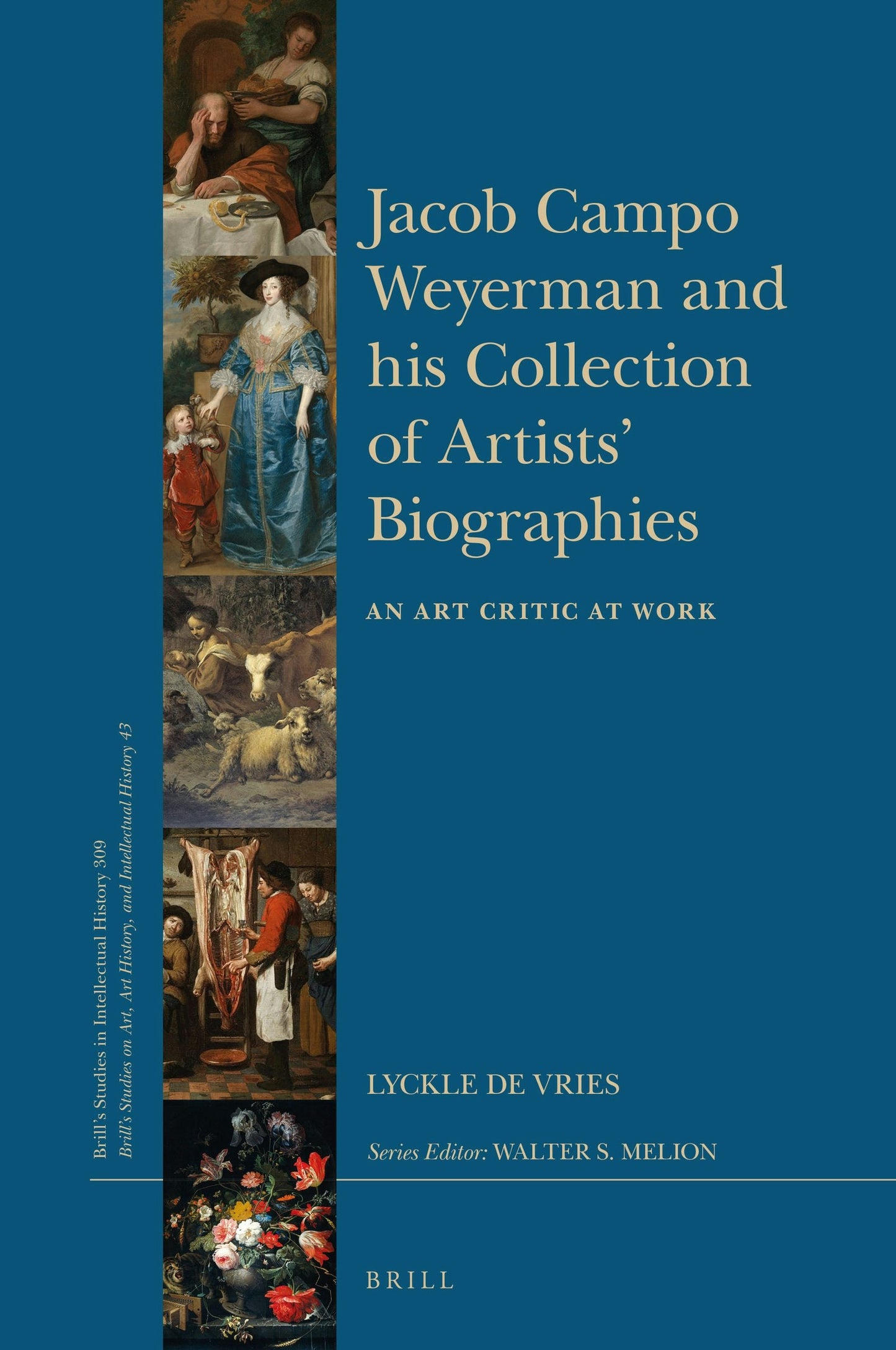
Weyerman’s collection of artists’ biographies (1729) is exceptional for three reasons. Firstly, he includes a great number of painters not mentioned elsewhere. Secondly, he does not limit his selection to good artists only; he also discusses failed painters and their abortive careers. Thirdly, he writes as an art critic who does not hesitate to pass judgments, sometimes severe, on his chosen subjects.
In the process, Weyerman provides much information on the social and economic circumstances of art production. He found that a bohemian lifestyle was pernicious to a painter’s career, and argued that artists should live and think as merchants. In addition to analyzing Weyerman’s art critical terminology and his ideas on art theory, De Vries includes translations of two full chapters along with the original Dutch.
In the process, Weyerman provides much information on the social and economic circumstances of art production. He found that a bohemian lifestyle was pernicious to a painter’s career, and argued that artists should live and think as merchants. In addition to analyzing Weyerman’s art critical terminology and his ideas on art theory, De Vries includes translations of two full chapters along with the original Dutch.

Price: $205.00
Pages: 386
Publisher: Brill
Imprint: Brill
Series: Brill's Studies on Art, Art History, and Intellectual History
Publication Date:
27 February 2020
ISBN: 9789004421806
Format: Hardcover

“Jacob Campo Weyerman and his Collection of Artists' Biographies is a great book. Not cheap, but the first 141 pages, Part One, will serve as a new benchmark in Weyerman Studies.”
Peter Altena, in JCW 43.2 (Mededelingen van de Stichting Jacob Campo Weyerman)
"The fact remains that, whatever [Weyerman's] motivations, he demonstrated (and de Vries amply acknowledges it) that he had an art critic training, that he mastered a technical vocabulary that deserves to be studied precisely because it is specific to a reality and an era and, in short, that he was a man fully immersed in his time. Probably these findings (and the many references to the situation of the art market in the Netherlands [...] would today satisfy more those who deal with social history of art, rather than history of art in the strict sense; however, they allow us to reconsider the importance of a work that, in Schlosser's time, seemed inevitably destined for oblivion and ignominy."
Giovanni Mazzaferro, in: Letteratura artistica: Cross-cultural Studies in Art History Sources, August 2020
Peter Altena, in JCW 43.2 (Mededelingen van de Stichting Jacob Campo Weyerman)
"The fact remains that, whatever [Weyerman's] motivations, he demonstrated (and de Vries amply acknowledges it) that he had an art critic training, that he mastered a technical vocabulary that deserves to be studied precisely because it is specific to a reality and an era and, in short, that he was a man fully immersed in his time. Probably these findings (and the many references to the situation of the art market in the Netherlands [...] would today satisfy more those who deal with social history of art, rather than history of art in the strict sense; however, they allow us to reconsider the importance of a work that, in Schlosser's time, seemed inevitably destined for oblivion and ignominy."
Giovanni Mazzaferro, in: Letteratura artistica: Cross-cultural Studies in Art History Sources, August 2020
Lyckle de Vries (*1937) retired from Groningen University in 2000. Apart from writing monographic studies on 17th-century Dutch artists, he analysed contemporary printed sources on Dutch art and art theory, Gerard de Lairesse (1998, 2011), and Johan van Gool (1990).