


Some error occured while loading the Quick View. Please close the Quick View and try reloading the page.
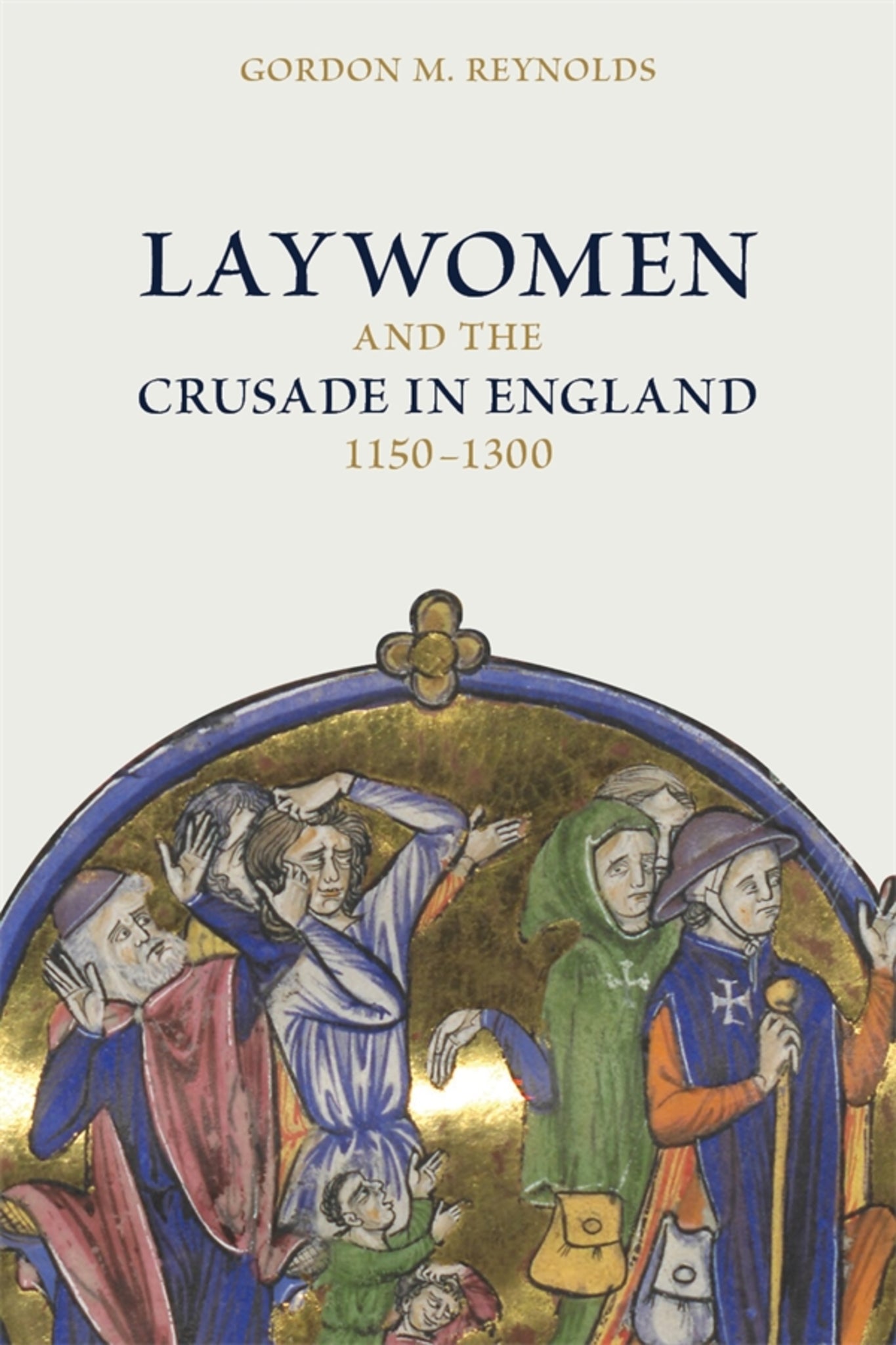
Considers how elite women could participate in Crusade, their means and motivations.
The popular perception of the medieval Crusades is of conflicts spanning from the Holy Land to the Baltic, with huge armies of religious zealots led by knights wearing crosses. However, the reality is far more nuanced. The vast majority of those living in western Europe did not go on crusade at all. But that does not mean that crusading was not on their minds, or that they could not influence the movement. They urged others to take up the cross, provided financial support, and prayed for the campaigns in the Holy Land; for them, this was crusade.
This book investigates how English laywomen were encouraged to support crusades and identify with holy war during the Middle Ages, challenging preconceptions of what crusade "meant", and bringing out the diverse ways of their participation. It draws on detailed analysis of cartularies, judicial records, chronicles and lyrical sources; it also examines the rich material culture of commemoration that celebrated the endeavour, alongside the papal propaganda which idealised women's sponsorship of crusade. This study therefore sheds new light not only on the role of women in crusade, but on their influence and piety more generally.
The popular perception of the medieval Crusades is of conflicts spanning from the Holy Land to the Baltic, with huge armies of religious zealots led by knights wearing crosses. However, the reality is far more nuanced. The vast majority of those living in western Europe did not go on crusade at all. But that does not mean that crusading was not on their minds, or that they could not influence the movement. They urged others to take up the cross, provided financial support, and prayed for the campaigns in the Holy Land; for them, this was crusade.
This book investigates how English laywomen were encouraged to support crusades and identify with holy war during the Middle Ages, challenging preconceptions of what crusade "meant", and bringing out the diverse ways of their participation. It draws on detailed analysis of cartularies, judicial records, chronicles and lyrical sources; it also examines the rich material culture of commemoration that celebrated the endeavour, alongside the papal propaganda which idealised women's sponsorship of crusade. This study therefore sheds new light not only on the role of women in crusade, but on their influence and piety more generally.

Price: $105.00
Pages: 242
Publisher: Boydell & Brewer Inc.
Imprint: Boydell Press
Series: Crusading in Context
Publication Date:
19 November 2024
Trim Size: 9.21 X 6.14 in
ISBN: 9781837652242
Format: Hardcover
BISACs:
HISTORY / Europe / Great Britain / Norman Conquest to Late Medieval (1066-1485), European history: medieval period, middle ages, HISTORY / Military / Medieval, Medieval warfare (predating gunpowder warfare)

By reconfiguring what it meant to be on the "periphery" of the crusades, Reynolds makes a strong case for the existence of a culture of holy war that permeated medieval society. He effectively de-centers the crusades, both geographically and methodologically, demonstrating the extent to which support from the "home front" was integral to the success of the endeavor and how the momentum for holy war was sustained across centuries.
Reynolds' book provides a powerful argument for viewing crusading as a cultural activity shared by noncombatants and combatants alike and it should force students and established scholars alike to reassess what crusading meant to those who participated in its many manifestations.
Overall, Reynolds's study is a valuable and meticulously researched contribution to the expanding scholarship on gender and crusading. His focus on England addresses a significant gap in the field, which has often emphasized broader, pan-European perspectives rather than regional ones. ... Ultimately, this book deepens our understanding of the social dynamics of crusading and highlights the movement's character as a collective enterprise, rooted as much in households and parishes as in the distant theatres of war.
Reynolds' book provides a powerful argument for viewing crusading as a cultural activity shared by noncombatants and combatants alike and it should force students and established scholars alike to reassess what crusading meant to those who participated in its many manifestations.
Overall, Reynolds's study is a valuable and meticulously researched contribution to the expanding scholarship on gender and crusading. His focus on England addresses a significant gap in the field, which has often emphasized broader, pan-European perspectives rather than regional ones. ... Ultimately, this book deepens our understanding of the social dynamics of crusading and highlights the movement's character as a collective enterprise, rooted as much in households and parishes as in the distant theatres of war.
List of Illustrations
List of Abbreviations
Some Conventions
Timeline of Relevant Events
Introduction
Part I - Propaganda
1. Crusade and Culture in England
2. The Papacy and Incentives to Support
3. Preaching Patronage
Part II - Support
4. Encouraging Crusaders
5. Backing the Expeditions
6. Trends and Motivations
Part III - Memory
7. Commemoration and Creating Identity
Conclusion: Identities Beyond the Battlefield
Appendices
Appendix 1: Crusade Support Activity
Appendix 2: Known Round Churches in England
Appendix 3: Patronage of English Hospitaller Houses
Bibliography
Acknowledgments
Index
List of Abbreviations
Some Conventions
Timeline of Relevant Events
Introduction
Part I - Propaganda
1. Crusade and Culture in England
2. The Papacy and Incentives to Support
3. Preaching Patronage
Part II - Support
4. Encouraging Crusaders
5. Backing the Expeditions
6. Trends and Motivations
Part III - Memory
7. Commemoration and Creating Identity
Conclusion: Identities Beyond the Battlefield
Appendices
Appendix 1: Crusade Support Activity
Appendix 2: Known Round Churches in England
Appendix 3: Patronage of English Hospitaller Houses
Bibliography
Acknowledgments
Index