


Some error occured while loading the Quick View. Please close the Quick View and try reloading the page.
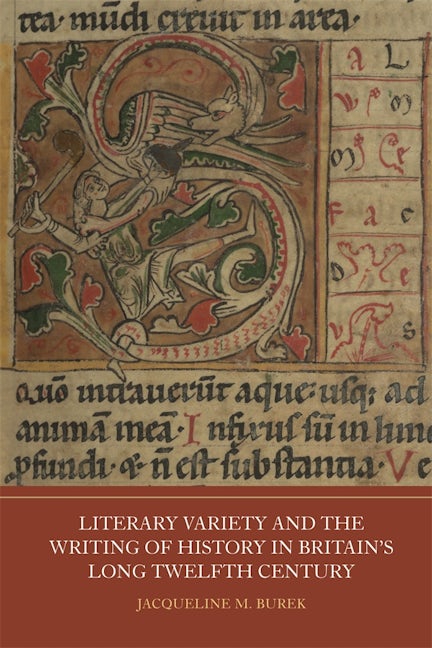
A survey of the different literary forms adopted by history writers after the Conquest, exploring why and for what effects they were used.
Histories of Britain composed during the "twelfth-century renaissance" display a remarkable amount of literary variety (Latin varietas). Furthermore, British historians writing after the Norman Conquest often draw attention to the differing forms of their texts. But why would historians of this period associate literary variety with the work of history-writing?
Drawing on theories of literary variety found in classical and medieval rhetoric, this book traces how British writers came to believe that varietas could help them construct comprehensive, continuous accounts of Britain's past. It shows how Latin prose historians, such as William of Malmesbury, Henry of Huntingdon, and Geoffrey of Monmouth, filled their texts with a diverse array of literary forms, which they carefully selected and ordered in accordance with their broader historiographical aims. The pronounced literary variety of these influential histories inspired some Middle English verse chroniclers, including Laȝamon and Robert Mannyng, to adopt similar principles in their vernacular poetry. By uncovering the rhetorical and historiographical theories beneath their literary variety, this book provides a new framework for interpreting the stylistic and organizational choices of medieval historians.
Histories of Britain composed during the "twelfth-century renaissance" display a remarkable amount of literary variety (Latin varietas). Furthermore, British historians writing after the Norman Conquest often draw attention to the differing forms of their texts. But why would historians of this period associate literary variety with the work of history-writing?
Drawing on theories of literary variety found in classical and medieval rhetoric, this book traces how British writers came to believe that varietas could help them construct comprehensive, continuous accounts of Britain's past. It shows how Latin prose historians, such as William of Malmesbury, Henry of Huntingdon, and Geoffrey of Monmouth, filled their texts with a diverse array of literary forms, which they carefully selected and ordered in accordance with their broader historiographical aims. The pronounced literary variety of these influential histories inspired some Middle English verse chroniclers, including Laȝamon and Robert Mannyng, to adopt similar principles in their vernacular poetry. By uncovering the rhetorical and historiographical theories beneath their literary variety, this book provides a new framework for interpreting the stylistic and organizational choices of medieval historians.

Price: $95.00
Pages: 294
Publisher: Boydell & Brewer Inc.
Imprint: York Medieval Press
Publication Date:
10 January 2023
Trim Size: 9.21 X 6.14 in
ISBN: 9781914049101
Format: Hardcover
BISACs:
HISTORY / Europe / Medieval, European history: medieval period, middle ages, LITERARY CRITICISM / Medieval, Literary studies: ancient, classical and medieval

Introduction: Discontinuous History in the Long Twelfth Century
Part I: Varietas in Latin
1: Varietas: From Roman Rhetoric to British History
2: 'I take it that no one will object to some variety': William of Malmesbury's Gesta regum Anglorum
3: 'Since nothing endures here, pay attention': Henry of Huntingdon's Historia Anglorum
4: 'Continuously and in order': Geoffrey of Monmouth's Historia regum Britanniae
Part II: Variety in Middle English
5: 'Three texts into one': Laʒamon's Brut
6: 'Of diuers kynd': Robert Mannyng's Story of Inglande
Conclusions: The Rhetoric of Discontinuity?
Bibliography
Index
Part I: Varietas in Latin
1: Varietas: From Roman Rhetoric to British History
2: 'I take it that no one will object to some variety': William of Malmesbury's Gesta regum Anglorum
3: 'Since nothing endures here, pay attention': Henry of Huntingdon's Historia Anglorum
4: 'Continuously and in order': Geoffrey of Monmouth's Historia regum Britanniae
Part II: Variety in Middle English
5: 'Three texts into one': Laʒamon's Brut
6: 'Of diuers kynd': Robert Mannyng's Story of Inglande
Conclusions: The Rhetoric of Discontinuity?
Bibliography
Index