


Some error occured while loading the Quick View. Please close the Quick View and try reloading the page.
Winner, 2025 Sociology of Development Book Award, Sociology of Development Section, American Sociological Association
Winner, 2025 Choice Outstanding Academic Title
Shortlisted, 2026 Alice Amsden Best Book Award, Society for the Advancement of Socio-Economics
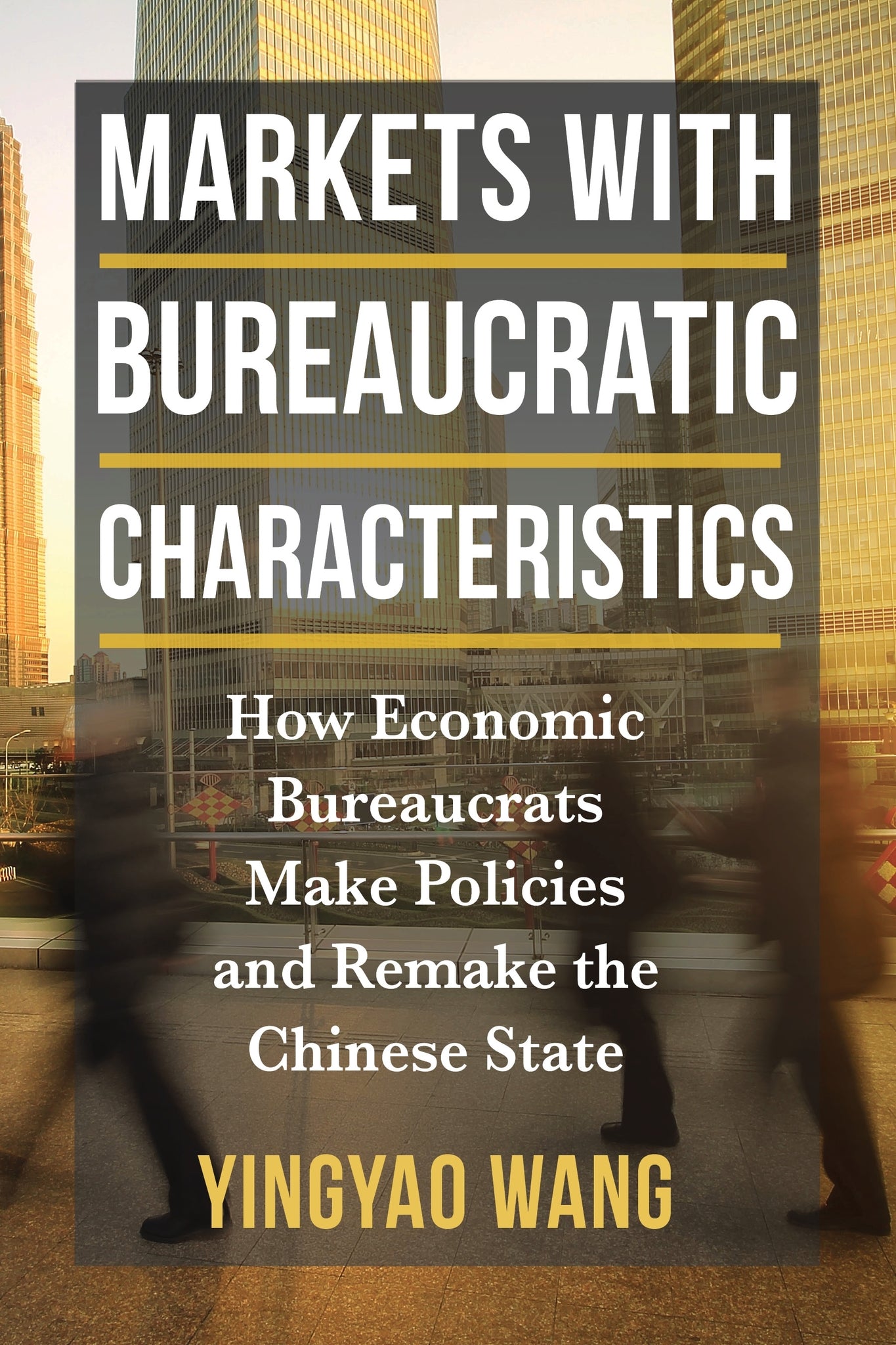
China’s breathtaking economic development has been driven by bureaucrats. Even as the country transitioned away from socialist planning toward a market economy, the economic bureaucracy retained a striking degree of influence and control over crafting and implementing policy. Yet bureaucrats are often dismissed as faceless and inconsequential, their role neglected in favor of party leaders’ top-down rule or bottom-up initiatives.
Markets with Bureaucratic Characteristics offers a new account of economic policy making in China over the past four decades that reveals how bureaucrats have spurred large-scale transformations from within. Yingyao Wang demonstrates how competition among bureaucrats motivated by careerism has led to the emergence of new policy approaches. Second-tier economic bureaucrats instituted distinctive—and often conflicting—“policy paradigms” aimed at securing their standing and rewriting China’s long-term development plans for their own benefit. Emerging from the middle levels of the bureaucracy, these policy paradigms ultimately reorganized the Chinese economy and reshaped state-market relations. Drawing on fine-grained biographical and interview data, Wang traces how officials coalesced around shared career trajectories, generational experiences, and social networks to create new alliances and rivalries. Shedding new light on the making and trajectory of China’s ambitious economic reforms, this book also provides keen sociological insight into the relations among bureaucracy, states, and markets.


— Sarah Babb, author of Managing Mexico: Economists from Nationalism to Neoliberalism
It's often too easy to treat the state as a solid and coherent behemoth. Yingyao Wang’s book opens up the black box of the Chinese bureaucracy and provides a wonderful analytic narrative of how organizations and individuals shape each other. Instead of seeing only a homogeneous mass of party cadres, we can now understand the career, geographical, and generational diversity behind the shifting Chinese policy paradigms.
— Miguel A. Centeno, coeditor of State and Nation Making in Latin America and Spain: The Neoliberal State and Beyond
A major contribution to our knowledge of economic policymaking in post-Mao China, this book offers a rare look into the bureaucratic inner workings of the technocrats in major industrial and financial arenas. Wang uses a distinctive sociological lens to make sense of the social world in which those technocrats’ career trajectories intersect, social networks are formed and reconfigured and, in so doing, the Chinese state evolves and is remade.
— Xueguang Zhou, author of The Logic of Governance in China: An Organizational Approach
Her monograph skillfully and successfully illuminates the complex nexus between China's omnipresent bureaucracy and its exacting party-state....Highly recommended.
For an audience eager to learn more about the policy implications of China's rise, Markets with Bureaucratic Characteristics is particularly timely given current debates about China's economic trajectory and its impact on international relations and global governance.
Introduction
Part I. Genesis
1. The Socialist Circulators and the Bureaucratic Origin of China’s Economic Reform
2. Balanced Development or Decentralized Growth? Elite Reformers in the 1980s
Part II. Consolidation
3. The Rise of Technocrats: Market Rationalization and the Macrocontrol Paradigm
4. National Champions and the Organizational Approach to Enterprises and Markets
Part III. Effervescence
5. The Remaking of Public Finance in China and the Financial Approach to Economic Control
6. The Ascent of the Industrial View: Industrial Policy for Making a Manufacturing Superpower
Conclusion
List of Abbreviations
Acknowledgments
Notes
References
Index