


Some error occured while loading the Quick View. Please close the Quick View and try reloading the page.
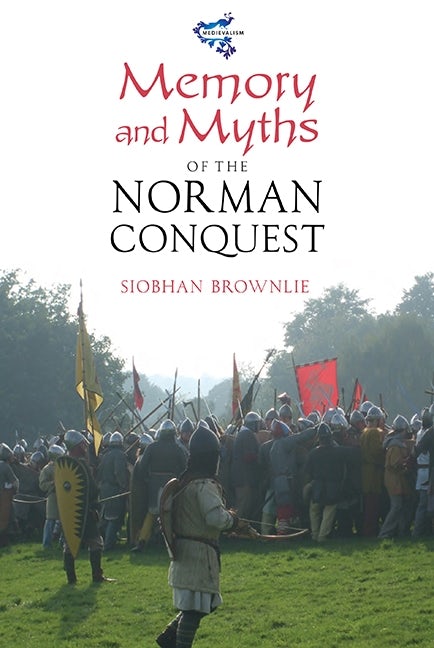
In an innovative approach drawn from Memory Studies, this book seeks to uncover how the Norman Conquest is popularly "remembered".
The Norman Conquest is one of the most significant events in British history - but how is it actually remembered and perceived today? This book offers a study of contemporary British memory of the Norman Conquest, focussing on shared knowledge, attitudes and beliefs. A major source of evidence for its findings are references to the Norman Conquest in contemporary British newspaper articles: 807 articles containing references to the Conquest were collectedfrom ten British newspapers, covering a recent three year period. A second important source of information is a quantitative survey for which a representative sample of 2000 UK residents was questioned. These sources are supplemented by the study of contemporary books and film material, as well as medieval chronicles for comparative purposes, and the author also draws on cultural theory to highlight the characteristics and functions of distant memory and myth. The investigation culminates in considering the potential impact of memory of the Norman Conquest in Britain today.
Siobhan Brownlie is a Lecturer in the School of Arts, Languages & Cultures at the University of Manchester.
The Norman Conquest is one of the most significant events in British history - but how is it actually remembered and perceived today? This book offers a study of contemporary British memory of the Norman Conquest, focussing on shared knowledge, attitudes and beliefs. A major source of evidence for its findings are references to the Norman Conquest in contemporary British newspaper articles: 807 articles containing references to the Conquest were collectedfrom ten British newspapers, covering a recent three year period. A second important source of information is a quantitative survey for which a representative sample of 2000 UK residents was questioned. These sources are supplemented by the study of contemporary books and film material, as well as medieval chronicles for comparative purposes, and the author also draws on cultural theory to highlight the characteristics and functions of distant memory and myth. The investigation culminates in considering the potential impact of memory of the Norman Conquest in Britain today.
Siobhan Brownlie is a Lecturer in the School of Arts, Languages & Cultures at the University of Manchester.

Price: $120.00
Pages: 238
Publisher: Boydell & Brewer Inc.
Imprint: Boydell Press
Publication Date:
15 August 2013
Trim Size: 9.21 X 6.14 in
ISBN: 9781843838524
Format: Hardcover
BISACs:
HISTORY / Europe / Medieval, European history: medieval period, middle ages, SOCIAL SCIENCE / Popular Culture, Popular culture

This fascinating book [is] part of a new and very welcome move towards rigorous quantitative study in the field of the public understanding of the past....Brownlie['s] analysis of the myth of the 'Norman Yoke' and its rich radical history is particularly illuminating.
Memory and Method
Knowledge, Symbolization and Tradition
Multiple Remediation
Presentism and Multidirectionality
Affective Mobility
Mythologization: A Founding Myth
A Time-honoured Myth
Contradictory Myths
Memorial and Mythic Functions
Significance of Distant Memory
Afterword
Appendices
Bibliography
Knowledge, Symbolization and Tradition
Multiple Remediation
Presentism and Multidirectionality
Affective Mobility
Mythologization: A Founding Myth
A Time-honoured Myth
Contradictory Myths
Memorial and Mythic Functions
Significance of Distant Memory
Afterword
Appendices
Bibliography