


Some error occured while loading the Quick View. Please close the Quick View and try reloading the page.
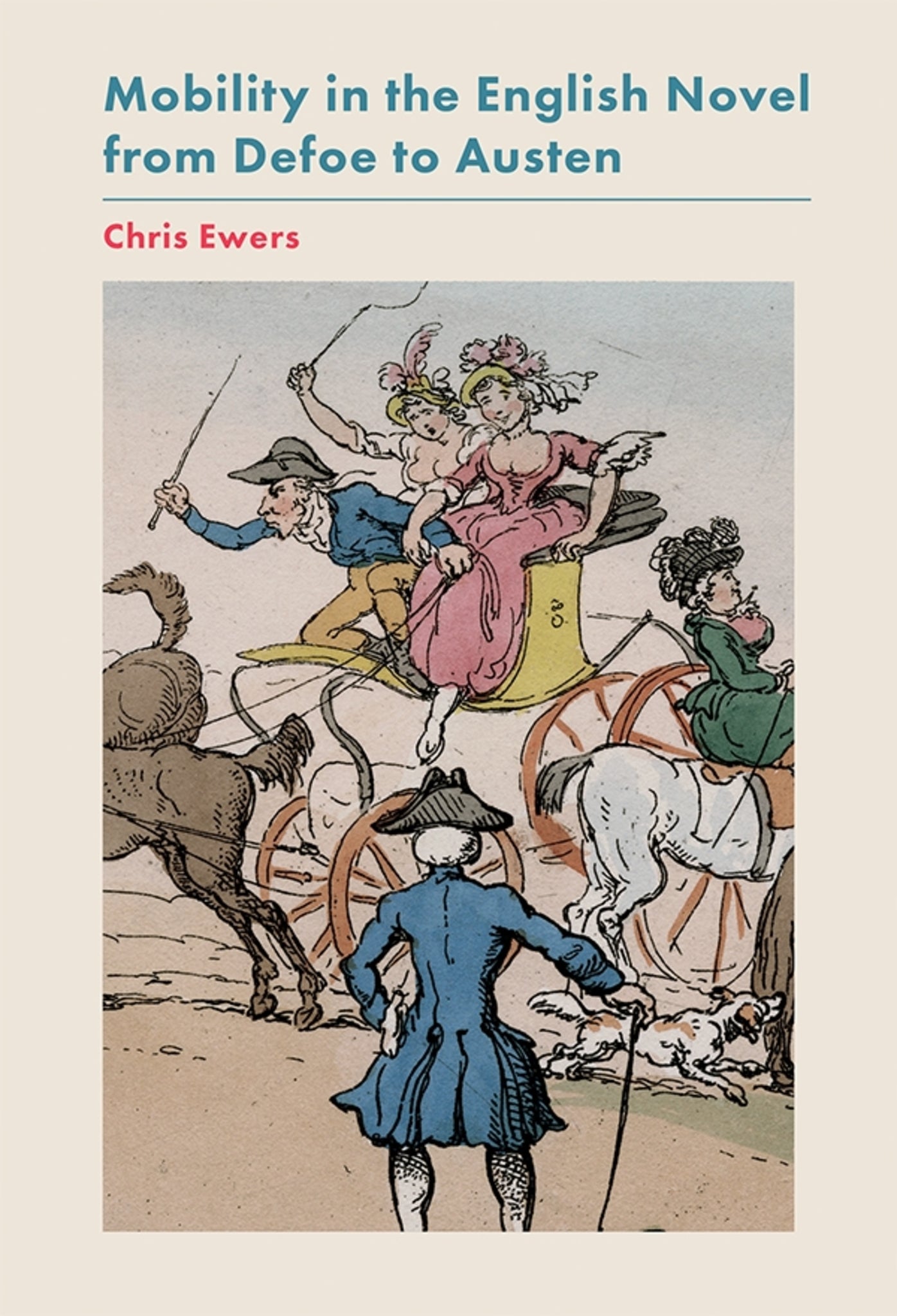
A lively exploration of the relation between the arrival of the novel, the literary form that uses life-as-a-journey as its master trope, and the transport revolution in eighteenth-century Britain.
In 1700 the fastest coach from London to Manchester took five days. By 1790 the development of the turnpike road system across England had reduced this figure to twenty-seven hours, and both the landscape and the ways in which people experienced it had been radically transformed.
This revolution in transport came at the same time as the emergence of the novel as a dominant literary form in Britain. In this highly original reading of some of themajor novelists of the long eighteenth century - Defoe, Fielding, Smollett, Sterne and Austen - Chris Ewers shows how these two developments interacted. He argues that this reconfiguration of local geography and the new experience of moving through space at speed had a profound effect upon the narrative and form of the novel, leaving its mark on genre, prose technique, the depiction of class and gender relations and the way texts are structured. It is noaccident, he concludes, that the arrival of the novel, the literary form that uses life-as-a-journey as a master trope, is roughly co-terminous with the revolution of internal transport in Britain.
CHRIS EWERS is a lecturer in Eighteenth Century Literature at the University of Exeter
In 1700 the fastest coach from London to Manchester took five days. By 1790 the development of the turnpike road system across England had reduced this figure to twenty-seven hours, and both the landscape and the ways in which people experienced it had been radically transformed.
This revolution in transport came at the same time as the emergence of the novel as a dominant literary form in Britain. In this highly original reading of some of themajor novelists of the long eighteenth century - Defoe, Fielding, Smollett, Sterne and Austen - Chris Ewers shows how these two developments interacted. He argues that this reconfiguration of local geography and the new experience of moving through space at speed had a profound effect upon the narrative and form of the novel, leaving its mark on genre, prose technique, the depiction of class and gender relations and the way texts are structured. It is noaccident, he concludes, that the arrival of the novel, the literary form that uses life-as-a-journey as a master trope, is roughly co-terminous with the revolution of internal transport in Britain.
CHRIS EWERS is a lecturer in Eighteenth Century Literature at the University of Exeter

Price: $120.00
Pages: 234
Publisher: Boydell & Brewer Inc.
Imprint: Boydell Press
Publication Date:
20 April 2018
Trim Size: 9.21 X 6.14 in
ISBN: 9781783272969
Format: Hardcover
BISACs:
HISTORY / Modern / 18th Century, General and world history, LITERARY CRITICISM / European / English, Irish, Scottish, Welsh, Literature: history and criticism

This book does much to unearth the imprint left by transit systems on the writing of the long eighteenth century, and is elegant in its execution. How novelists responded to the emerging mobilities of their decade, and the corresponding modes of movement of their characters, is at last given the attention it has been waiting for.
Fresh vistas are here to discover in this busy, enthusiastic book.
Fills an important gap itself by demonstrating how 'the extended prose narratives of the 1700s mirror the extended range of spatial experience that accompanied the transport revolution' (p. 190).
Mobility in the English Novel provides a compelling complement to recent studies of global mobility . . . demonstrating, through its series of sensitive, imaginative arguments, the literary origins of the modern freedom of movement that many people are missing acutely right now, and some have never really had.
Fresh vistas are here to discover in this busy, enthusiastic book.
Fills an important gap itself by demonstrating how 'the extended prose narratives of the 1700s mirror the extended range of spatial experience that accompanied the transport revolution' (p. 190).
Mobility in the English Novel provides a compelling complement to recent studies of global mobility . . . demonstrating, through its series of sensitive, imaginative arguments, the literary origins of the modern freedom of movement that many people are missing acutely right now, and some have never really had.
Introduction: Mobility and the eighteenth-century novel
Travelling by sea and land in Robinson Crusoe
Tom Jones and the epic of mobility
Smollett and the changing landscape of the ramble
Sterne and the invention of speed
Crash: Sentimental journeys and alternative mobilities
Northanger Abbey and the Austen's 'wandering story'
Conclusion
Bibliography
Travelling by sea and land in Robinson Crusoe
Tom Jones and the epic of mobility
Smollett and the changing landscape of the ramble
Sterne and the invention of speed
Crash: Sentimental journeys and alternative mobilities
Northanger Abbey and the Austen's 'wandering story'
Conclusion
Bibliography