


Some error occured while loading the Quick View. Please close the Quick View and try reloading the page.
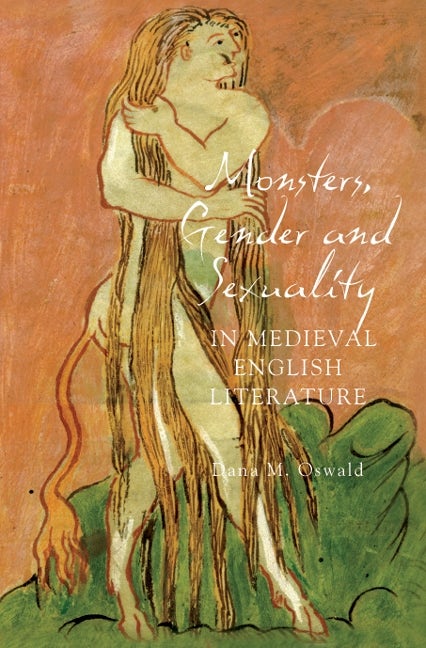
A gendered reading of monster and the monstrous body in medieval literature.
Monsters abound in Old and Middle English literature, from Grendel and his mother in Beowulf to those found in medieval romances such as Sir Gowther. Through a close examination of the way in which their bodies are sexed and gendered, and drawing from postmodern theories of gender, identity, and subjectivity, this book interrogates medieval notions of the body and the boundaries of human identity. Case studies of Wonders of the East, Beowulf, Mandeville's Travels, the Alliterative Morte Arthure, and Sir Gowther reveal a shift in attitudes toward the gendered and sexed body, and thus toward identity, between the two periods: while Old English authors and artists respond to the threat of the gendered, monstrous form by erasing it, Middle English writers allow transgressive and monstrous bodies to transform and therefore integrate into society. This metamorphosis enables redemption for some monsters, while other monstrous bodies become dangerously flexible and invisible, threatening the communities they infiltrate. These changing cultural reactions to monstrous bodies demonstrate the precarious relationship between body and identity in medieval literature.
DANA M. OSWALD is Assistant Professor of English, University of Wisconsin-Parkside.
Monsters abound in Old and Middle English literature, from Grendel and his mother in Beowulf to those found in medieval romances such as Sir Gowther. Through a close examination of the way in which their bodies are sexed and gendered, and drawing from postmodern theories of gender, identity, and subjectivity, this book interrogates medieval notions of the body and the boundaries of human identity. Case studies of Wonders of the East, Beowulf, Mandeville's Travels, the Alliterative Morte Arthure, and Sir Gowther reveal a shift in attitudes toward the gendered and sexed body, and thus toward identity, between the two periods: while Old English authors and artists respond to the threat of the gendered, monstrous form by erasing it, Middle English writers allow transgressive and monstrous bodies to transform and therefore integrate into society. This metamorphosis enables redemption for some monsters, while other monstrous bodies become dangerously flexible and invisible, threatening the communities they infiltrate. These changing cultural reactions to monstrous bodies demonstrate the precarious relationship between body and identity in medieval literature.
DANA M. OSWALD is Assistant Professor of English, University of Wisconsin-Parkside.

Price: $120.00
Pages: 236
Publisher: Boydell & Brewer Inc.
Imprint: D.S.Brewer
Publication Date:
16 September 2010
Trim Size: 9.21 X 6.14 in
ISBN: 9781843842323
Format: Hardcover
BISACs:
LITERARY CRITICISM / Medieval, Literary studies: ancient, classical and medieval

Monsters, Gender, and Sexuality in Medieval English Literature offers a compelling long view of the monstrous medieval body, and Oswald's novel readings of lesser-known monsters [...] are fresh and exhilarating. [...] I hope that she and other modern teratologists will return to further trace the intriguing ideas outlined in this fine first foray.
Introduction: Sex and the Single Monster
The Indecent Bodies of the Wonders of the East
Dismemberment as Erasure: the Monstrous Body in Beowulf
Circulation and Transformation: The Monstrous Feminine in Mandeville's Travels
Paternity and Monstrosity in the Alliterative Morte Arthure and Sir Gowther
Conclusion: Transformation and the Trace of the Monstrous
Bibliography
The Indecent Bodies of the Wonders of the East
Dismemberment as Erasure: the Monstrous Body in Beowulf
Circulation and Transformation: The Monstrous Feminine in Mandeville's Travels
Paternity and Monstrosity in the Alliterative Morte Arthure and Sir Gowther
Conclusion: Transformation and the Trace of the Monstrous
Bibliography