


Some error occured while loading the Quick View. Please close the Quick View and try reloading the page.
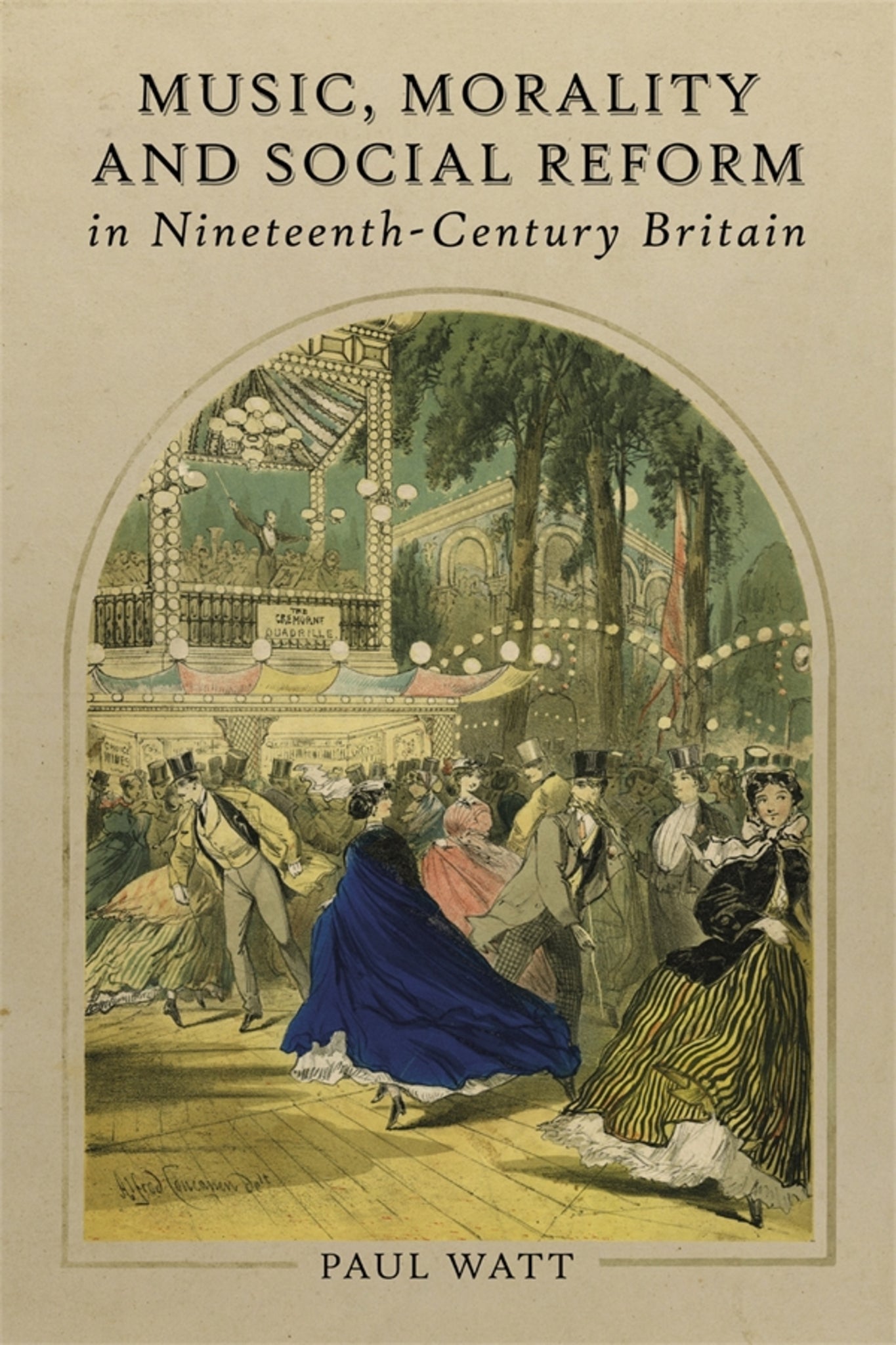
A pioneering work which delves into and reveals the links between music, moral instruction and social reform.
This book discusses the role of music in programmes of personal improvement and social reform in nineteenth-century Britain. The pursuit of morality through music was designed not just to improve personal and communal character but to affect social change and transformation. The book examines the musical education of children, women and men through a variety of literature published for various educational settings including mechanics' institutes. It also considers the role of music in narratives of social programs and community-building projects that sought to promote utility, well-being and freedom from the strictures of Christianity as the dominant moral and cultural force.
The first book to connect the threads between music, moral instruction and social reform across the educational life cycle in nineteenth-century Britain, it shows how these threads are found in unlikely places, such as games, manners books, economics treatises and short stories. It deftly illustrates the links between everyday life, popular culture and discourses of morality and social reform of the period.
This book discusses the role of music in programmes of personal improvement and social reform in nineteenth-century Britain. The pursuit of morality through music was designed not just to improve personal and communal character but to affect social change and transformation. The book examines the musical education of children, women and men through a variety of literature published for various educational settings including mechanics' institutes. It also considers the role of music in narratives of social programs and community-building projects that sought to promote utility, well-being and freedom from the strictures of Christianity as the dominant moral and cultural force.
The first book to connect the threads between music, moral instruction and social reform across the educational life cycle in nineteenth-century Britain, it shows how these threads are found in unlikely places, such as games, manners books, economics treatises and short stories. It deftly illustrates the links between everyday life, popular culture and discourses of morality and social reform of the period.

Price: $120.00
Pages: 228
Publisher: Boydell & Brewer Inc.
Imprint: Boydell Press
Publication Date:
21 November 2023
Trim Size: 9.21 X 6.14 in
ISBN: 9781837650811
Format: Hardcover
BISACs:
MUSIC / History & Criticism, History of music, MUSIC / Genres & Styles / Classical, EDUCATION / History, Music reviews and criticism, Art music, orchestral and formal music

Music, Morality and Social Reform in Nineteenth-Century Britain is beautifully put together ... Throughout, the readable, lucid, and enjoyable writing style is a testimony to Watt's evident fascination with his subject and close engagement with his sources and characters. ... Watt engages closely with the ideas and problems of his subject matter while writing in a manner accessible to scholars without subject expertise. The overall result is a valuable addition to the literature that forms an essential contribution to our understanding of music, social, and cultural history.
— JOURNAL OF BRITISH STUDIES
A rich and practical collection of well-organised sources that shed light on music's role in expressions of morality, both in private and public spheres. Watt is a careful guide, situating his work among the wealth of literature on cultural and social expressions of morality. [The book] succeeds in presenting an original, sensitive, and nuanced elucidation of the complex relationships between music and ideas of morality, and how they functioned as part of a broader sweep of nineteenth-century social development.
— CONTEXT: JOURNAL OF MUSIC RESEARCH
It is especially in Watt's range of genres and topics that this book excels: everything from educational treatises, etiquette books, hymns, and books on political economy, by men and women, and for/by various classes. Watt's book is recommended for both the scholar and the student who wishes to understand the ideological impetus for enriched morality in British society-personally and collectively-and ways that music and other activities played a part.
— VICTORIAN STUDIES
Music, Morality and Social Reform in Nineteenth-Century Britain serves as an excellent first book devoted to this topic; it fills an important gap in musical scholarship. ... Watt's prose is engaging and a pleasure to read ... Watt's outstanding research - including both primary materials and mastery of secondary literature - is evident in both the chapters and the thorough and useful bibliography.
— NINETEENTH-CENTURY MUSIC REVIEW
Overall, this is a very welcome and engaging study and there is a great deal to take forward from Watt's work, both from an academic research perspective and with respect to our enhanced understanding of the role of music in society.
— THE CONSORT
The book contains much of value. Watt covers a wide range of subjects. His findings are considered and balanced, with constant emphasis on the ways gender and place led to a multiplicity of approaches to moral and social reform, even within similar publications or institutions. Seeking musical pastures new, he has deepened our knowledge of the component parts he studies and, in that sense, our wider understanding of music and morality in Victorian Britain.
— MUSIC & LETTERS
This is a study which addresses an existing, indeed, familiar notion-that music-making in nineteenth-century Britain was frequently celebrated and deployed for its moralising or reforming qualities-yet which flips the perspective from a musicological focus to a sociological one. While music is the cornerstone of Watt's study, it is placed proportionately against other key themes, anxieties, and ideologies prevalent during the period. ... [It is an] interesting and clearly written piece, which approaches an existing idea from a fresh perspective.
— SCOTTISH HISTORICAL REVIEW
— JOURNAL OF BRITISH STUDIES
A rich and practical collection of well-organised sources that shed light on music's role in expressions of morality, both in private and public spheres. Watt is a careful guide, situating his work among the wealth of literature on cultural and social expressions of morality. [The book] succeeds in presenting an original, sensitive, and nuanced elucidation of the complex relationships between music and ideas of morality, and how they functioned as part of a broader sweep of nineteenth-century social development.
— CONTEXT: JOURNAL OF MUSIC RESEARCH
It is especially in Watt's range of genres and topics that this book excels: everything from educational treatises, etiquette books, hymns, and books on political economy, by men and women, and for/by various classes. Watt's book is recommended for both the scholar and the student who wishes to understand the ideological impetus for enriched morality in British society-personally and collectively-and ways that music and other activities played a part.
— VICTORIAN STUDIES
Music, Morality and Social Reform in Nineteenth-Century Britain serves as an excellent first book devoted to this topic; it fills an important gap in musical scholarship. ... Watt's prose is engaging and a pleasure to read ... Watt's outstanding research - including both primary materials and mastery of secondary literature - is evident in both the chapters and the thorough and useful bibliography.
— NINETEENTH-CENTURY MUSIC REVIEW
Overall, this is a very welcome and engaging study and there is a great deal to take forward from Watt's work, both from an academic research perspective and with respect to our enhanced understanding of the role of music in society.
— THE CONSORT
The book contains much of value. Watt covers a wide range of subjects. His findings are considered and balanced, with constant emphasis on the ways gender and place led to a multiplicity of approaches to moral and social reform, even within similar publications or institutions. Seeking musical pastures new, he has deepened our knowledge of the component parts he studies and, in that sense, our wider understanding of music and morality in Victorian Britain.
— MUSIC & LETTERS
This is a study which addresses an existing, indeed, familiar notion-that music-making in nineteenth-century Britain was frequently celebrated and deployed for its moralising or reforming qualities-yet which flips the perspective from a musicological focus to a sociological one. While music is the cornerstone of Watt's study, it is placed proportionately against other key themes, anxieties, and ideologies prevalent during the period. ... [It is an] interesting and clearly written piece, which approaches an existing idea from a fresh perspective.
— SCOTTISH HISTORICAL REVIEW
List of Illustrations
Acknowledgements
Introduction
Part 1 Morality
1. Elementary Instruction
2. Manners and Etiquette
3. Mechanics' Institutes
Part 2 Social Reform
4. Political Economy - William Stanley Jevons
5. Philanthropy - Hannah More and Octavia Hill
6. Utopia - Auguste Comte and Malcolm Quin
Afterword
Bibliography
Index
Acknowledgements
Introduction
Part 1 Morality
1. Elementary Instruction
2. Manners and Etiquette
3. Mechanics' Institutes
Part 2 Social Reform
4. Political Economy - William Stanley Jevons
5. Philanthropy - Hannah More and Octavia Hill
6. Utopia - Auguste Comte and Malcolm Quin
Afterword
Bibliography
Index