


Some error occured while loading the Quick View. Please close the Quick View and try reloading the page.
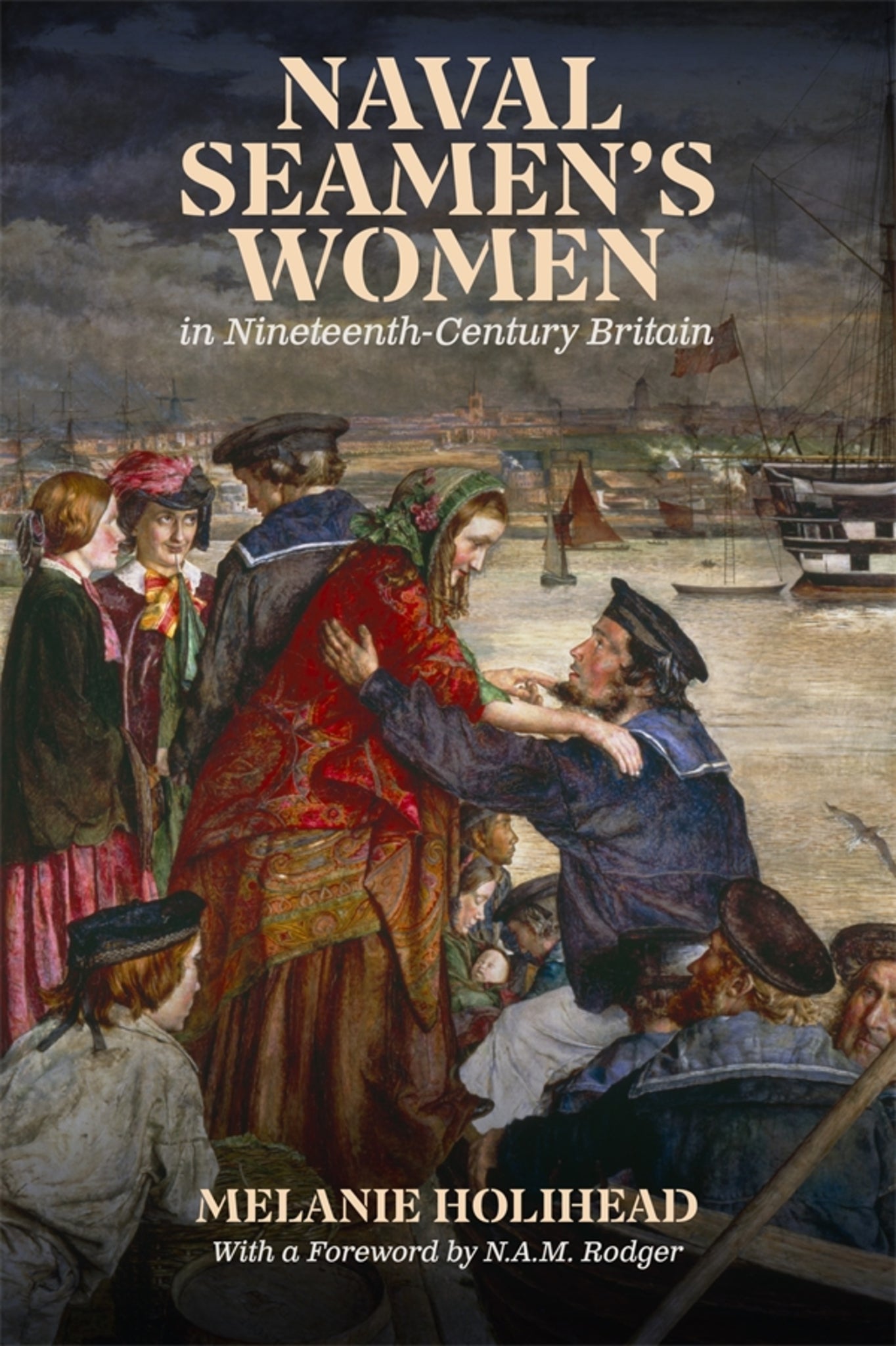
Explores the lived experiences of the women of lower deck seamen in the nineteenth century British navy.
HIGHLY COMMENDED: 2025 Anderson Medal (Society for Nautical Research)
COMMENDED: 2023/4 Women's History Network Prize
This book explores the lived experiences of the women - the mothers, sisters, foster-mothers of motherless children, but above all the wives - of lower deck seamen in the nineteenth century British navy. It makes extensive use of the "allotment" scheme, a system which enabled men to convey portions of their pay to dependants at home. The scheme had been devised by a Royal Navy worried by the adverse effect on naval manpower caused by experienced and mature sailors quitting the service in order to support loved ones suffering poverty on shore.
Drawing also on civil, parish and local data, the book reveals hitherto unknown differences between naval and civilian patterns of nuptiality, family life, occupation and household structure. It illustrates the impact of naval breadwinners' long-term absence in analyses of local migration, mutual support networks, and clusterings of "same ship" families, and to bring the picture to life it includes microhistories and stories of individual women.
The book concludes that while the sailor's woman's "allotted place" in the popular imagination shifted with changing perceptions of sailors' reputation and standing, a constant "otherness" attached to women who chose marriage to long-absent men, and a life of necessary self-reliance.
HIGHLY COMMENDED: 2025 Anderson Medal (Society for Nautical Research)
COMMENDED: 2023/4 Women's History Network Prize
This book explores the lived experiences of the women - the mothers, sisters, foster-mothers of motherless children, but above all the wives - of lower deck seamen in the nineteenth century British navy. It makes extensive use of the "allotment" scheme, a system which enabled men to convey portions of their pay to dependants at home. The scheme had been devised by a Royal Navy worried by the adverse effect on naval manpower caused by experienced and mature sailors quitting the service in order to support loved ones suffering poverty on shore.
Drawing also on civil, parish and local data, the book reveals hitherto unknown differences between naval and civilian patterns of nuptiality, family life, occupation and household structure. It illustrates the impact of naval breadwinners' long-term absence in analyses of local migration, mutual support networks, and clusterings of "same ship" families, and to bring the picture to life it includes microhistories and stories of individual women.
The book concludes that while the sailor's woman's "allotted place" in the popular imagination shifted with changing perceptions of sailors' reputation and standing, a constant "otherness" attached to women who chose marriage to long-absent men, and a life of necessary self-reliance.

Price: $170.00
Pages: 372
Publisher: Boydell & Brewer Inc.
Imprint: Boydell Press
Publication Date:
19 November 2024
Trim Size: 9.21 X 6.14 in
ISBN: 9781837650118
Format: Hardcover
BISACs:
HISTORY / Military / Naval, HISTORY / Europe / Great Britain / General, HISTORY / Modern / 19th Century

Holihead's enthusiasm for her subject is evident on every page. She captures forgotten voices and offers engaging 'microhistories' of individual women and their households. She also shows that these resourceful wives and other female dependants of lower-deck seamen made a remarkable contribution to their community and deserve their place in history. In sum, this is a sensitive, scholarly work that can claim to be foundational. It will be required reading for anyone interested in the Navy of the period.
— INTERNATIONAL JOURNAL OF MARITIME HISTORY
'This is a splendid study of a much-neglected subject. The women whose lives were tied to naval seamen have largely been studied impressionistically through contemporary media representations. Melanie Holihead has used data from the Navy's pay allotment registers, census, local and personal records to give more balance, shape and colour to our understanding of the lives of these women in Portsmouth around the mid-century. The result is a rich picture of the wide variety of life histories, prospects and daily tribulations that will be welcome to social and cultural historians as well as those who want a fuller understanding of daily life in a naval environment.
— JUDGES OF THE SOCIETY FOR NAUTICAL RESEARCH ANDERSON MEDAL
— INTERNATIONAL JOURNAL OF MARITIME HISTORY
'This is a splendid study of a much-neglected subject. The women whose lives were tied to naval seamen have largely been studied impressionistically through contemporary media representations. Melanie Holihead has used data from the Navy's pay allotment registers, census, local and personal records to give more balance, shape and colour to our understanding of the lives of these women in Portsmouth around the mid-century. The result is a rich picture of the wide variety of life histories, prospects and daily tribulations that will be welcome to social and cultural historians as well as those who want a fuller understanding of daily life in a naval environment.
— JUDGES OF THE SOCIETY FOR NAUTICAL RESEARCH ANDERSON MEDAL
Melanie Holihead, winner of the Institute of Historical Research's Sir Julian Corbett Prize in Modern Naval History 2012, and the 2018-19 Doctoral Prize awarded by the British Commission for Maritime History, completed her doctorate at the University of Oxford
List of Illustrations
Foreword by N.A.M. Rodger
Preface
Acknowledgements
Introduction
1. The Naval Context
2. Naval Women
3. Place and Birthplace
4. Marriage
5. Children
6. Household Structure
7. Home Environment
8. Work
9. Making Ends Meet
10. Parish Relief and Prostitution
11. Crime
12. Marital Violence
13. Marital Complexities
14. farewell, Returns, and Between
15. Death
Conclusion
Bibliography
Foreword by N.A.M. Rodger
Preface
Acknowledgements
Introduction
1. The Naval Context
2. Naval Women
3. Place and Birthplace
4. Marriage
5. Children
6. Household Structure
7. Home Environment
8. Work
9. Making Ends Meet
10. Parish Relief and Prostitution
11. Crime
12. Marital Violence
13. Marital Complexities
14. farewell, Returns, and Between
15. Death
Conclusion
Bibliography