


Some error occured while loading the Quick View. Please close the Quick View and try reloading the page.
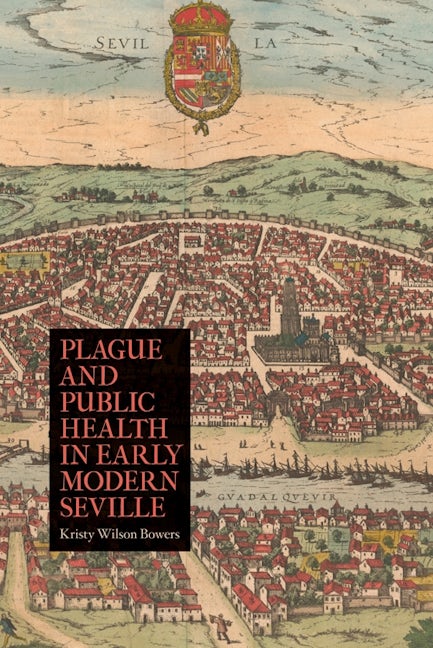
This study of sixteenth-century Seville offers a new perspective on how early modern cities adapted to living with repeated epidemics of plague.
Plague and Public Health in Early Modern Seville offers a reassessment of the impact of plague in the early modern era, presenting sixteenth-century Seville as a case study of how municipal officials and residents worked together to create a public health response that protected both individual and communal interests. Similar studies of plague during this period either dramatize the tragic consequences of the epidemic or concentrate on the tough "modern" public health interventions, such as quarantine, surveillance and isolation, and the laxness or strictness of their enforcement. Arguing for a redefinition of "public health" in the early modern era, this study chronicles amore restrained, humane, and balanced response to outbreaks in 1582 and 1599-1600 Seville, showing that city officials aimed to protect the population but also maintain trade and commerce in order to prevent economic disruption.
Based on extensive primary sources held in the municipal archive of Seville, the work argues that a careful reading of the records shows a critical difference between how plague regulations were written and how they were enforced, a difference that reflects an unacknowledged process of negotiation aimed at preserving balance within the community. The book makes important contributions to the study of early modern city governance and to the historiography of epidemics more broadly.
Kristy Wilson Bowers received her PhD from Indiana University and teaches in the History Department at Northern Illinois University.
Plague and Public Health in Early Modern Seville offers a reassessment of the impact of plague in the early modern era, presenting sixteenth-century Seville as a case study of how municipal officials and residents worked together to create a public health response that protected both individual and communal interests. Similar studies of plague during this period either dramatize the tragic consequences of the epidemic or concentrate on the tough "modern" public health interventions, such as quarantine, surveillance and isolation, and the laxness or strictness of their enforcement. Arguing for a redefinition of "public health" in the early modern era, this study chronicles amore restrained, humane, and balanced response to outbreaks in 1582 and 1599-1600 Seville, showing that city officials aimed to protect the population but also maintain trade and commerce in order to prevent economic disruption.
Based on extensive primary sources held in the municipal archive of Seville, the work argues that a careful reading of the records shows a critical difference between how plague regulations were written and how they were enforced, a difference that reflects an unacknowledged process of negotiation aimed at preserving balance within the community. The book makes important contributions to the study of early modern city governance and to the historiography of epidemics more broadly.
Kristy Wilson Bowers received her PhD from Indiana University and teaches in the History Department at Northern Illinois University.

Price: $120.00
Pages: 152
Publisher: Boydell & Brewer Inc.
Imprint: University of Rochester Press
Publication Date:
15 September 2013
Trim Size: 9.00 X 6.00 in
ISBN: 9781580464512
Format: Hardcover
BISACs:
MEDICAL / History, History of medicine, MEDICAL / Public Health, HISTORY / Europe / Spain, Public health and preventive medicine

An insightful examination [and] an eloquent account of the difficulties of legislating and enforcing public health regulations on epidemic disease in the sixteenth and seventeenth centuries.
Introduction
Early Modern Seville: Balancing Growth and Governance
Perceptions of Plague: Balancing Disease Concepts
Negotiating Public Health: Balancing the Individual and the Community
The Wider Politics of Public Health: Balancing Urban and Rural
City and Crown: Balancing Authorities
Conclusion
Notes
Bibliography
Index
Early Modern Seville: Balancing Growth and Governance
Perceptions of Plague: Balancing Disease Concepts
Negotiating Public Health: Balancing the Individual and the Community
The Wider Politics of Public Health: Balancing Urban and Rural
City and Crown: Balancing Authorities
Conclusion
Notes
Bibliography
Index