


Some error occured while loading the Quick View. Please close the Quick View and try reloading the page.
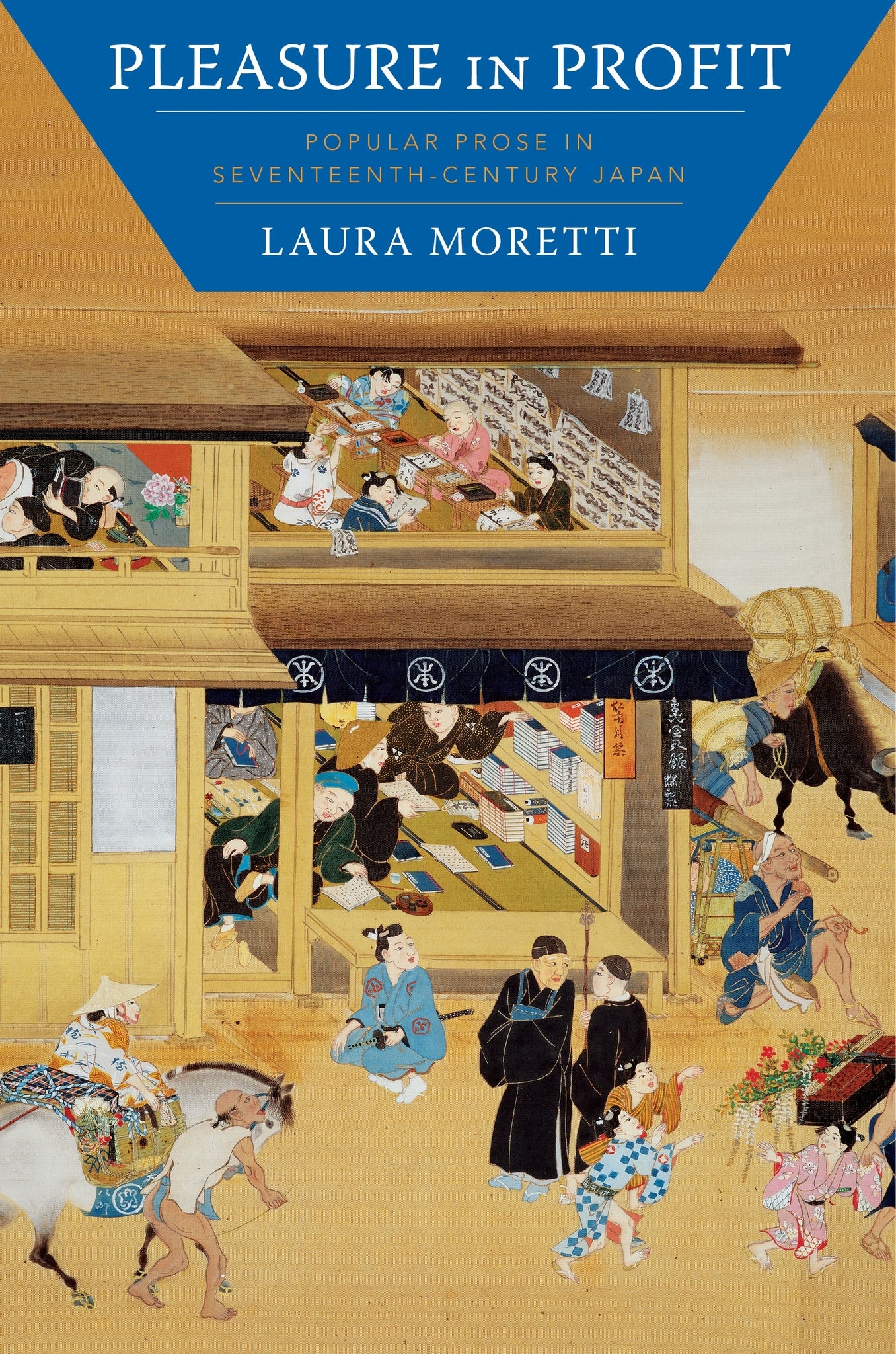
In the seventeenth century, Japanese popular prose flourished as waves of newly literate readers gained access to the printed word. Commercial publishers released vast numbers of titles in response to readers’ hunger for books that promised them potent knowledge. However, traditional literary histories of this period position the writings of Ihara Saikaku at center stage, largely neglecting the breadth of popular prose.
In the first comprehensive study of the birth of Japanese commercial publishing, Laura Moretti investigates the vibrant world of vernacular popular literature. She marshals new data on the magnitude of the seventeenth-century publishing business and highlights the diversity and porosity of its publishing genres. Moretti explores how booksellers sparked interest among readers across the spectrum of literacies and demonstrates how they tantalized consumers with vital ethical, religious, societal, and interpersonal knowledge. She recasts books as tools for knowledge making, arguing that popular prose engaged its audience cognitively as well as aesthetically and emotionally to satisfy a burgeoning curiosity about the world. Crucially, Moretti shows, readers experienced entertainment within the didactic, finding pleasure in the profit gained from acquiring knowledge by interacting with transformative literature. Drawing on a rich variety of archival materials to present a vivid portrait of seventeenth-century Japanese publishing, Pleasure in Profit also speaks to broader conversations about the category of the literary by offering a new view of popular prose that celebrates plurality.


In this exemplary study, Laura Moretti challenges the conventional wisdom in her choice of texts (outside the literary canon), in her treatment of genres (as ‘porous’), and in her approach (comparative). Her book should appeal to students of comparative literature as well as to specialists on Japan.
— Peter Burke, author of Popular Culture in Early Modern Europe
The world of popular literature is often dismissed by scholarship, but it is precisely within the mundane that we are able to catch a glimpse of the authentic. Only by taking didactic prose seriously can we discover how the intellectual elite’s ideas percolate down and influence the everyman. Moretti has put the study of early modern Japanese literature on an entirely new footing.
— Richard Bowring, author of In Search of the Way: Thought and Religion in Early-Modern Japan
Laura Moretti is an intensely learned guide through a forest of underappreciated popular prose books. She shows how didactic texts shaped the lives and fantasies of Japanese across class lines during the early decades of print, forever changing our view of publishers, audiences, and their multiple literacies.
— Linda Chance, author of Ōoku: The Secret World of the Shogun's Women
Drawing on sources from etiquette manuals to literary works—and, tellingly, books that are both at once—Pleasure in Profit offers a nuanced portrait of popular publishing in seventeenth-century Japan, highlighting simultaneously its particularity and its echoes of European contexts. I can’t imagine a more lucid, approachable, and grounded treatment of the topic.
— Michael Emmerich, author of The Tale of Genji: Translation, Canonization, and World Literature
Pleasure in Profit is refreshingly ambitious in its framing, and Moretti skillfully treads the fine line between a meticulous academic work, and a book that can hold appeal to a wider audience. Among the detailed analysis there is for the modern reader—like the 17th-century Edo conduct-book reader—an opportunity for escapism: Moretti’s work transports a reader elsewhere and allows them, even briefly, to glimpse the world through another’s eyes.
Moretti dismantles the age-old, simplistic contrast between what is entertaining or aesthetic versus what is instructive or didactic when she concludes that books that were issued for monetary gain provided their readers with the pleasures of other kinds of profit, such as the self-confidence and even joy that can come from learning new and useful things. This book is impressive in both scope and sophistication. Highly recommended.
What Moretti has given us is a magnificent guidebook through the maze of popular publications of the 17th century . . . Pleasure in Profit is a major work that not only successfully challenges traditional scholarship on this period but also offers both new information and new approaches to understanding early modern Japanese culture.
Highly sophisticated, thoroughly researched, and extremely well written . . . Moretti’s work pushes the boundaries of the early modern literary canon and challenges us to expand our notions of what it means to study and teach Japanese literature.
Pleasure in Profit is a must-read for students of Japanese literature and of great relevance to specialists in early modern Japanese history and religion.
This story compels us to reconsider what we know about the first century of popular literature in Japan and how we define literature in general. Much anticipated, Pleasure in Profit is poised to shake things up and inspire new directions for research on Edo-period literature and beyond.
[Moretti] has given us (to risk a pun) a totally novel reassessment of early Edo prose. And, it must be added, with numerous, sometimes quite long and always beautiful translated episodes, the modern reader does not just learn history better but can find pleasure and profit in these forgotten books, just as someone in the seventeenth century did.
Acknowledgments
Note to Readers
Introduction: Reclaiming the Great Unread
1. The Culture of the Written Word
2. The Publishing Business
3. Negotiating the Way
4. Civility Matters
5. Say It in a Skillful Letter
6. A Commitment to the Present
7. The Triumph of Plurality
Epilogue: Wayfinding
Notes
Bibliography
Index