


Some error occured while loading the Quick View. Please close the Quick View and try reloading the page.
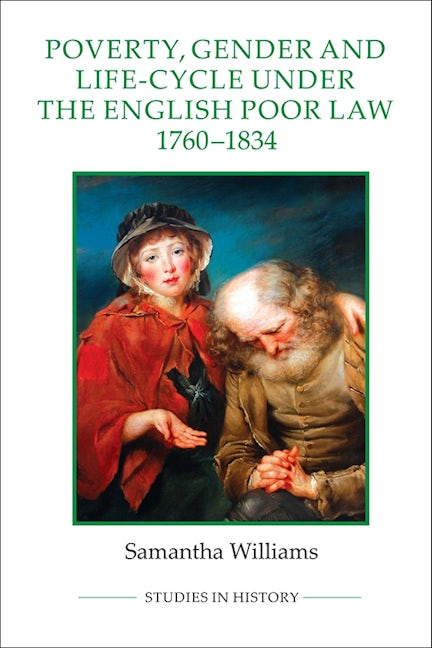
Examination of welfare during the last years of the Poor Law, bringing out the impact of poverty on particular sections of society - the lone mother and the elderly.
Social welfare, increasingly extensive during the seventeenth and eighteenth centuries, was by the first third of the nineteenth under considerable, and growing, pressure, during a "crisis" period when levels of poverty soared. This book examines the poor and their families during these final decades of the old Poor Law. It takes as a case study the lived experience of poor families in two Bedfordshire communities, Campton and Shefford, and contrasts it with the perspectives of other participants in parish politics, from the magistracy to the vestry, and from overseers to village ratepayers. It explores the problem of rising unemployment, the provision of parish make-work schemes,charitable provision and the wider makeshift economy, together with the attitudes of the ratepayers. That gender and life-cycle were crucial features of poverty is demonstrated: the lone mother and her dependent children and the elderly dominated the relief rolls. Poor relief might have been relatively generous but it was not pervasive - child allowances, in particular, were restricted in duration and value - and it by no means approximated to the income of other labouring families. Poor families must either have had access to additional resources, or led meagre lives.
Samantha Williams is a university lecturer in local and regional history at the Institute of ContinuingEducation, Cambridge, and a Bye-Fellow in History, Girton College, Cambridge.
Social welfare, increasingly extensive during the seventeenth and eighteenth centuries, was by the first third of the nineteenth under considerable, and growing, pressure, during a "crisis" period when levels of poverty soared. This book examines the poor and their families during these final decades of the old Poor Law. It takes as a case study the lived experience of poor families in two Bedfordshire communities, Campton and Shefford, and contrasts it with the perspectives of other participants in parish politics, from the magistracy to the vestry, and from overseers to village ratepayers. It explores the problem of rising unemployment, the provision of parish make-work schemes,charitable provision and the wider makeshift economy, together with the attitudes of the ratepayers. That gender and life-cycle were crucial features of poverty is demonstrated: the lone mother and her dependent children and the elderly dominated the relief rolls. Poor relief might have been relatively generous but it was not pervasive - child allowances, in particular, were restricted in duration and value - and it by no means approximated to the income of other labouring families. Poor families must either have had access to additional resources, or led meagre lives.
Samantha Williams is a university lecturer in local and regional history at the Institute of ContinuingEducation, Cambridge, and a Bye-Fellow in History, Girton College, Cambridge.

Price: $29.99
Pages: 208
Publisher: Boydell & Brewer Inc.
Imprint: Boydell Press
Series: Royal Historical Society Studies in History New Series
Publication Date:
19 September 2013
Trim Size: 9.21 X 6.14 in
ISBN: 9781843838661
Format: Paperback
BISACs:
HISTORY / Modern / 18th Century, HISTORY / Modern / 19th Century, HISTORY / Europe / Great Britain / General, General and world history

An important work for historians of poverty and poor relief, particularly for those interested in the lives of the poor.
People, place and poverty
Policy and paupers
Paying for poverty
Gender, life-cycle and the life-course
Work, unemployment and the makeshift economy
Policy and paupers
Paying for poverty
Gender, life-cycle and the life-course
Work, unemployment and the makeshift economy