


Some error occured while loading the Quick View. Please close the Quick View and try reloading the page.
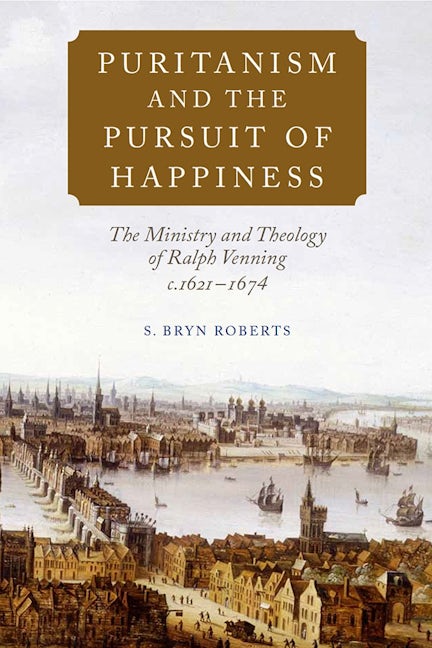
Reveals a much neglected strand of puritan theology which emphasised the importance of inner happiness and personal piety.
The traditional view of puritans is that they were killjoys - serious, austere, gloomy people who closed theatres and abolished Christmas. This book, based on extensive original research, presents a different view. Focusing on both the writings of the leading Independent divine, Ralph Venning, and also on his pastoral work in the 1640s and 1650s when he was successively chaplain to the Tower of London and vicar of St Olave's, Southwark, the book revealsa much neglected strand of puritan theology. This emphasised the importance of inner happiness and the development of a personal piety which, the author argues, was similar in its nature to medieval mysticism, not that differentfrom the piety promoted by earlier metaphysical preachers, and not at all driven by the predestinarian ideas usually associated with puritans, ideas liable to induce a sense of helplessness and despair. In addition, the book reassesses the role of Emmanuel College, Cambridge, where Venning was educated, in shaping puritan thought, discusses Max Weber's ideas about puritanism and capitalism especially in relation to recreation and leisure activities, and demonstrates that Venning's strand of puritanism favoured toleration, moderation and church unity to a much greater degree than is usually associated with puritans.
Stephen Bryn Roberts was awarded his doctorate from theUniversity of Aberdeen and has been Adjunct Lecturer in Early Modern Church History at International Christian College, Glasgow since 2011.
The traditional view of puritans is that they were killjoys - serious, austere, gloomy people who closed theatres and abolished Christmas. This book, based on extensive original research, presents a different view. Focusing on both the writings of the leading Independent divine, Ralph Venning, and also on his pastoral work in the 1640s and 1650s when he was successively chaplain to the Tower of London and vicar of St Olave's, Southwark, the book revealsa much neglected strand of puritan theology. This emphasised the importance of inner happiness and the development of a personal piety which, the author argues, was similar in its nature to medieval mysticism, not that differentfrom the piety promoted by earlier metaphysical preachers, and not at all driven by the predestinarian ideas usually associated with puritans, ideas liable to induce a sense of helplessness and despair. In addition, the book reassesses the role of Emmanuel College, Cambridge, where Venning was educated, in shaping puritan thought, discusses Max Weber's ideas about puritanism and capitalism especially in relation to recreation and leisure activities, and demonstrates that Venning's strand of puritanism favoured toleration, moderation and church unity to a much greater degree than is usually associated with puritans.
Stephen Bryn Roberts was awarded his doctorate from theUniversity of Aberdeen and has been Adjunct Lecturer in Early Modern Church History at International Christian College, Glasgow since 2011.

Price: $120.00
Pages: 232
Publisher: Boydell & Brewer Inc.
Imprint: Boydell Press
Publication Date:
15 March 2015
Trim Size: 9.21 X 6.14 in
ISBN: 9781843839781
Format: Hardcover
BISACs:
RELIGION / History, History of religion, HISTORY / Modern / 17th Century, RELIGION / Christianity / Protestant, General and world history

Roberts's work combines aspects of social, intellectual and cultural history . . . The resulting portrait of Venning's Puritanism than Patrick Collinson's depiction of the stressful relationship between Anglican and Puritan, with a more ambiguous line of demarcation between the two, and a theology less driven by predestinarian ideas.
Introduction
Venning's Early Life (c.1621-1643)
Venning at Emmanuel College (1643-1650)
Venning and the 'Puritan Revolution' (c.1650-1660)
Venning, the Restoration and Dissent (1660-1674)
Godliness and the Pursuit of Happiness
Happiness in Work and Leisure
Sin, the Enemy of Happiness
Spiritual Growth as the Pursuit of Happiness
Conclusion
Bibliography
Venning's Early Life (c.1621-1643)
Venning at Emmanuel College (1643-1650)
Venning and the 'Puritan Revolution' (c.1650-1660)
Venning, the Restoration and Dissent (1660-1674)
Godliness and the Pursuit of Happiness
Happiness in Work and Leisure
Sin, the Enemy of Happiness
Spiritual Growth as the Pursuit of Happiness
Conclusion
Bibliography