


Some error occured while loading the Quick View. Please close the Quick View and try reloading the page.
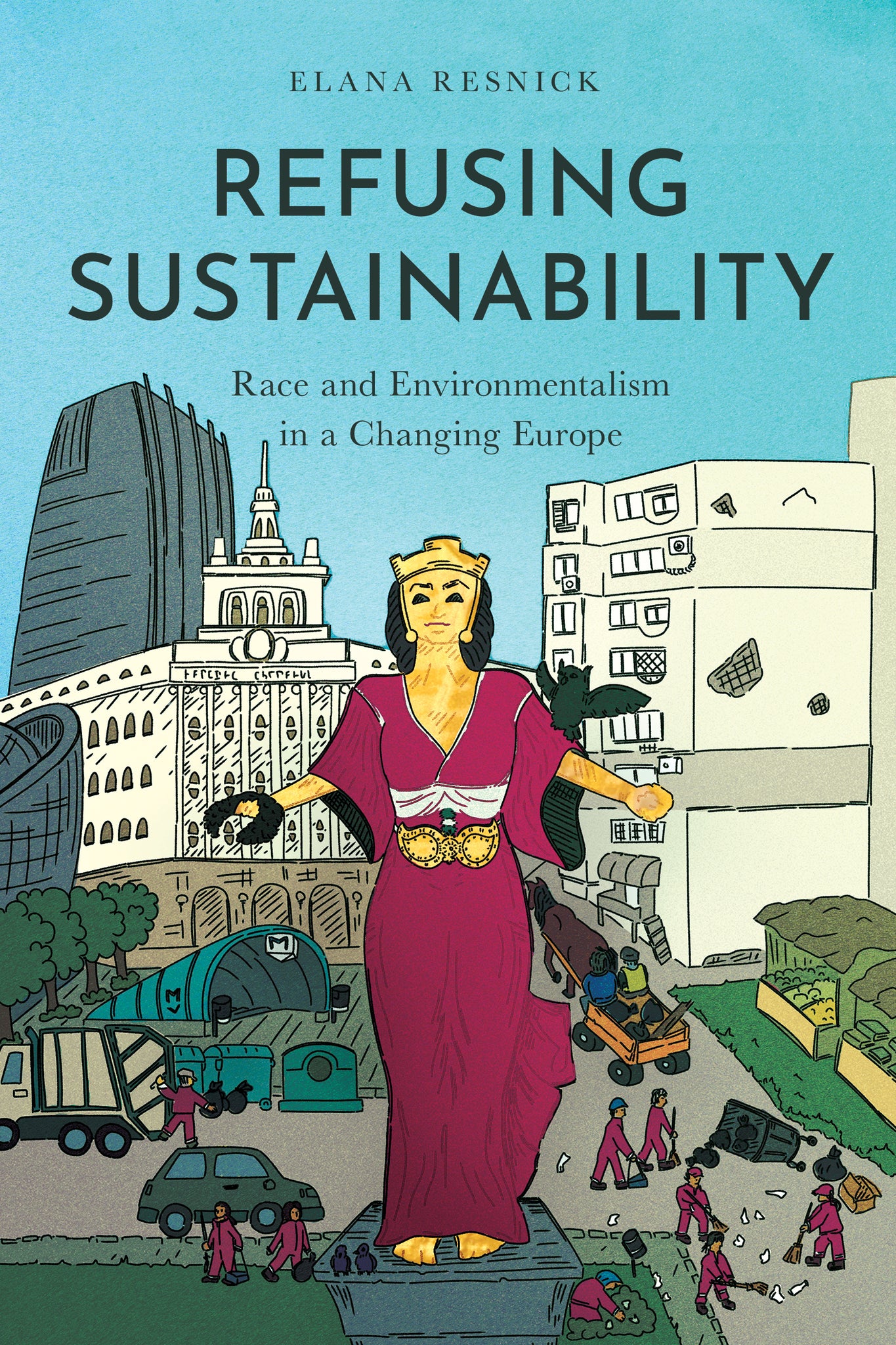
Sustainability has become a touchstone for development worldwide, promising an antidote to environmental degradation and capitalism's excess: waste. Refusing Sustainability presents a fundamentally different account of sustainability and waste itself by uncovering the intersections of international environmental reforms and racialized labor. In Bulgaria, Roma comprise the bulk of the country's waste workers, while anti-Roma racism casts them as socially disposable. Without their labor, however, the country cannot meet the sustainability targets required by the European Union. Drawing on fieldwork that spans twenty years, including eleven months working alongside Romani women street sweepers, and years embedded in waste organizations, political campaigns, Roma NGOs, and activist groups, Elana Resnick examines the power hierarchies that shape both waste management and European geopolitics.
Instead of focusing on only environmental harms or toxic distributions, Refusing Sustainability approaches Romani life-worlds as spaces of creative production, and also tells several larger stories: of postsocialist racial capitalism, environmental progressivism, democratic failures, mutual aid, and the power of women's friendships. Through these stories, Resnick illuminates how ordinary people, racialized as discardable, resist systems that simultaneously rely on and exclude them.


"With some of the best ethnographic writing our field has seen in years, Resnick takes us into the racialized landscapes of environmentalism that few, if ever, want to recognize, but also ones so thick with example around disposal, deferral, and distancing that it is impossible to not keep reading. Richly evoked Romani worlds, conjured here with humor and insight, challenge the segregationisms of our contemporary life." —Bruce Grant, New York University
"Resnick confronts the enduring, mutually constituting relationship between modernity and race in this innovative and beautifully written ethnography. Bringing us to Bulgaria where the absent presence of race haunts environmental sustainability efforts, Refusing Sustainability, identifies the subtleties embedded in taken for granted investments in environmental protections that reinforce the status quo of racial order. Through the deft employment of grounded ethnography as theory, Resnick poses the possibility of imagining life-worlds beyond the destructive forces that render some lives and ways of being as excess, waste, and disposable." —Aimee Meredith Cox, New York University
"As the striking title suggests, Refusing Sustainability offers a compelling critique of these 'progressive' interventions that aim to mitigate environmental harm while simultaneously perpetuating a racial regime structured around anti-Roma racism." —Lara Sarlak, Journal of Urban Affairs
Note on Language and Terminology
Note on Illustrations
Introduction
1. Waste and Race
2. Recycling
3. Surveillance
4. Voting
5. Friendship
Conclusion: Running Water in the Land of Spitting Dragons
Notes
References
Index