


Some error occured while loading the Quick View. Please close the Quick View and try reloading the page.
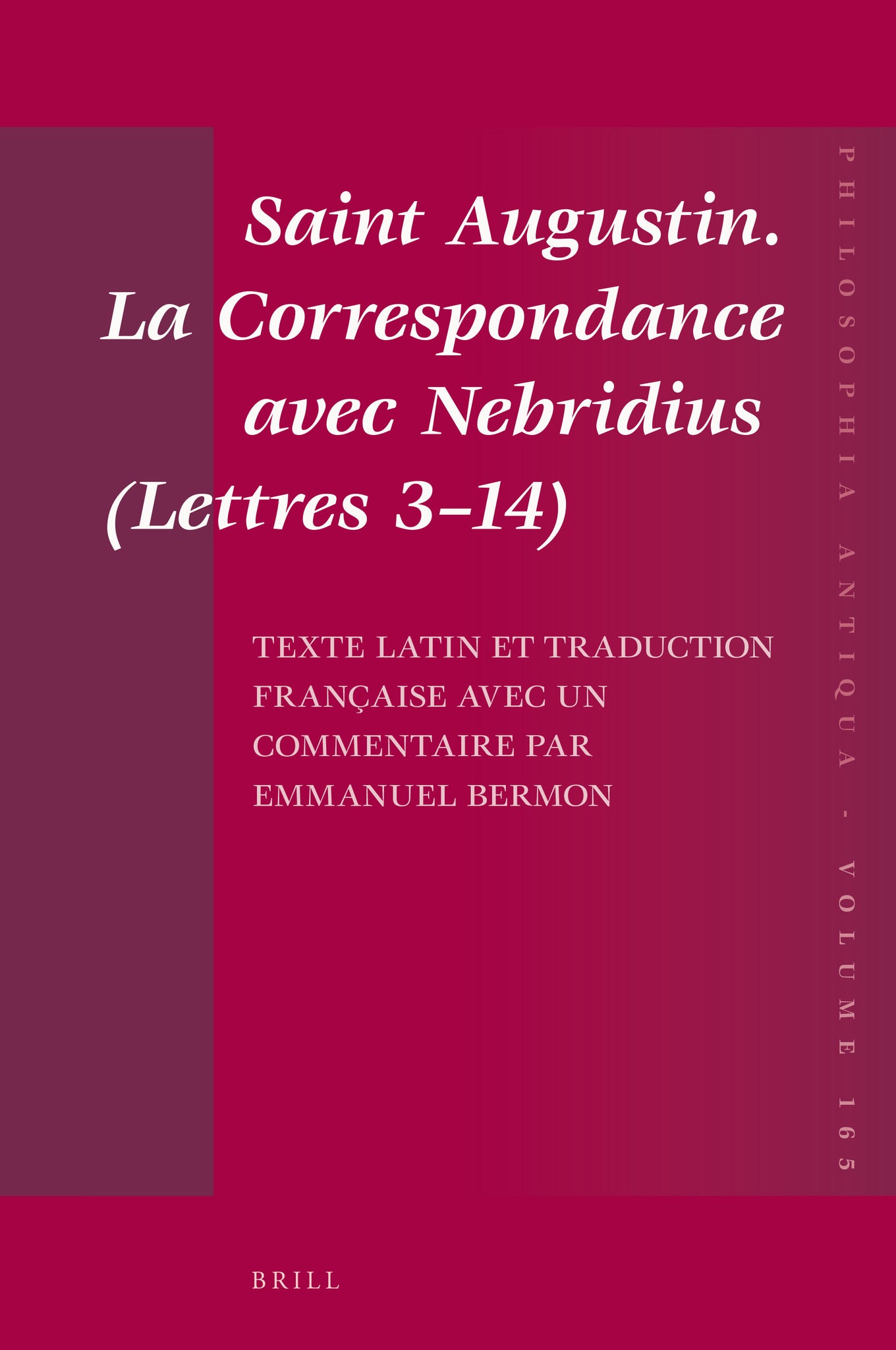
Écrite entre 386 et 390 dans l’effervescence de la découverte du néoplatonisme, la correspondance entre Augustin et son ami Nebridius est un concentré de questions platoniciennes sur l’infini, la distinction entre le sensible et l’intelligible, l’imagination et la réminiscence, les rêves inspirés, l’assimilation à Dieu, le « véhicule » de l’âme, l’intériorité et l’individualité. S’y ajoutent des développements théologiques majeurs sur l’Incarnation et la Trinité. Grâce à ces lettres qui font tour à tour « entendre le Christ, Platon et Plotin », comme le dit Nebridius lui-même, nous comprenons mieux ce moment incandescent de la vie d’Augustin où il se convertit à la fois à la philosophie et au christianisme, comme en témoigneront plus tard les Confessions.
Written between 386 and 390 during the excitement of his discovery of Neoplatonism, Augustine’s correspondence with his friend Nebridius is a distillation of Platonic questions concerning the infinite, the distinction between sensible and intelligible phenomena, the imagination and recollection, inspired dreams, assimilation to God, the “vehicle” of the soul, interiority, and individuality. In addition, the exchange contains major theological insights concerning the Incarnation and the Trinity. Thanks to these letters, which, as Nebridius himself says, make “Christ, Plato, and Plotinus heard,” we can better understand this incandescent moment in Augustine’s life when he converted to both philosophy and Christianity, as the Confessions will later testify.
Written between 386 and 390 during the excitement of his discovery of Neoplatonism, Augustine’s correspondence with his friend Nebridius is a distillation of Platonic questions concerning the infinite, the distinction between sensible and intelligible phenomena, the imagination and recollection, inspired dreams, assimilation to God, the “vehicle” of the soul, interiority, and individuality. In addition, the exchange contains major theological insights concerning the Incarnation and the Trinity. Thanks to these letters, which, as Nebridius himself says, make “Christ, Plato, and Plotinus heard,” we can better understand this incandescent moment in Augustine’s life when he converted to both philosophy and Christianity, as the Confessions will later testify.

Price: $238.00
Pages: 518
Publisher: Brill
Imprint: Brill
Series: Philosophia Antiqua
Publication Date:
19 May 2022
ISBN: 9789004512504
Format: Hardcover

Emmanuel Bermon est Professor d’histoire de la métaphysique et philosophie de la religion à l’Université Bordeaux Montaigne. Il est l’auteur du Cogito dans la pensée de saint Augustin (2001) et de La signification et l’enseignement: commentaire du De magistro de saint Augustin (2007).
Emmanuel Bermon is Professor of History of Metaphysics and Philosophy of Religion at the University of Bordeaux Montaigne. He is the author of Le cogito dans la pensée de saint Augustin (2001) and La signification et l’enseignement: commentaire du De magistro de saint Augustin (2007).
Emmanuel Bermon is Professor of History of Metaphysics and Philosophy of Religion at the University of Bordeaux Montaigne. He is the author of Le cogito dans la pensée de saint Augustin (2001) and La signification et l’enseignement: commentaire du De magistro de saint Augustin (2007).