


Some error occured while loading the Quick View. Please close the Quick View and try reloading the page.
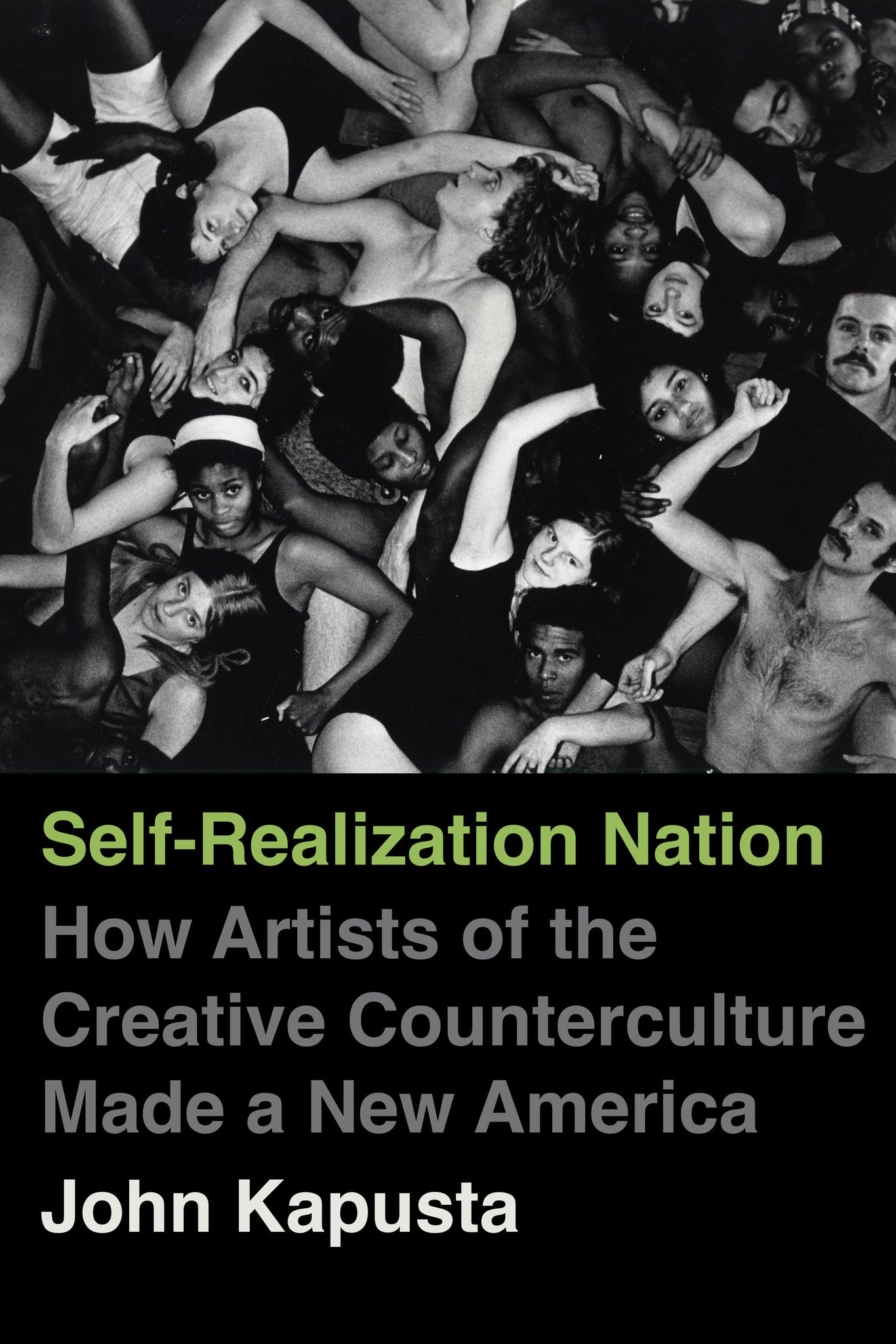
After World War II, personal fulfillment emerged as a defining American cultural ideal. Self-realization—the quest to become our authentic selves—remains a powerful part of American culture and arts today.
In Self-Realization Nation, John Kapusta provides a lively cultural history of how an overlooked movement of musicians, dancers, and actors championed the ideal of self-realization. These performers, who spanned many backgrounds, identities, genres, and artistic styles, became what he calls the creative counterculture. Artists as varied as Sonny Rollins, John Cage, Anna Halprin, Alice and John Coltrane, and Pauline Oliveros shared an approach to creativity focused on letting go of limiting beliefs and subverting oppressive social norms. Through colorful vignettes, Kapusta reveals how these artists made their art and how their approach spread beyond the performing arts to influence such fields as psychology, education, and wellness. Ultimately, these creative counterculturists came to define a new vision of an America where everyone was free to be themselves, together.


"John Kapusta provides a lively cultural history of how an overlooked movement of musicians, dancers, and actors championed the ideal of self-realization."
“Traces the influence of Eastern spirituality, politics, and psychoanalytic theories of self-actualization on West Coast ‘creative counterculturalists’. . . Compelling, well-researched . . . illuminating the spiritual and aesthetic quests of such figures as Sonny Rollins, John Cage, John and Alice Coltrane, Pauline Oliveros, and Anna Halprin.”
Contents
List of Illustrations
Introduction: The Creative Counterculture
1. The American Tradition of Self-Realization
2. Breakdown
3. The Art of Letting Go
4. To Find Ourselves by Finding Others
5. Do Your Own Tai Chi
6. You Don't Have to Melt
Conclusion
Acknowledgments
Notes
Bibliography
Index