


Some error occured while loading the Quick View. Please close the Quick View and try reloading the page.
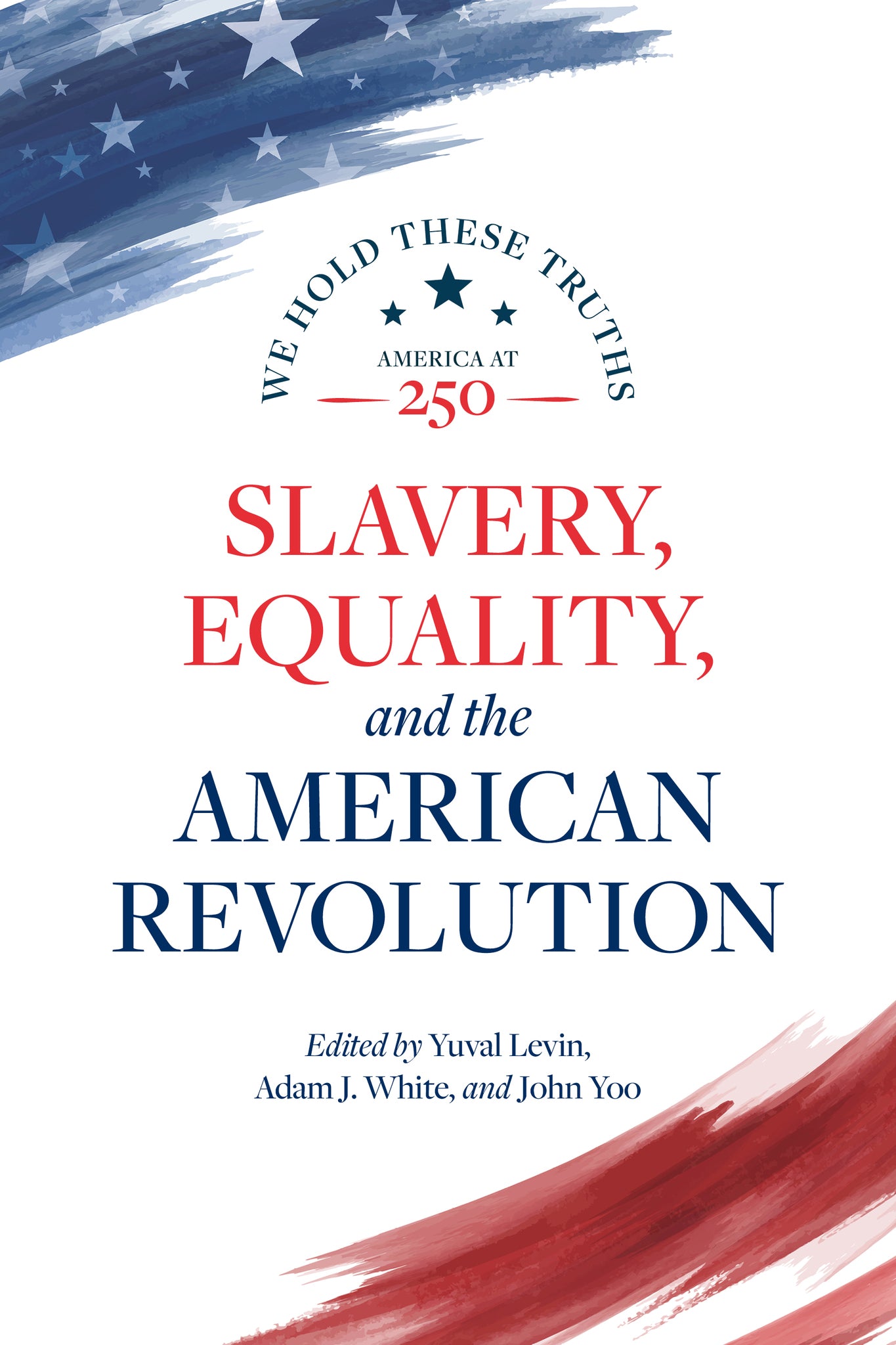
Featuring original essays by Randy E. Barnett, Kurt T. Lash, Lucas E. Morel, Justin Driver, and Diana Schaub.
The year 2026 marks the 250th anniversary of American independence, yet the nation’s founding is controversial now in ways it has not been in decades.The American Enterprise Institute offers a major intellectual and educational project to reintroduce Americans to the unique value of their national inheritance.
In the fifth volume of this series, legal scholars and political scientists discuss how the American Revolution both perpetuated slavery and created the conditions for its abolition. While hundreds of thousands of African Americans remained enslaved at the end of the Revolutionary War, the Declaration of Independence’s assertion of human equality galvanized slavery’s opponents and laid the groundwork for increasingly egalitarian definitions of American citizenship.
Considering how the Declaration shaped antislavery thinkers and politicians such as Frederick Douglass and Abraham Lincoln and informed the 14th Amendment demonstrates how the American Revolution enabled a “new birth of freedom” in the 19th century.


Yuval Levin
1. But What About Slavery?
Randy E. Barnett
2. Freedom and Federalism
Kurt T. Lash
3. Lincoln's Battle for the Founders' Declaration
Lucas E. Morel
4. The Founding of Frederick Douglass
Justin Driver
5. Frederick Douglass' Civic Education
Diana Schaub
About the Authors
About the Editors