


Some error occured while loading the Quick View. Please close the Quick View and try reloading the page.
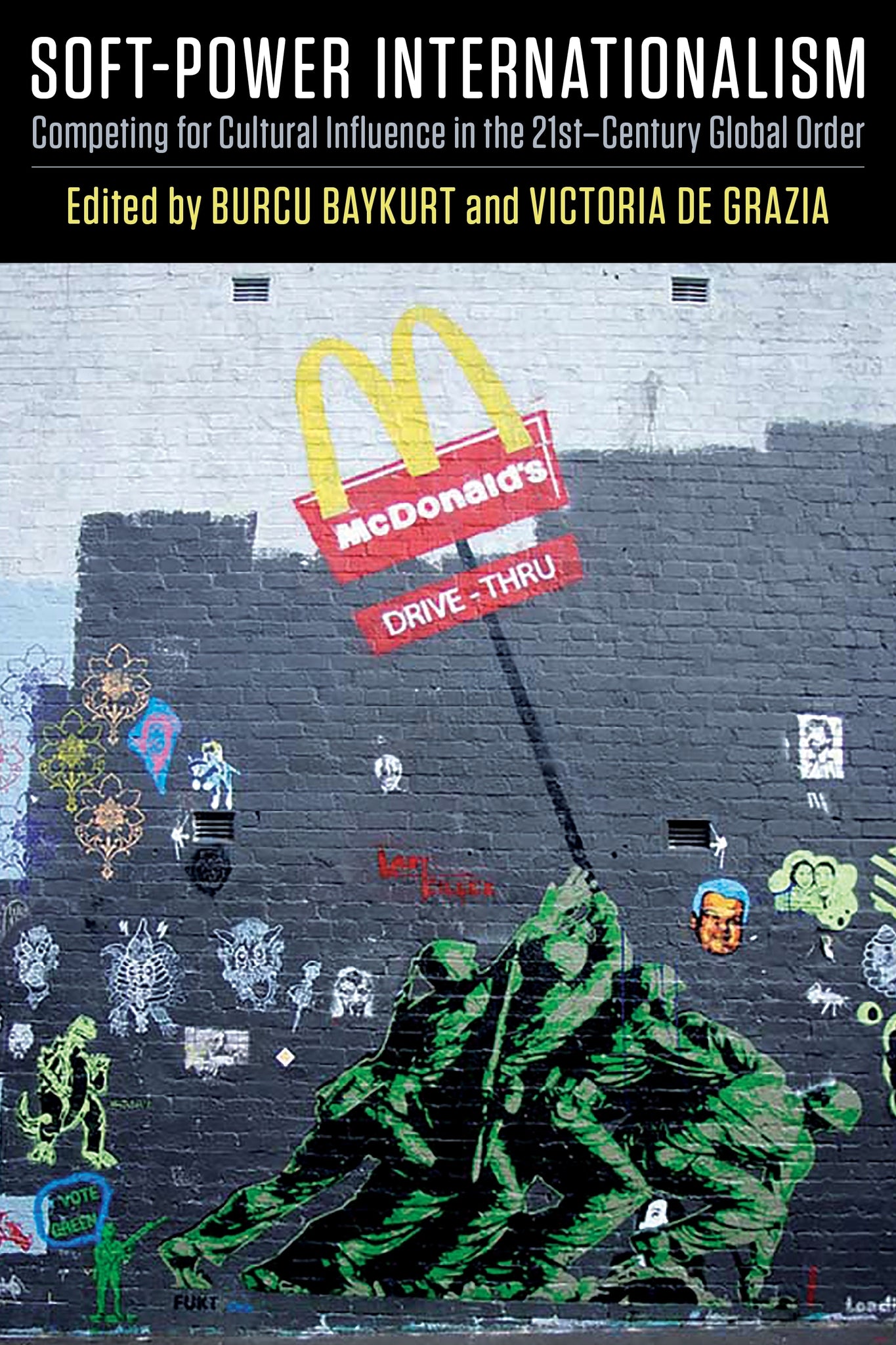
The term “soft power” was coined in 1990 to foreground a capacity in statecraft analogous to military might and economic coercion: getting others to want what you want. Emphasizing the magnetism of values, culture, and communication, this concept promised a future in which cultural institutes, development aid, public diplomacy, and trade policies replaced nuclear standoffs. From its origins in an attempt to envision a United States–led liberal international order for a post–Cold War world, it soon made its way to the foreign policy toolkits of emerging powers looking to project their own influence.
This book is a global comparative history of how soft power came to define the interregnum between the celebration of global capitalism in the 1990s and the recent resurgence of nationalism and authoritarianism. It brings together case studies from the European Union, China, Brazil, Turkey, and the United States, examining the genealogy of soft power in the Euro-Atlantic and its evolution in the hands of other states seeking to counter U.S. hegemony by nonmilitaristic means. Contributors detail how global and regional powers created a variety of new ways of conducting foreign policy, sometimes to build new solidarities outside Western colonial legacies and sometimes with more self-interested purposes. Offering a critical history of soft power as an intellectual project as well as a diplomatic practice, Soft-Power Internationalism provides new perspectives on the potential and limits of a multilateral liberal global order.


— Peter J. Katzenstein, Walter S. Carpenter Jr. Professor of International Studies, Cornell University
Baykurt and de Grazia begin their cogent and cohesive edited volume with essays that provide a sophisticated theoretical discussion of soft power. The comparative case studies that follow include China, Brazil, and Turkey. This interdisciplinary collection is a must-read that contextualizes the institutions that provide the scaffolding for the diffusion of Western political cultural practices.
— Mabel Berezin, author of Illiberal Politics in Neoliberal Times: Culture, Security and Populism in the New Europe
Soft-Power Internationalism offers a highly informative deep dive into the post–Cold War period when soft power was considered the ultimate method of peace building. It shows how a concept largely promulgated by the West was successfully upended by emerging countries for the sake of their own postcolonial narrative. An essential eye-opener for policy makers seeking a better understanding of today’s vacillating world order.
— Pierre Vimont, Ambassador of France, Senior Fellow at Carnegie Europe
A bold and original rereading of soft power, internationalism, revitalized nationalism, and the internet. Baykurt and de Grazia enlarge our understanding of a familiar idea through a new taxonomy of influences, a new perspective on shifts in global power, and a new map of actors of significance as the twentieth century morphs into the twenty-first.
— Monroe E. Price, author of Free Expression, Globalism, and the New Strategic Communication
Burcu Baykurt is an assistant professor of communication at the University of Massachusetts Amherst and a faculty associate at the Berkman Klein Center for Internet and Society at Harvard University.
Victoria de Grazia is Moore Collegiate Professor of History at Columbia University. Her books include Irresistible Empire: America’s Advance Through Twentieth-Century Europe (2005) and The Perfect Fascist: A Story of Love, Power, and Morality in Mussolini’s Italy (2020).
Acknowledgments
Introduction: Soft-Power Internationalism, by Burcu Baykurt and Victoria de Grazia
Part 1: Historical and Conceptual Foundations of Soft-Power Internationalism
1. Soft-Power U.S. Versus Normative Power EU: Competing Ideals of Hegemony in the Post–Cold War West, 1990–2015, by Victoria de Grazia
2. Circulating Liberalism: The Global Internet and the Rise of Soft-Power Internationalism, by Burcu Baykurt
Part 2: Turkey
3. Turkey’s “Soft Power”: A Conceptual Overreach and a Conversation in Multiple Concepts, by Dilek Barlas and Lerna Yanık
4. Turkey as “Trading State”: The High Hopes for Commerce from the Boom Years to the Arab Spring, by Mustafa Kutlay
Part 3: Brazil
5. Bridge Builder, Humanitarian Donor, Reformer of Global Order: Brazilian Narratives of Soft Power Before Bolsonaro, by Oliver Stuenkel
6. Lula’s Assertive Foreign Policy: Soft Power or Dependency?, by Fernando Santomauro and Jean Tible
Part 4: China
7. China’s Soft Power in Africa: Promoting Alternative Perspectives, by Martina Bassan
8. The Evolution of China’s Soft-Power Quest from the Late 1980s to the 2010s, by Zhongying Pang
9. Global China and Symbolic Power in the Era of the Belt and Road, by Anastas Vangeli
Part 5: Euro-Atlantic Perspectives
10. The End or the Beginning of Normative Power Europe? Transcendence and the Crisis of European Foreign Policy, by Thomas Diez
11. Is There a Coherent Ideology of Illiberal Modernity, and Is It a Source of Soft Power?, by Jack Snyder
Power, Culture, and Hegemony: A Selected Bibliography
Contributors
Index