


Some error occured while loading the Quick View. Please close the Quick View and try reloading the page.
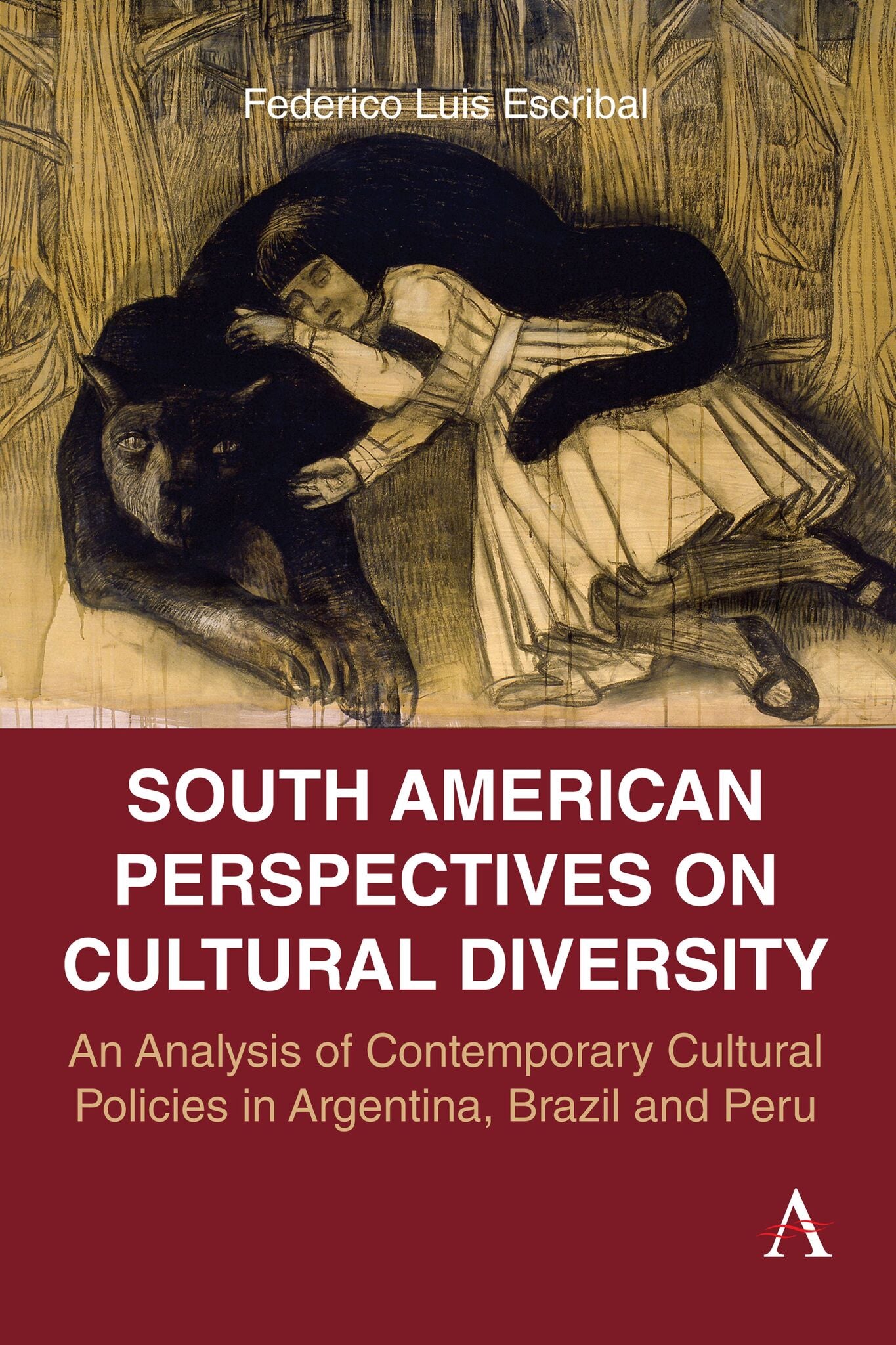
This book is a pioneering work that examines cultural diversity policies in Argentina, Brazil, and Peru over the past 15 years. The book offers a critical analysis of the rationalities and concepts underpinning these policies, exposing their inherent contradictions and the social forces that have both supported and resisted their implementation. By highlighting the struggles of marginalized groups in their pursuit of social, economic, and political equality, it reveals the deep intersections between culture, identity, and power.
The book situates these discussions within the broader context of Latin America’s colonial legacy and ongoing decolonization efforts. It demonstrates how the region’s nation-states, often founded on myths of cultural homogeneity, have grappled with the complex realities of diverse populations. Through detailed case studies, the book showcases how cultural diversity has become a powerful tool for social empowerment, particularly among racialized groups and other marginalized communities. It also offers insights into the evolution of these policies, tracing the ways in which they have responded to grassroots movements and the global discourse on cultural citizenship.
Furthermore, this work contributes to global debates by positioning Latin America as a key player in rethinking cultural policies that promote diversity, justice, and inclusion. It reflects on the lessons learned from observing these policies, urging readers to consider the broader implications for social cohesion and inclusive development. This work not only provides a thorough analysis of Latin America’s unique contributions to cultural policy but also underscores the urgent need for more dynamic, intercultural approaches to address the challenges of the 21st century.


“The book represents an original and useful endeavour. This is the first book that is tackling cultural diversity as the global theme enhanced by the UNESCO Convention 2005 in a specific regional perspective of South America. As it is written in English language, it will enlighten the complex situations related to the cultural diversity and cultural policy in Latin America to the worldwide audience. Using concepts developed within Latino American decolonial studies, such as pluriversity and epistemic justice, and offering interculturality as an alternative framework that enables more justice in multicultural society (‘interculturality refuses to treat cultural groups as stable, bounded entities
that merely coexist in a shared public sphere’), the book gives complex comparative perspectives but also regional common trends that include voices of artists, scholars, minority activists and cultural operators in a cultural and policy realm.” —Milena Dragićević Šešić, Head of the UNESCO Chair on Interculturalism, Art Management and Mediation.
“South American Perspectives on Cultural Diversity offers an essential outlooks on cultural policy development and implementation in this part of the world, and points to some of its challenges and limitations, while also providing comparativists with analytical resources to understand distinctive approach to culture and identity that emerge from this context.” —Jonathan Paquette, University of Ottowa, Canada.
Acknowledgements; Preface – Second Wives; Introduction; 1.Dhofar; 2.Discussion of References; 3.Definitions; 4. My Positionality; 5. Relationships Before Marriage; 6. Marriage – Main Understandings; 7.Choosing a Spouse; 8.Engagement; 9. Wedding Announcements, Invitations and Photos; 10. Wedding Parties; 11. After the Wedding; 12. Creating a Marital Relationship; 13. Marriage and Placement; 14. End of a Marriage; 15. Second Wives/Co-wives; 16. Children; 17. Differences/Distinctions – Which Culture Does Marriage Better?; 18.Coda; References; Index