


Some error occured while loading the Quick View. Please close the Quick View and try reloading the page.
Help Children Help Themselves!
Most students thrive on consistency and it’s especially important for autistic students. Without it, teachers can expect them to experience higher levels of anxiety and more meltdowns. Because of their neurology, autistic students learn best when they know exactly what they are going to do, when they are going to do it, and with whom they will do it.
Despite knowledge and well-intended efforts, educational systems often create a lack of predictability for students when they transition from year to year. Teachers certainly try. They’ve read last year’s IEP, took part in creating a new one, and have read all the information in the student’s file. But they still don’t know details, such as what the student’s mini schedule looks like and what prompts are needed to support social interaction. Until now.
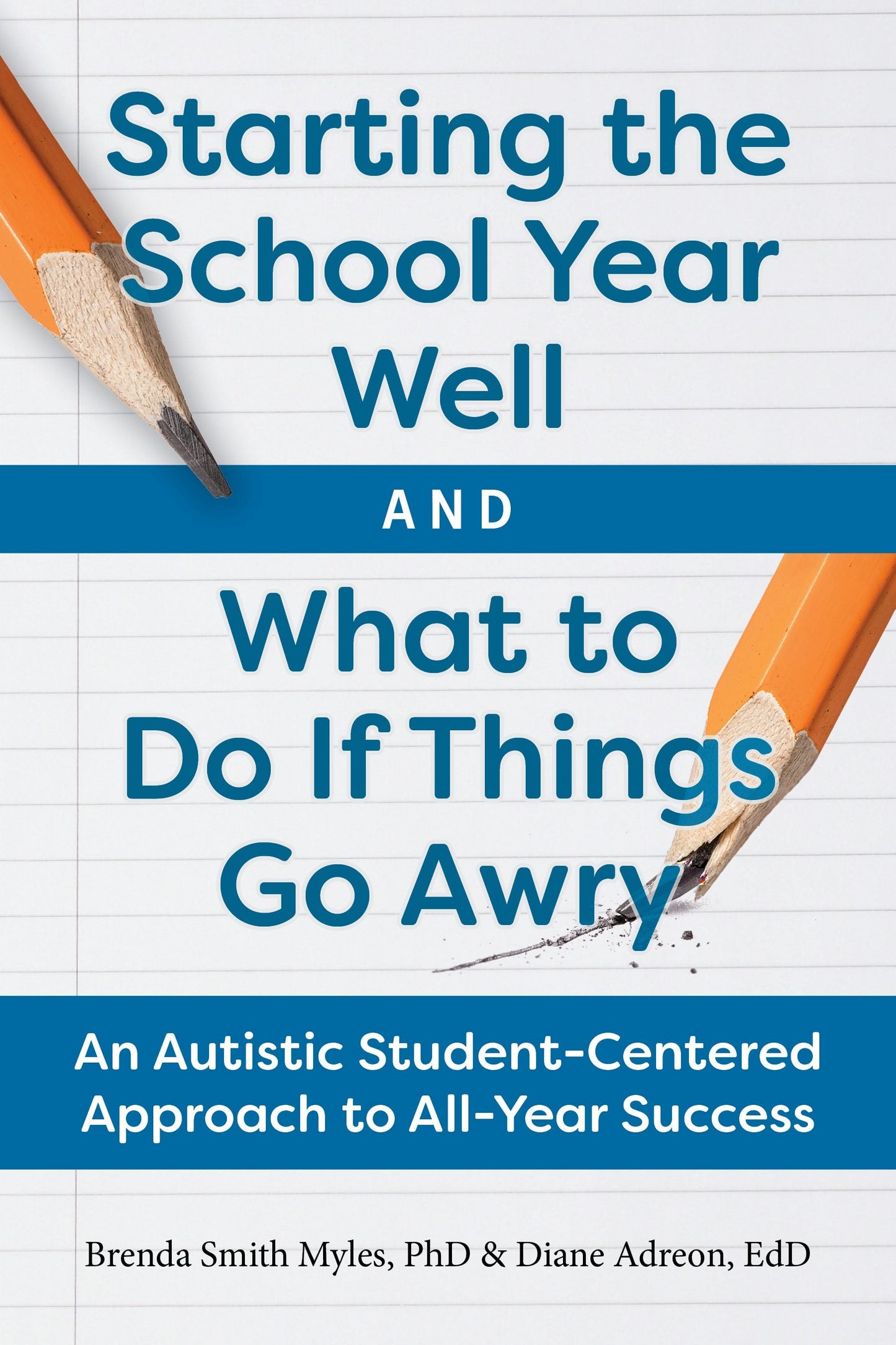
Starting the School Year Well provides a simple way for teachers to learn from past educators through the completion of three simple-to-use instruments:
- Transition Checklist
- Comprehensive Autism Planning System
- Learner Snapshot
These tools allow educators to immediately implement effective strategies instead of spending time engaged in trial-and-error instruction. These instruments create a smoother transition that enhances learning. Also included is an extensive approach to behavior challenges that results in real change! If behavior challenges occur, use this student-and-teacher-friendly approach to teach new behaviors and provide support.
By eliminating guesswork as you get to know a student at the beginning of the year, you can get right to work teaching them new skills that match how they learn.


Part I: The Same Things Happens Every Year.
This chapter briefly reviews how the lack of grade-to-grade transition planning can result in up to a 5 year loss of instruction time.
Part II: A Good Beginning.
Three instruments are introduced that can help students begin a school year successfully.
Chapter 1: Transition Checklist.
The sending team of educators indicate what supports the student needed for success during the previous year.
Chapter 2: Comprehensive Autism Planning System.
The receiving team completes this “practical IEP” that identifies what instruction and supports are needed and when they are needed.
Chapter 3: Learner Snapshot.
Parents complete this document to describe (a) their child’s exceptionality; (b) how they learn best; (c) special interests and motivators, and preferences; (d) strengths and challenges; (e) issues related to being upset and having meltdowns; and (f) general modifications and accommodations.
Part III: If Difficulties Occur.
This section of this book provides information on how to support a student who is experiencing challenges at school. This book suggests that educators add the following measures to their typical functional behavior assessment (FBA) process.
Chapter 4: Student Perspective Analysis.
This interview gives insight into how the student thinks about school. It contains asks specific questions about each class and teacher.
Chapter 5: Modified Inventory of Wrongful Activities.
Recognizing that most autistic students are bullied in school, this interview ask student about various types of bullying (verbal, social, electronic, and education).
Chapter 6: The Sensory Scan™ Worksheet.
The student is taught to scan their environments to identify “sensory violations” across the eight senses.
Chapter 7: Student Crisis Plan
Sheet. The educational team completes this brief instrument that provides a blueprint on how to support the student during the three stages of the meltdown cycle.
Chapter 8: Case Study Agustin.
This case study addresses Agustin’s transition from 5th to 6th grade and then details the process that occurs when he experiences self-regulation challenges.