


Some error occured while loading the Quick View. Please close the Quick View and try reloading the page.
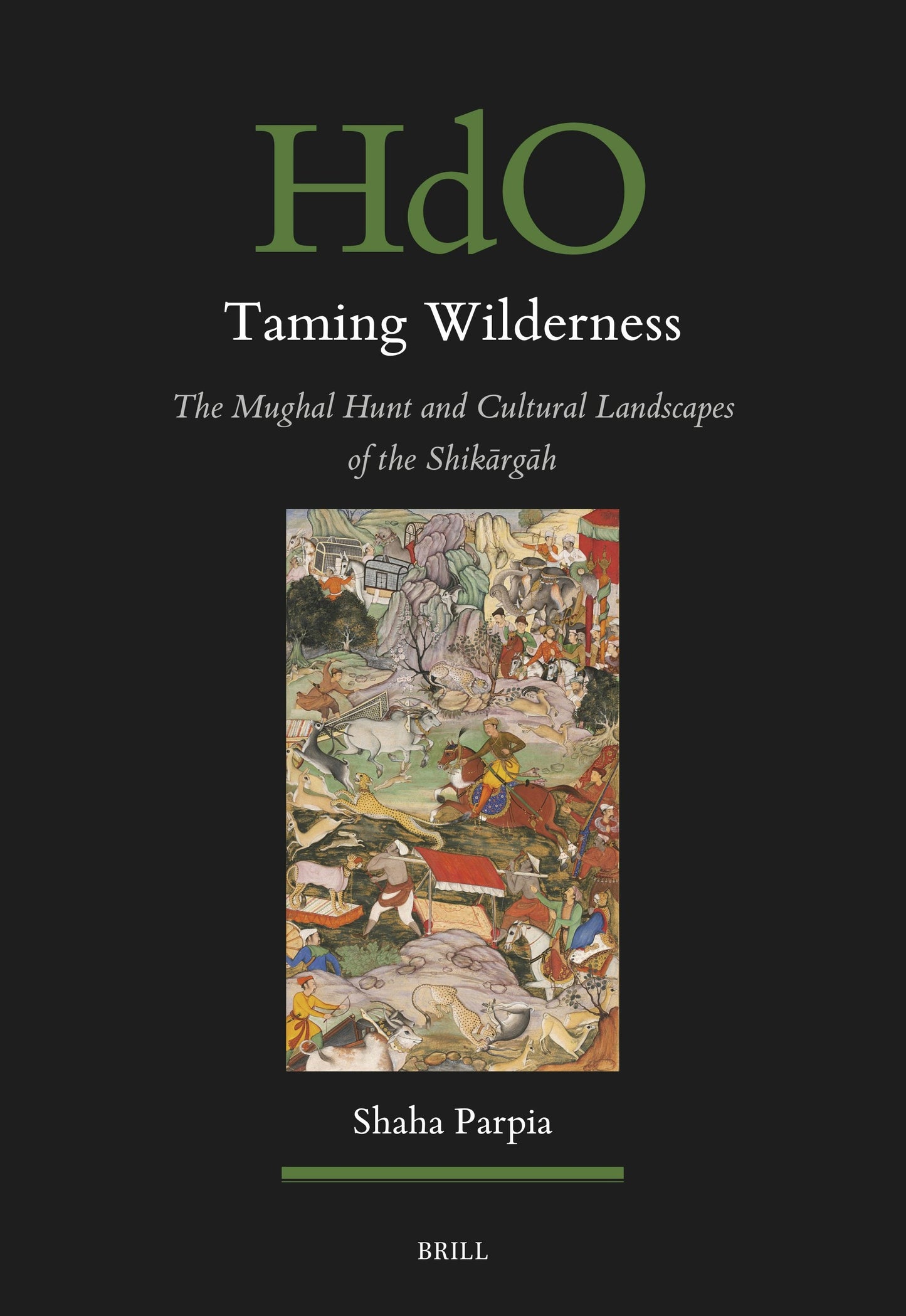
The Mughal hunt may be understood as an interaction with the wilderness and conservation that comprehends empire building, the promotion of welfare and agricultural causes, scientific pursuits and engendering spiritual connections with nature. Countering traditional definitions of a hunting ground as an untamed, amorphous space, this book delves into the details of the Mughal shikārgāh conceived as an ecologically modified landscape with spatial and cultural relationships to gardens, agrarian lands and irrigation projects, and as an intermediate space that existed between cultivated lands and forests. Replete with colourful hunting anecdotes and richly illustrated, Taming Wilderness is an insightful study of this fascinating subject.

Price: $129.00
Pages: 300
Publisher: Brill
Imprint: Brill
Series: Handbook of Oriental Studies. Section 1 The Near and Middle East
Publication Date:
29 January 2026
ISBN: 9789004749030
Format: Hardcover

"Taming Wilderness is a fascinating account that sheds new light on the significance of the imperial hunt and the meanings of hunting landscape, presenting an insightfully original narrative that redefines the relationships between humans, animals, and nature in Mughal culture."— Prof. Samer Akkach, Centre for Asian and Middle Eastern Architecture (CAMEA), Adelaide University
"In this volume, Parpia reconsiders and substantially develops her earlier research on Mughal hunting parks—first articulated in a series of articles derived from her doctoral dissertation— culminating in a comprehensive and authoritative account. The study marks a significant intervention in Mughal landscape scholarship. While the formal garden remains among the most extensively examined subjects in the field, Parpia stands as the sole scholar to have undertaken a sustained and rigorous investigation of the hunting park. She interprets these vast parklands as landscapes of profound political and cultural significance—spaces that served the emperors and their retinues as stages for imperial performance, evocations of ancestral kingship, and affirmations of dynastic sovereignty. Drawing on a rich corpus of textual, visual, and material evidence, Parpia reconstructs the hunting park not merely as a site of recreation but as an instrument of rule. Parpia demonstrates, moreover, that the hunting park was not solely an ideological projection but a working landscape—shaped by logistical, ecological, and administrative considerations that grounded imperial authority in tangible practice. She examines in detail the processes and purposes of forest clearing; the relationship between hunting parks and irrigation projects; the technologies of the hunt and encampment; and the park’s economic and ecological impact on local agriculture and agrarian communities. She further explores the design and architecture of the hunting park itself and its close relationship to the Mughal formal garden—long recognized as a potent emblem of imperial power. Among the volume’s most important contributions is its integration of landscape history with Mughal scientific and intellectual culture, situating the imperial engagement with land within a broader framework of knowledge production. Parpia’s analysis deepens our understanding of how the Mughals transformed the natural world of South Asia into a medium of political expression, articulating authority through the deliberate design and management of landscape. This newly expanded study will be welcomed by scholars of history and art history, landscape architecture, and environmental history alike. It is an exceptional work of scholarship."— Lisa Balabanlilar, Joseph and Joanna Nazro Mullen Professor in the Humanities Chair, Department of Transnational Asian Studies, Rice University
"In this volume, Parpia reconsiders and substantially develops her earlier research on Mughal hunting parks—first articulated in a series of articles derived from her doctoral dissertation— culminating in a comprehensive and authoritative account. The study marks a significant intervention in Mughal landscape scholarship. While the formal garden remains among the most extensively examined subjects in the field, Parpia stands as the sole scholar to have undertaken a sustained and rigorous investigation of the hunting park. She interprets these vast parklands as landscapes of profound political and cultural significance—spaces that served the emperors and their retinues as stages for imperial performance, evocations of ancestral kingship, and affirmations of dynastic sovereignty. Drawing on a rich corpus of textual, visual, and material evidence, Parpia reconstructs the hunting park not merely as a site of recreation but as an instrument of rule. Parpia demonstrates, moreover, that the hunting park was not solely an ideological projection but a working landscape—shaped by logistical, ecological, and administrative considerations that grounded imperial authority in tangible practice. She examines in detail the processes and purposes of forest clearing; the relationship between hunting parks and irrigation projects; the technologies of the hunt and encampment; and the park’s economic and ecological impact on local agriculture and agrarian communities. She further explores the design and architecture of the hunting park itself and its close relationship to the Mughal formal garden—long recognized as a potent emblem of imperial power. Among the volume’s most important contributions is its integration of landscape history with Mughal scientific and intellectual culture, situating the imperial engagement with land within a broader framework of knowledge production. Parpia’s analysis deepens our understanding of how the Mughals transformed the natural world of South Asia into a medium of political expression, articulating authority through the deliberate design and management of landscape. This newly expanded study will be welcomed by scholars of history and art history, landscape architecture, and environmental history alike. It is an exceptional work of scholarship."— Lisa Balabanlilar, Joseph and Joanna Nazro Mullen Professor in the Humanities Chair, Department of Transnational Asian Studies, Rice University
Shaha Parpia, Ph.D. (2019), is Visiting Research Fellow at The University of Adelaide, Centre for Asian and Middle Eastern Architecture (CAMEA), Australia. She is an architecture historian whose work focuses on Islamic architecture and gardens, Mughal landscapes, and the hunt.