Skip to product information
1 of 1

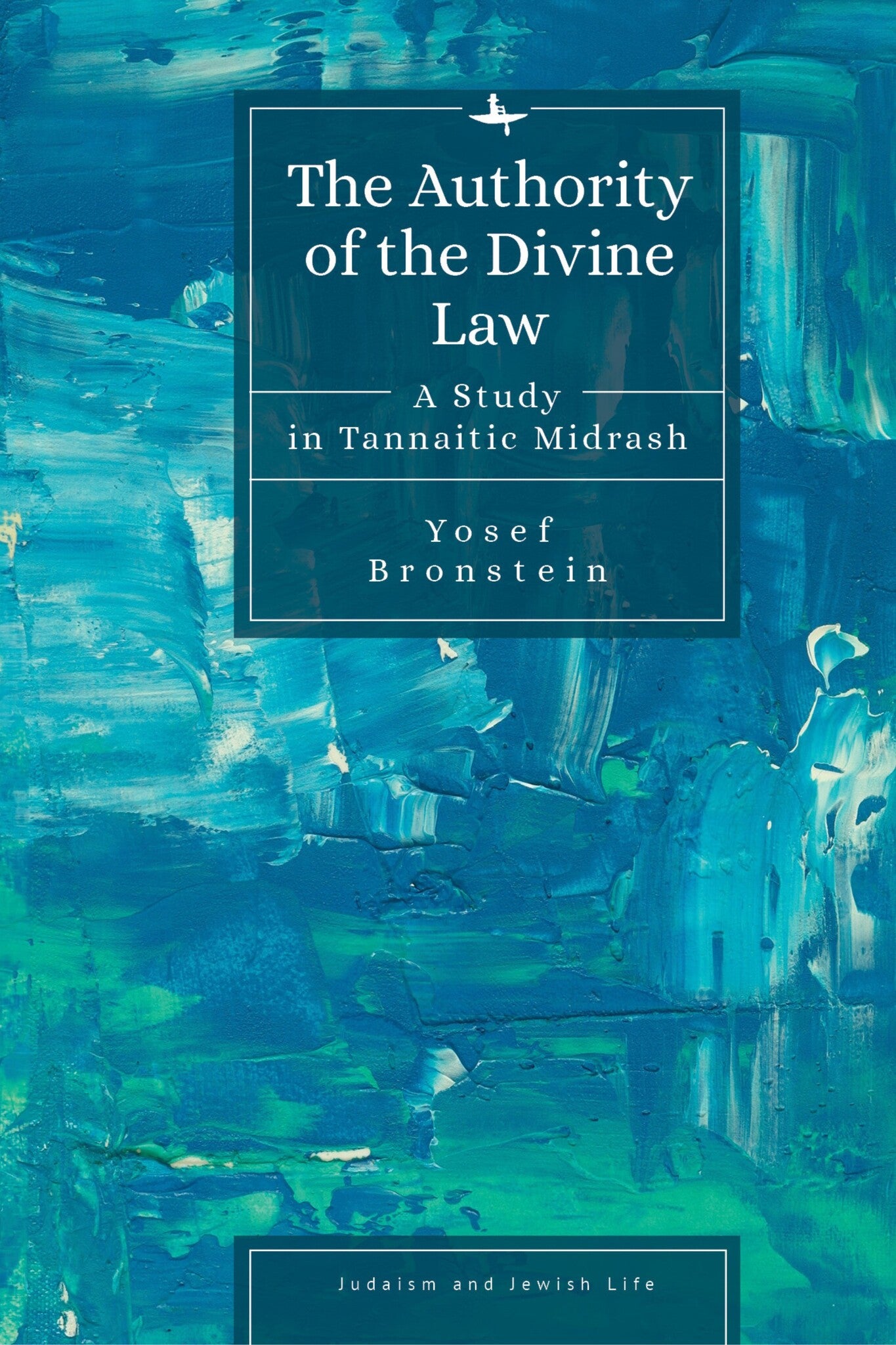
The Authority of the Divine Law

Regular price $119.95
Regular price $119.95 Sale price $119.95
Sold out
This book explores the various rationales offered by Jewish groups in late antiquity for the authority of the Divine Law. While Second Temple groups tended to look towards philosophy or metaphysics...
Read More
  • 12 March 2024
View Product Details
Many Jewish groups of late antiquity assumed that they were obligated to observe the Divine Law. This book attempts to study the various rationales offered by these groups to explain the authority that the Divine Law had over them. Second Temple groups tended to look towards philosophy or metaphysics to justify the Divine Law’s authority. The tannaim, though, formulated legal arguments that obligate Israel to observe the Divine Law. While this turn towards legalism is pan-tannaitic, two distinct legal arguments can be identified in tannaitic literature. These specific arguments about the Divine Law’s authority, link to a set of issues regarding the tannaim’s conception of Divine Law and of Israel’s election.
files/i.png Icon
Price: $119.95
Pages: 242
Publisher: Academic Studies Press
Imprint: Academic Studies Press
Series: Judaism and Jewish Life
Publication Date: 12 March 2024
Trim Size: 9.21 X 6.14 in
ISBN: 9798887194127
Format: Hardcover
BISACs: Systems of law: Jewish Law, Philosophy & Religion, Jewish philosophy, Religious issues & debates, History of religion, Judaism, Judaism: sacred texts and revered writings
REVIEWS Icon

Yosef Bronstein presents us with a masterful analysis of the very foundations of Jewish law. He mines through the layers of Tannaitic midrash and Talmud to discover distinct narratives that set the stage for the concept of Israel’s responsibility to the Torah’s commandments. This study is a model of academic excellence in its methodological care to compare manuscript variants, review a wide swath of Second Temple history as a backdrop to the Rabbis' commentaries, contextualize each source in time and place, and connect textual details with philosophical assumptions. At the same time, this book remains as relevant as ever for a modern Jew seeking rationales for the Jewish people’s commitment to Halakha and contemplating whether their chosenness is coerced or voluntary, contingent or essential. The classical rabbinic responses uncovered in this work offer fresh and revealing insights applicable to the study of Jewish thought today.

— Rabbi Dr. Richard Hidary, Professor of Judaic Studies, Yeshiva University 

Yosef Bronstein received rabbinic ordination and a PhD in Talmudic Studies from Yeshiva University. He is the Rosh Bet Midrash of Machon Zimrat Ha’aretz, a community learning center and rabbinical training program in Efrat, Israel, and also teaches Jewish philosophy at Yeshiva University’s Isaac Breuer College. He is the coauthor of Reshimot Shiurim al Masekhet Kiddushin (Rabbi Joseph B. Soloveitchik’s Talmud lectures on tractate Kiddushin) and the author of Engaging the Essence: The Philosophy of the Lubavitcher Rebbe (forthcoming from Maggid Books).

Acknowledgments

  1. Introduction: The Authority of the Divine Law over the Chosen People
  2. Pre-Tannaitic Conceptions of the Divine Law’s Authority
  3. “You Are My Slaves”: The Authority of the Divine Law in Akivan Midrash
  4. “May I Be Your King?”: The Authority of the Divine Law in Ishmaelian Midrash
  5. Contextualizing the Tannaim’s Legal Arguments
  6. Setting the Boundaries: Tannaitic Attitudes Towards Non-Israelites and Conversion
  7. The Contingency or Eternality of Israel’s Election
  8. Is the Israelite Sinner Still an Israelite?
  9. Into the Bavli

Conclusion

Appendix—Tannaitic Sources Regarding the Primordial Roots of Israel’s Election and of the Divine Law

References

Index