


Some error occured while loading the Quick View. Please close the Quick View and try reloading the page.
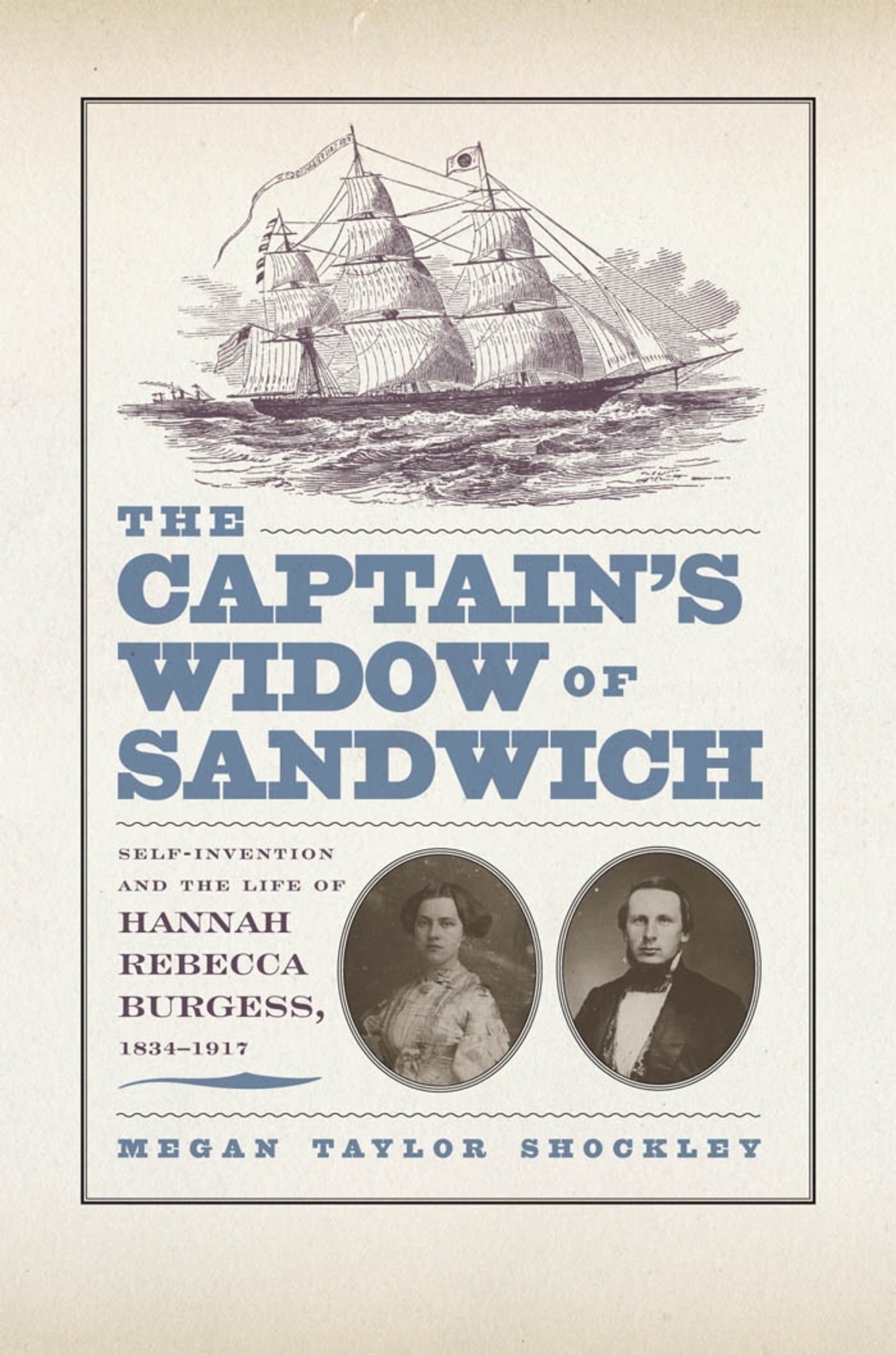
In 1852 Hannah Rebecca Crowell married sea captain William Burgess and set sail. Within three years, Rebecca Burgess had crossed the equator eleven times and learned to navigate a vessel. In 1856, 22-year-old Rebecca saved the ship Challenger as her husband lay dying from dysentery. The widow returned to her family’s home in Sandwich, Massachusetts, where she refused all marriage proposals and died wealthy in 1917.
This is the way Burgess recorded her story in her prodigious journals and registers, which she donated to the local historical society upon her death, but there is no other evidence that this dramatic event occurred exactly this way. In The Captain’s Widow of Sandwich, Megan Taylor Shockley examines how Burgess constructed her own legend and how the town of Sandwich embraced that history as its own. Through careful analysis of myriad primary sources, Shockley also addresses how Burgess dealt with the conflicting gender roles of her life, reconciling her traditionally masculine adventures at sea and her independent lifestyle with the accepted ideals of the period’s “Victorian woman.”


— Robin Miskolcze
Shockley has written a fine historian’s biography that is also a good read. The Captains Widow of Sandwich shows how Burgess created her own heroic persona and how that particular version of one womans story embodied and ennobled the ideals of an embattled Cape Cod community.
— Cynthia Kierner,author of The Contrast: Manners, Morals, and Authority in the Early American Republic
Shockleys fascinating analysis of the life and writing of Rebecca Burgess complicates our understanding of the construction of white, middle-class womanhood in Victorian America. Burgess neither rejected nor embraced the traditional meanings of womanhood in her day. She was independent and obedient, domestic and a wanderer. She valued & separate spheres and loved her ocean travels with her sea captain husband. Burgesss story is a cautionary tale, a reminder that real human beings are generally more complex than we may realize.
— Sheila Skemp,author of First Lady of Letters: Judith Sargent Murray and the Struggle for Female Independence