


Some error occured while loading the Quick View. Please close the Quick View and try reloading the page.
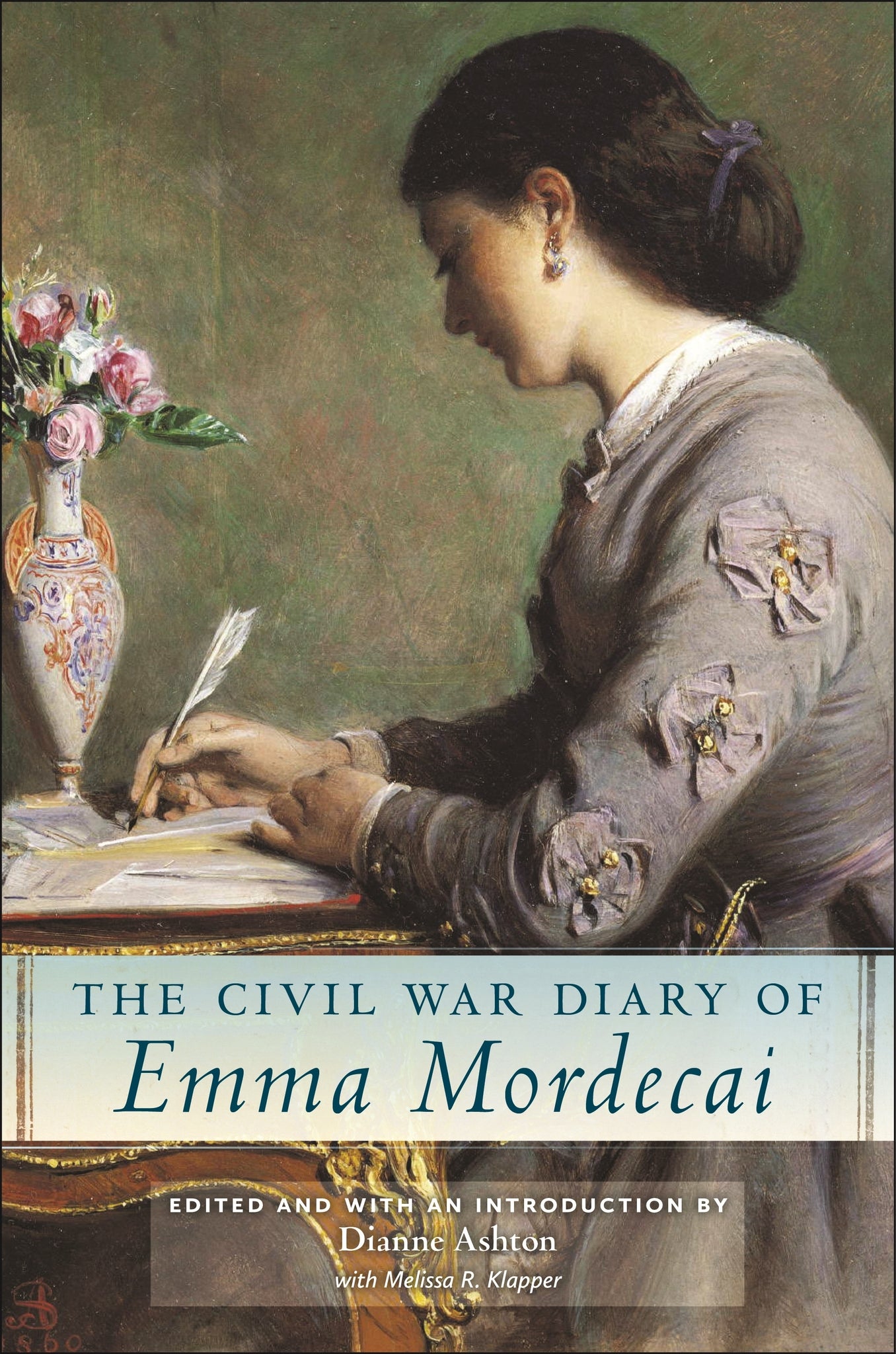
A vivid look at the wartime experiences of a Jewish woman in the Confederate South
Emma Mordecai lived an unusual life. She was Jewish when Jews comprised less than 1 percent of the population of the Old South, and unmarried in a culture that offered women few options other than marriage. She was American born when most American Jews were immigrants. She affirmed and maintained her dedication to Jewish religious practice and Jewish faith while many family members embraced Christianity. Yet she also lived well within the social parameters established for Southern white women, espoused Southern values, and owned enslaved African Americans.
The Civil War Diary of Emma Mordecai is one of the few surviving Civil War diaries by a Jewish woman in the antebellum South. It charts her daily life and her evolving perspective on Confederate nationalism and Southern identity, Jewishness, women’s roles in wartime, gendered domestic roles in slave-owning households, and the centrality of family relationships. While never losing sight of the racist social and political structures that shaped Emma Mordecai’s world, the book chronicles her experiences with dislocation and the loss of her home.
Bringing to life the hospital visits, food shortages, local sociability, Jewish observances, sounds and sights of nearby battles, and the very personal ramifications of emancipation and its aftermath for her household and family, The Civil War Diary of Emma Mordecai offers a valuable and distinct look at a unique historical figure from the waning years of the Civil War South.


"A rare testimony of a Southern Jewish woman’s experience during the Civil War."
"A window into this little-known world and its contradictions."
"The Civil War Diary of Emma Mordecai reminds us that Jews could be devoted to Judaism and ardent Confederates. Completing the work begun by the late pioneering religion scholar Dianne Ashton, Melissa R. Klapper has brought Emma Mordecai’s diary to light for a new generation, eager to know more about an American Jewish past that was intertwined with this nation’s enslaved."
"Emma Mordecai’s diary is a valuable addition to southern women’s history, to Confederate history, and to Jewish history that will prove rewarding to general readers and researchers alike."
— George C. Rable
"Scholars ... will find much value in the contents of Emma’s diary as a primary source and even more in the introduction that frames that diary in this edited volume. Especially useful are the historiographical connections made by the editors to emerging methodologies in emotions history, Jewish studies, and Civil War memory studies. But beyond these scholarly attributes and their broad utility within the academy, a more general audience will find both the diary itself and the contextualization of it in the introduction imminently accessible, intellectually compelling, and even at times dramatically riveting."
"Ashton’s introduction (with Klapper’s additions) is impressively contextualized in notes that cover scholarship on southern Judaism, the history of slavery and race relations, Confederate values, the gendering of labor in southern households, and historical wartime narratives. The addition of Mordecai’s diary to Confederate–era literature builds a more inclusive archive, a diverse contribution of great value in any time of political de-stability."
Dianne Ashton was Professor Emeritus of Philosophy and World Religions at Rowan University. She is the author and editor of a number of books, including Hanukkah in America: A History and Rebecca Gratz: Women and Judaism in Antebellum America.
Melissa R. Klapper (Author)
Melissa R. Klapper is Professor of History and Director of Women’s & Gender Studies at Rowan University and author of many books, including Ballots, Babies, and Banners of Peace: American Jewish Women’s Activism, 1890-1940, winner of a National Jewish Book Award.