


Some error occured while loading the Quick View. Please close the Quick View and try reloading the page.
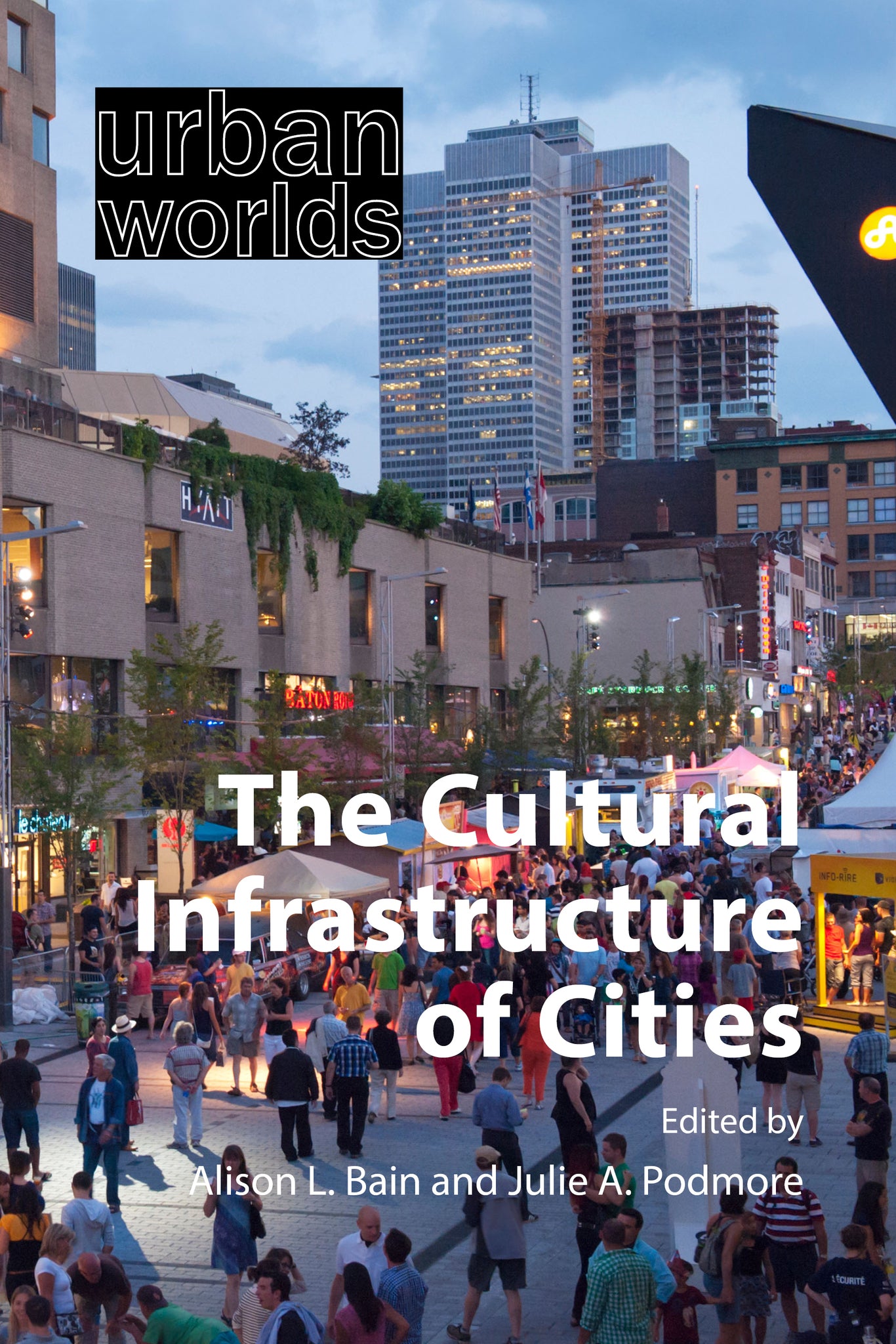
Cities are synonymous with the production and consumption of culture. It is their material and human cultural infrastructure that also makes them archives and works of art. The Cultural Infrastructure of Cities critically re-examines the relationship between the urban and its cultures. It expands our understanding of the concept of urban cultural infrastructure and highlights the foundational role of culture to the materiality and sociality of urban life and the governance of cities.
The book begins with a theoretical overview of the cultural and infrastructural turns in urban studies scholarship. It then explores definitions of cultural infrastructure and its “hard” and “soft” dimensions before critically considering the vulnerabilities generated in the cultural sector by the Covid-19 pandemic. Chapters are organised in four thematic sections focusing on aspects of producing, performing, consuming and collecting culture, which feature detailed case studies from 17 cities across the global North and South.
This book will be of interest not only to students and scholars of urban studies, but also to policy-makers planning and creating cultural infrastructures as well as those working in cultural institutions and creative industries.


— Deborah Stevenson, Professor of Sociology and Urban Cultural Research, Western Sydney University
What does it mean to look at the culture of cities through an infrastructure lens? This book's perspective is a powerful antidote against the instrumentalisation of culture to power urban economies and markets. The book maps a landscape of cultural production in cities making visible the complex and often contingent arrangements that make urban cultures alongside the many ways in which spaces of cultural production are reinvented and appropriated. Short, illuminating section introductions and four illustrations of architectural inspiration from Chan Arun-Pina bring together a carefully curated collection of essays. Cultural infrastructures become dynamic, changing, performed, alive. The deliberate engagement with the challenges of cultural production through the pandemic and in the post-pandemic period reemphasises the ever-changing language of cultural production. This book will appeal to artists, performers, curators, planners, entrepreneurs, infrastructure managers, and students and scholars of urban cultures, to look at their city anew and recognise urban culture in-the-making, full of hope and potentiality.
— Vanesa Castan Broto, Professor of Climate Urbanism, University of Sheffield
Alison L. Bain is Professor of Geography in the Faculty of Environmental and Urban Change, York University, Ontario. She is co-editor of Urbanization in a Global Context (second edition 2022) and author of Creative Margins: Cultural Production in Canadian Suburbs (2013).
Julie A. Podmore is Affiliate Assistant Professor in Geography, Planning and Environment at Concordia University, Montreal and Professor in Geosciences at John Abbott College, Montreal. She is the coeditor of Lesbian Feminism: Essays Opposing Global Heteropatriarchies (2019).
1. Introduction: configuring urban cultural infrastructure
Alison Bain and Julie Podmore
Part I: Producing culture
2. Clustering cultural infrastructure in districts
Alison Bain
3. The relational infrastructure of Open Creative Labs
Suntje Schmidt
4. Affordable studio space as cultural infrastructure: land trusts and the future of creative cities
Rhian Scott, Luke Dickens and Phil Hubbard
Part II: Performing culture
5. The infrastructural politics of post-pandemic theatrical performance
Megan A. Johnson and Marlis Schweitzer
6. The performative contingency of cultural infrastructure
Jessie Stein
7. Embodying cultural infrastructure in Carnival
Martha Radice
8. Youthful city-making through peripheral cultural infrastructure
Antonio Moya-Latorre
Part III: Consuming culture
9. Hawker culture and its infrastructure: experiences and contestations in everyday life
Lily Kong and Aidan Wong
10. Aestheticizing hipster retail infrastructure: from Neapolitan to cosmopolitan
Bryan Mark
11. Crafting alternative urban fashion infrastructure in a digital and pandemic age
Taylor Brydges, Deborah Leslie and Norma Rantisi
12. Embodying arts festivals as infrastructural transformation of places
Bernadette Quinn
Part IV: Collecting culture
13. Infrastructuring museums
Friederike Landau-Donnelly
14. Becoming socio-cultural infrastructure: librarizing practices in public libraries
Rianne van Melik
15. Queer counter-topographies: LGBTQ+ community archives as urban cultural infrastructure
Julie Podmore
16. Conclusion: Reconfiguring urban cultural infrastructure
Alison Bain, Julie Podmore and Chan Arun-Pina