


Some error occured while loading the Quick View. Please close the Quick View and try reloading the page.
2021 Outstanding Academic Title, Choice Magazine
How globalization is undermining sustainable social environments for children
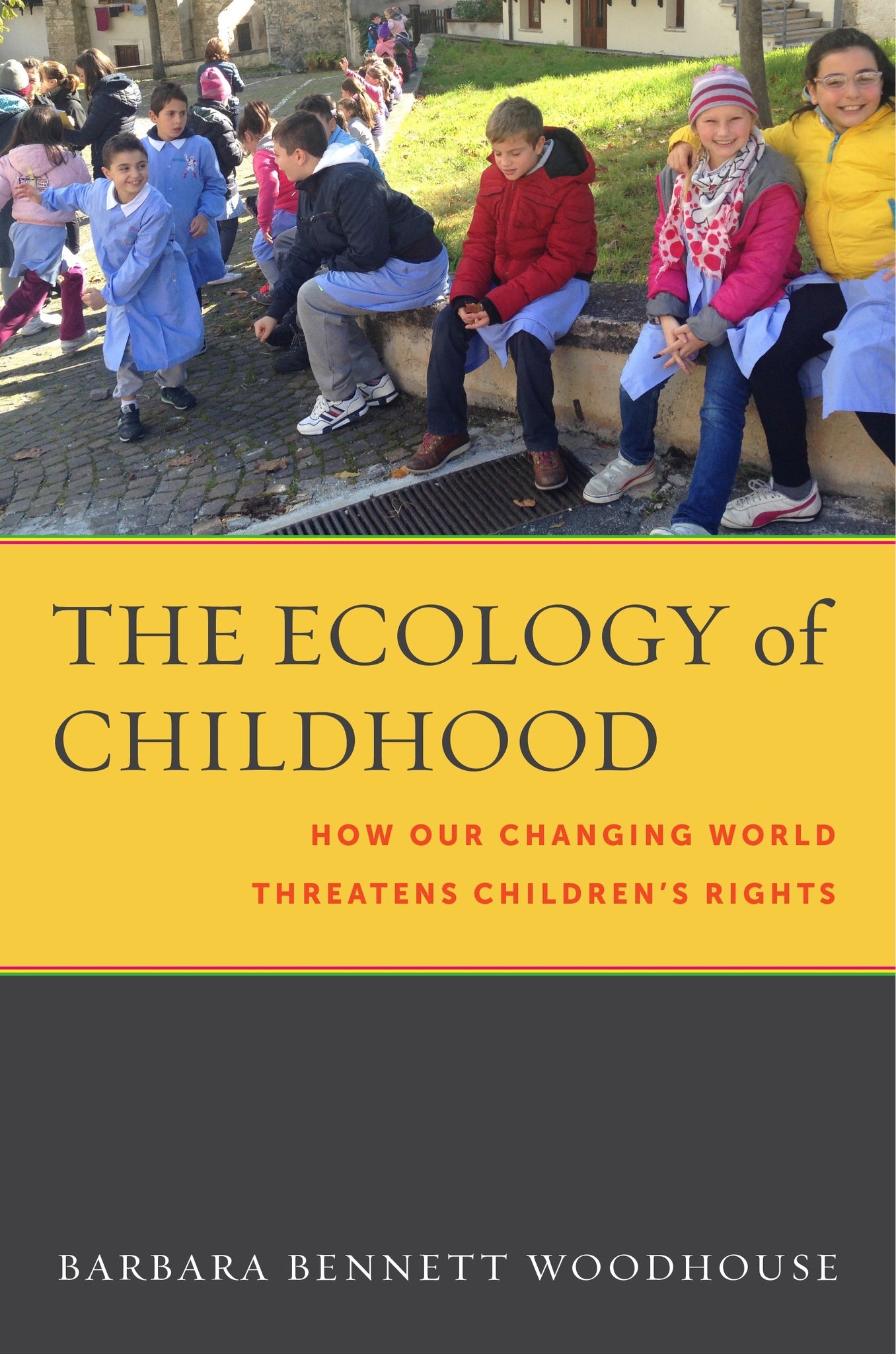
This book uses the ecological model of child development together with ethnographic and comparative studies of two small villages, in Italy and the United States, as its framework for examining the well-being of children in the aftermath of the Great Recession. Global forces, far from being distant and abstract, are revealed as wreaking havoc in children’s environments even in economically advanced countries. Falling birth rates, deteriorating labor conditions, fraying safety nets, rising rates of child poverty, and a surge in racism and populism in Europe and the United States are explored in the petri dish of the village. Globalism’s discontents—unrestrained capitalism and technological change, rising inequality, mass migration, and the juggernaut of climate change—are rapidly destabilizing and degrading the social and physical environments necessary to our collective survival and well-being. This crisis demands a radical restructuring of our macrosystemic value systems. Woodhouse proposes an ecogenerist theory that asks whether our policies and politics foster environments in which children and families can flourish. It proposes, as a benchmark, the family-supportive human-rights principles of the UN Convention on the Rights of the Child. The book closes by highlighting ways in which individuals can engage at the local and regional levels in creating more just and sustainable worlds that are truly fit for children.


— Barbara J. Stark, author of Human Rights and Children
A rare achievement in the literature both on childhood and on human rights, beautifully crafted [with] an impressive variety of research methods and multi-disciplinary analysis. She makes a totally compelling call for us to recognize the problems of the ’small’ as global problems, inextricably intertwined in space and time. Essential reading not only for the study of childhoods but also for anyone whose decisions affect children—that is, the whole of humankind.
— Jane Williams, Swansea University
A rare achievement in the literature both on childhood and on human rights, beautifully crafted [with] an impressive variety of research methods and multi-disciplinary analysis. She makes a totally compelling call for us to recognize the problems of the ’small’ as global problems, inextricably intertwined in space and time. Essential reading not only for the study of childhoods but also for anyone whose decisions affect children—that is, the whole of humankind.
— John Eekelaar, FBA, Emeritus fellow, Pembroke College, Oxford
The Ecology of Childhood invites the reader to join Woodhouse, one of the leading authorities on children’s rights, on a remarkable journey—one in which she demonstrates an exceptional ability to understand children and connect their lived experience to the law and other systems that govern the lives of children and families. An extraordinary interdisciplinary book that articulates a vision for how we can build communities, and ultimately a world, in which all children can thrive.
— Jonathan Todres, Distinguished University Professor and Professor of Law, Georgia State University College of Law
Recommended for All Levels.