


Some error occured while loading the Quick View. Please close the Quick View and try reloading the page.
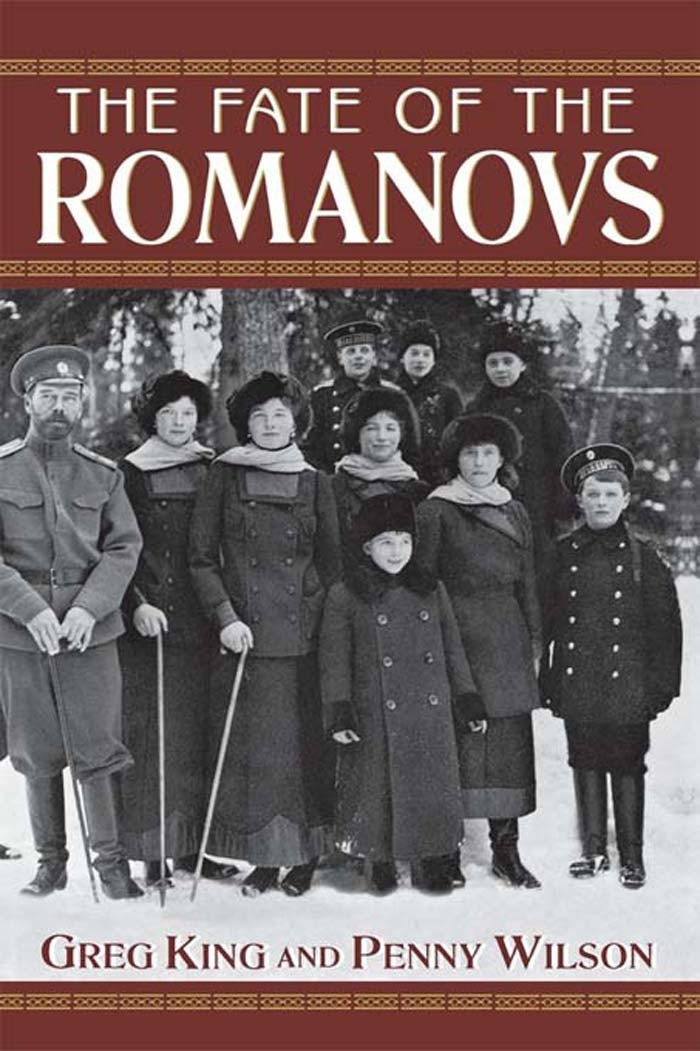
The collapse of the Soviet Union in 1991 revealed, among many other things, a hidden wealth of archival documents relating to the imprisonment and eventual murder of Tsar Nicholas II, his wife Alexandra, and their children. Emanating from sources both within and close to the Imperial Family as well as from their captors and executioners, these often-controversial materials have enabled a new and comprehensive examination of one the pivotal events of the twentieth century and the many controversies that surround it.
Based on a careful analysis of more than 500 of these previously unpublished documents, along with numerous newly discovered photos, The Fate of the Romanovs makes compelling revisions to many long-held beliefs about the Romanovs' final months and moments. This powerful account includes:
* Surprising evidence that Anastasia may, indeed, have survived
* Diary entries made by Nicholas and Alexandra during their captivity
* Revelations of how the Romanovs were betrayed by trusted servants
* A reconstruction of daily life among the prisoners at Ipatiev House
* Strong evidence that the Romanovs were not brutalized by their captors
* Statements from admitted participants in the murders


King (The Man Who Killed Rssputin) and Wilson, a historian specializing in Russia's late imperial era have written a graphic compelling reconstruction of the fate of the last tsar and his family and a detailed account of the case's developments in 1989-2001. Rather than blame the murders directly on Lenin, King and Wilson devote half of their account to proving that the Ural Regional Soviet decided on its own to murder the family, informing Lenin and the Presidium days later. The book's second half examines the wildly contentious ""discovery"" and identification of the royal bones in 1989, even though the Soviet government knew where the mass grave was all along. The disastrous exhumations made identification of the 11 sets of bones nearly impossible-a problem that was compounded when American forensics experts looked into the matter and failed to find the bones of two of the children. This account of the Romanovs' last days is far more graphic than Mark Steinberg and Vladimir M. Khrustalev's The Fall of the Romonovs, but Chapter 21 drops an unexploded bomb: ""The evidence, as it now stands, does not support any such conclusions about the possible deaths of either Grand Duchess Anastasia or Tsarevich Alexi.... (I)t is at least possible that one or more of the victims remain alive."" This opinion is supported only by the lack of physical evidence and seems to run counter to the authors' description of the murder scene earlier in the book. However, the exhaustive documentation and notes and readable style make this book necessary for academic and public libraries. - Harry Willems, Southeast Kansas Lib., Iola (Library Journal, September 15, 2003)
""...I was pleasantly surprised: this complex, fascinating work based on new archives...compellingly revisionist..."" (Daily Mail, 16 November 2003)
""...The Fate of The Romanovs is both encyclopaedic and compelling..."" (Evening Standard, 17 November 2003)
""...the resulting book is a masterpiece of historical research..."" (The Good Book Guide, January 2004)
""...the two authors have turned their investigations into a murder-mystery tale..."" (South Wales Argus, 27 December 2003)
""...makes for fascinating reading...an erudite retelling of a story that refuses to die..."" (Fortean Times, January 2004)
""A startlingly revisionist history of the last months of the Imperial family that compellingly destroys the tired old romantic cliches and recreates the Tsar and the commissars as real characters."" (The Financial Times)
""...a startlingly revisionist history of the last months of the Imperial family t