


Some error occured while loading the Quick View. Please close the Quick View and try reloading the page.
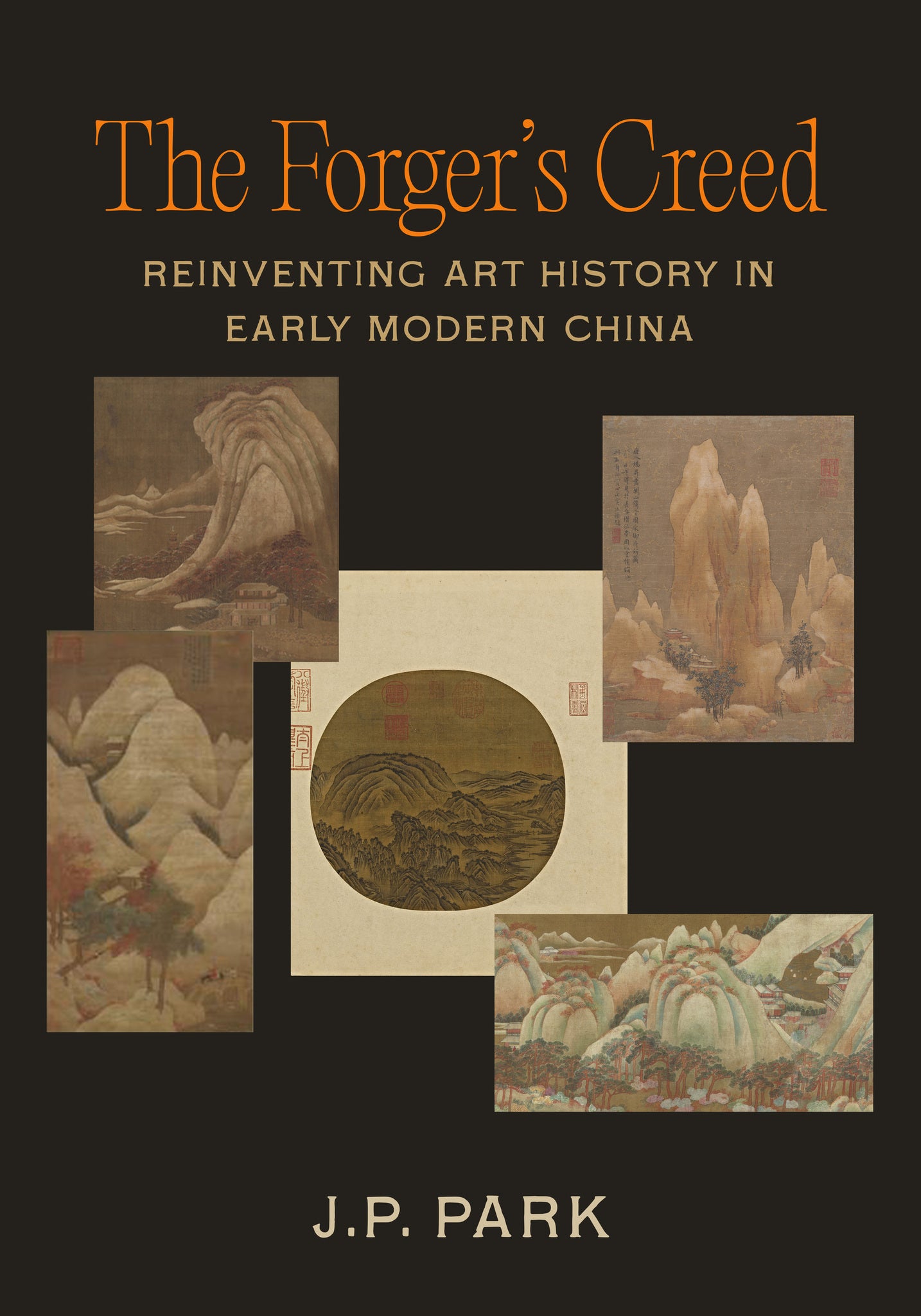
In 1634, scholar-official Zhang Taijie (b. ca. 1588) published a book titled A Record of Treasured Paintings (C. Baohui lu), presenting an extensive catalogue of a purportedly vast painting collection he claimed to have built. However, the entire book is Zhang's meticulously crafted forgery; he even forged paintings to match the documentation, and profited from trading them. Furthermore, the book intriguingly mirrors unfounded art-historical claims of its time. Prominent figures like Dong Qichang (1555–1636) made entirely fabricated arguments to assert legitimate lineages in Chinese art, designed to create a fictionalized history shaped by preferred beliefs rather than reality.
While presenting the first comprehensive exploration of various forgery practices in early modern China—fabricated texts, forged paintings, and fictitious art history—The Forger's Creed examines the cultural, social, and genealogical desires, anxieties, and tensions prevalent in early modern China. Through thorough scrutiny of the historical irregularities introduced by these forgeries, J. P. Park highlights a peculiar and paradoxical phenomenon wherein forgeries transform into legitimate materials across Chinese history.


“Park is an engaging writer, addressing both academics and laymen with clear statements and factual confidence. . . . This beautifully illustrated study is a major contribution to art and social history.”
"A groundbreaking contribution to the study of premodern Chinese art, moving beyond the view of forgeries as mere fabrications or profit-driven practices."
"Park's writing is eloquent and engaging, offering a vivid portrayal of late Ming cultural life, enriched by sociocultural theories and comparative cases beyond China."
“Park's study sets a foundation for untangling how such claims about creation, ownership, and authorship shaped the modern field of art history.”
List of Illustrations
Author’s Note
Acknowledgments
Prologue: James Cahill, Art Historian and Forger
Introduction: Zhang Taijie, the Greatest Art Collector in Chinese History?
1. The Literary Making of the Past: Reading History from Forged Texts
2. To Deceive Is to Believe: Paintings Forged
3. Inventing Traditions: Fabricated Art History
Conclusion: Zhang Taijie, Dong Qichang, and the Carnival
Glossary
Notes
Bibliography
Index