


Some error occured while loading the Quick View. Please close the Quick View and try reloading the page.
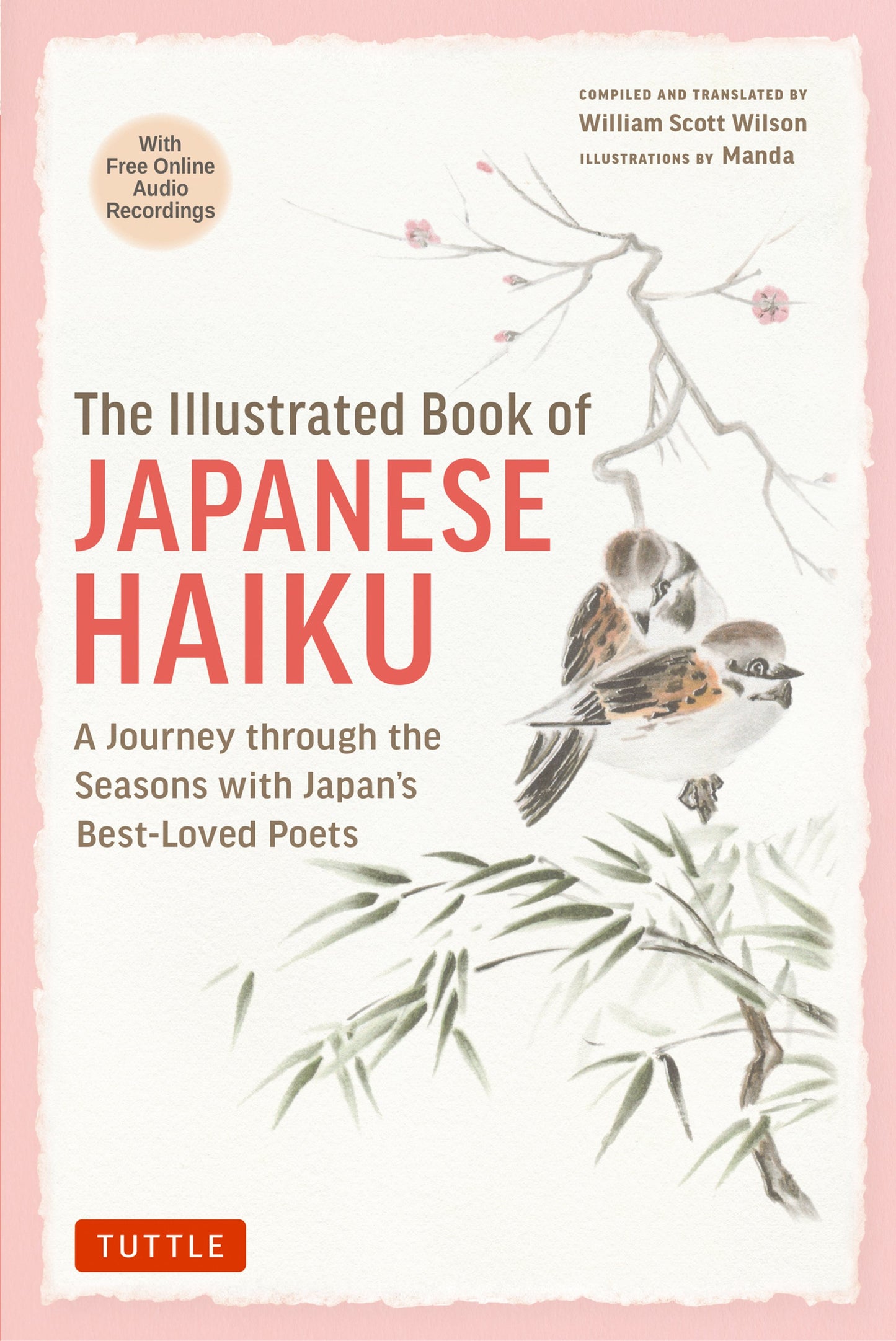
A beautifully illustrated volume of haiku poetry from the 100 most famous Japanese poets.
Ongoing spring;
a nameless mountain
under a light mist
— Basho
This beautifully illustrated collection of seasonal haiku poems by Japan's best-known poets is the perfect book for poetry lovers or anyone who wants to learn more about Japanese haiku. Selected and exquisitely translated by William Scott Wilson, the book features more than 385 haiku by over 100 famous poets with commentary by the translator.
Seasonal poems by the "Great Four" haiku poets (Basho, Shiki, Buson and Issa) are featured alongside the works of other well-known poets like Ryokan, Kikaku and Santoka. Wilson provides fresh new translations of the classic works and includes many other delightful work of poets who are rarely found in English anthologies, including the female poets Kaga no Chojo and Hisajo, as well as haiku written by the famous Japanese novelist Soseki Natsume.
The book is illustrated with 30 lovely haiga illustrations by award-winning French artist Manda, who has received the Order of the Rising Sun from the Japanese government for her work, the highest civilian honor given. All of the poems are presented in Japanese script with Romanized text and English translation. Audio recordings of the Japanese and English versions of the haiku are available online.
Ongoing spring;
a nameless mountain
under a light mist
— Basho
This beautifully illustrated collection of seasonal haiku poems by Japan's best-known poets is the perfect book for poetry lovers or anyone who wants to learn more about Japanese haiku. Selected and exquisitely translated by William Scott Wilson, the book features more than 385 haiku by over 100 famous poets with commentary by the translator.
Seasonal poems by the "Great Four" haiku poets (Basho, Shiki, Buson and Issa) are featured alongside the works of other well-known poets like Ryokan, Kikaku and Santoka. Wilson provides fresh new translations of the classic works and includes many other delightful work of poets who are rarely found in English anthologies, including the female poets Kaga no Chojo and Hisajo, as well as haiku written by the famous Japanese novelist Soseki Natsume.
The book is illustrated with 30 lovely haiga illustrations by award-winning French artist Manda, who has received the Order of the Rising Sun from the Japanese government for her work, the highest civilian honor given. All of the poems are presented in Japanese script with Romanized text and English translation. Audio recordings of the Japanese and English versions of the haiku are available online.

Price: $19.99
Pages: 144
Publisher: Tuttle Publishing
Imprint: Tuttle Publishing
Publication Date:
08 October 2024
Trim Size: 9.00 X 6.00 in
ISBN: 9784805318072
Format: Hardcover

"The illustrations were a marvel to behold, and I loved how they were painted traditionally in the style of minimal but fluid brushstrokes…I recommend it to everyone—even if you're not usually a poetry lover, because I do think this book is actually a great place to start!" —Nique Reviews, bookstagram @chroniqled
"I recently picked up this beautifully illustrated haiku anthology to share with my kids and found myself lingering on page after page, drawn in by the delicate illustrations and the quiet power of the poems…What we loved most was the way the book invited us into a slower pace: each haiku is paired with English translation, the original Japanese, and Romanization, and the images by Manda help evoke the calm beauty of traditional haiga painting." —Kids R. Us Blog
"I recently picked up this beautifully illustrated haiku anthology to share with my kids and found myself lingering on page after page, drawn in by the delicate illustrations and the quiet power of the poems…What we loved most was the way the book invited us into a slower pace: each haiku is paired with English translation, the original Japanese, and Romanization, and the images by Manda help evoke the calm beauty of traditional haiga painting." —Kids R. Us Blog
William Scott Wilson was raised in Ft. Lauderdale, FL; he holds BAs from Dartmouth College and The Monterey Institute of Foreign Studies, and an MA from the University of Washington. He has worked as a translator and advisor on cultural affairs for the Japanese Consulate-General in Seattle, Washington; a teacher of Japanese language; and a guide for Japanese tourists in South Florida. He has had 20 books published, variously translated into 21 foreign languages, including The Lone Samurai: The Life of Miyamoto Musashi. His translation of Hagakure, an 18th century treatise on samurai philosophy, was featured in the film Ghost Dog by the director Jim Jarmusch. Wilson was awarded a Commendation from the Foreign Ministry of Japan and inducted into the Order of the Rising Sun by the Japanese emperor.
Illustrated by:
Around thirty years ago, Manda felt the need to free herself from the academic art world, and distance herself from Western culture. She decided to travel to Japan. Frequent stays there gave her the opportunity to adopt new perspectives. She learned from Japanese masters the "art of the line" as well as the mysteries of haiga, compositions where painted images and calligraphy comes from the same brush, forming an integrated whole. She has published many books of haiga illustrations and poems in her native France, notably on the works of Basho and Santoka.
Illustrated by:
Around thirty years ago, Manda felt the need to free herself from the academic art world, and distance herself from Western culture. She decided to travel to Japan. Frequent stays there gave her the opportunity to adopt new perspectives. She learned from Japanese masters the "art of the line" as well as the mysteries of haiga, compositions where painted images and calligraphy comes from the same brush, forming an integrated whole. She has published many books of haiga illustrations and poems in her native France, notably on the works of Basho and Santoka.