


Some error occured while loading the Quick View. Please close the Quick View and try reloading the page.
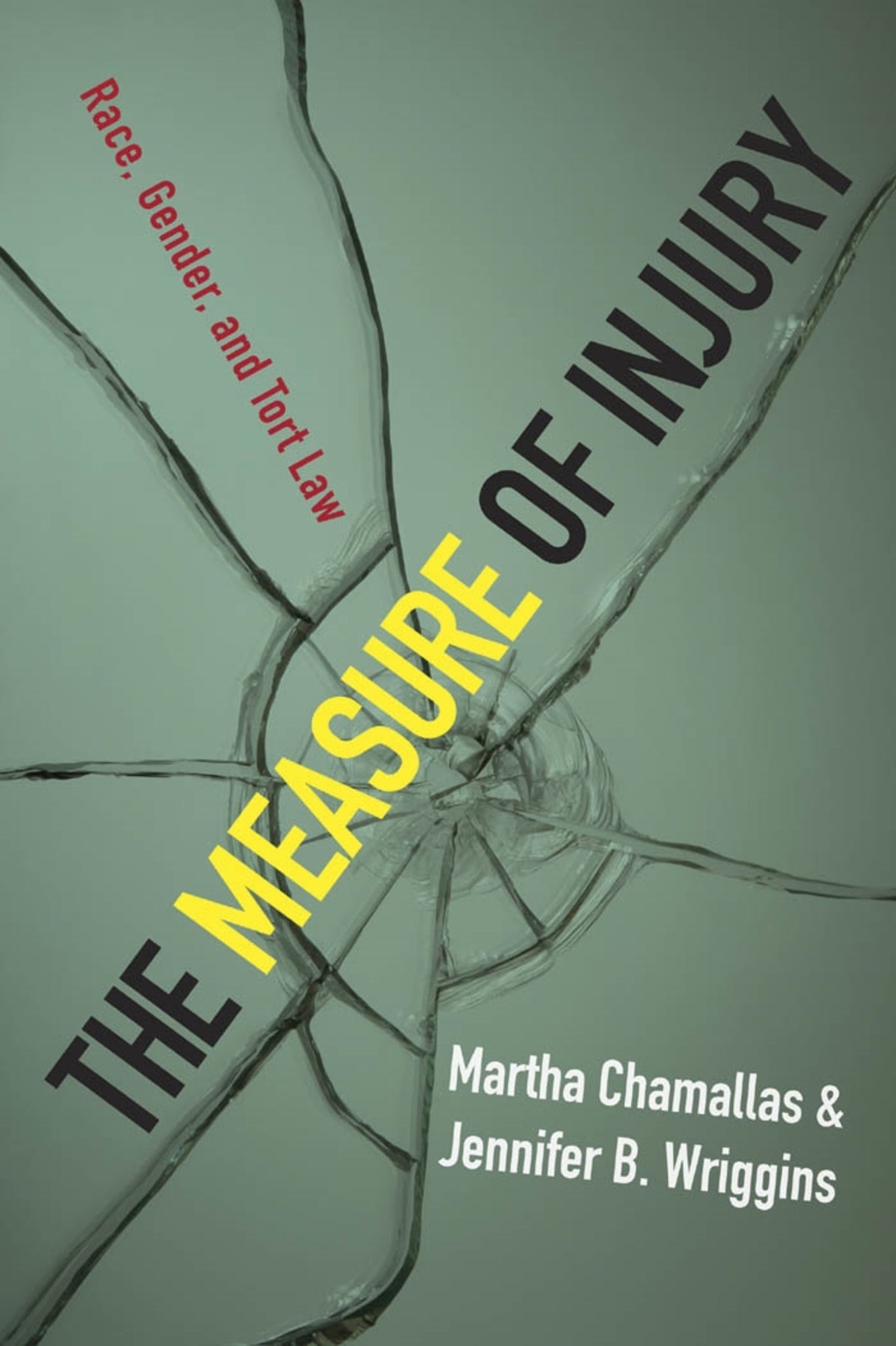
Tort law is the body of law governing negligence, intentional misconduct, and other wrongful acts for which civil actions can be brought. The conventional wisdom is that the rules, concepts, and structures of tort law are neutral and unbiased, free of considerations of gender and race.
In The Measure of Injury, Martha Chamallas and Jennifer Wriggins prove that tort law is anything but gender and race neutral. Drawing on an in-depth analysis of case law ranging from the Jim Crow South to the 9/11 Victim Compensation Fund, the authors demonstrate that women and minorities have been under-compensated in tort law and that traditional biases have resurfaced in updated forms to perpetuate patterns of disparate recovery based on race and gender. Grappling with tort theory, the intricacies of legal doctrine and the practical effects of legal rules, The Measure of Injury is a unique treatise on torts that uncovers the public and cultural dimensions of this always-controversial domain of private law.


The book manifests a unique perspective on tort law that is well-explained and carefully developed, and it is one of the best written books on critical legal theory that I have read .
— Michelle D. Deardorff
This book asks important questions about the tort system. Tort law is largely taught and described from a doctrinal perspective that makes no attempt to see how it is actually working on the ground. This book assesses how the tort system fares in operation by examining how race and gender influence court decisions in torts cases. A promising direction for scholarship on the tort system.
— Keith N. Hylton,Honorable Paul J. Liacos Professor of Law, Boston University
Though one would barely know it from the law school casebooks, the American law of torts has been deeply shaped by race and gender. Chamallas and Wriggins have revealed heretofore unknown features in the plate tectonics oftort law. Their book should usher in a new era in the study of race and gender in the field.
— John Fabian Witt,Yale Law School
What kind of harms matter, and why? Steeped in the history of American tort law, Chamallas and Wriggins demonstrate how attitudes about race and gender run through the harms recognizedand not recognizedby American law. This book is brimming with insights about how societies do and should express what matters in assigning liability for human pain and loss.
— Martha Minow,Dean of the Faculty of Law, Harvard Law School