


Some error occured while loading the Quick View. Please close the Quick View and try reloading the page.
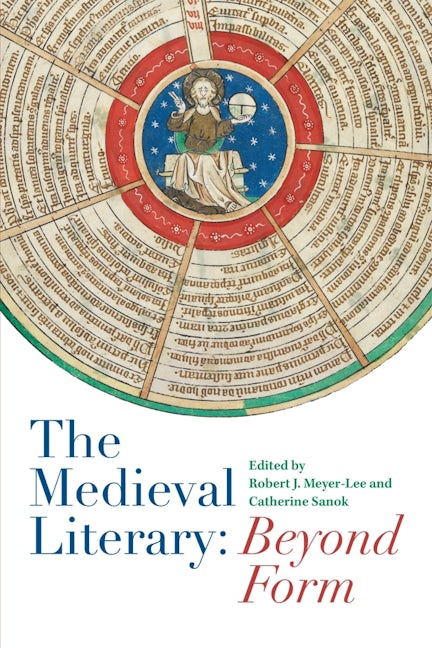
Essays studying the relationship between literariness and form in medieval texts.
The twenty-first century has witnessed the re-emergence of various kinds of literary formalism, and one project that characterizes most of these diverse formalisms is the effort to distinguish what is precisely literary about their objects of study. The presumed relation between form and the literary that this project presupposes, however, raises questions that still need to be addressed. What is it about form that produces the category of the literary? What precisely is literary about literary form? Can the literary be defined beyond form?
This volume explores these questions in the historical and geographical frame of late medieval Britain, across vaunted literary works such as the Franklin's Tale, Sir Gawain and the Green Knight, and the Towneley Shepherds' Plays, and presumed "non-literary" texts, such as books of hours. By studying texts from a period long priorto literary formalism - indeed, before any fully articulated theory of the literary - the essays gathered here aim to rethink the relationship between form and the literary.
Robert J. Meyer-Lee is Margaret W. PepperdeneDistinguished Scholar-in-Residence at Agnes Scott College; Catherine Sanok is an Associate Professor of English and Women's Studies at the University of Michigan.
Contributors: Anke Bernau, Jessica Brantley, Seeta Chaganti, Shannon Gayk, Kathryn Kerby-Fulton, Andrew Klein, Robert J. Meyer-Lee, Ingrid Nelson, Maura Nolan, Sarah Elliott Novacich, Catherine Sanok, Emily Steiner, Claire M. Waters.
The twenty-first century has witnessed the re-emergence of various kinds of literary formalism, and one project that characterizes most of these diverse formalisms is the effort to distinguish what is precisely literary about their objects of study. The presumed relation between form and the literary that this project presupposes, however, raises questions that still need to be addressed. What is it about form that produces the category of the literary? What precisely is literary about literary form? Can the literary be defined beyond form?
This volume explores these questions in the historical and geographical frame of late medieval Britain, across vaunted literary works such as the Franklin's Tale, Sir Gawain and the Green Knight, and the Towneley Shepherds' Plays, and presumed "non-literary" texts, such as books of hours. By studying texts from a period long priorto literary formalism - indeed, before any fully articulated theory of the literary - the essays gathered here aim to rethink the relationship between form and the literary.
Robert J. Meyer-Lee is Margaret W. PepperdeneDistinguished Scholar-in-Residence at Agnes Scott College; Catherine Sanok is an Associate Professor of English and Women's Studies at the University of Michigan.
Contributors: Anke Bernau, Jessica Brantley, Seeta Chaganti, Shannon Gayk, Kathryn Kerby-Fulton, Andrew Klein, Robert J. Meyer-Lee, Ingrid Nelson, Maura Nolan, Sarah Elliott Novacich, Catherine Sanok, Emily Steiner, Claire M. Waters.

Price: $130.00
Pages: 288
Publisher: Boydell & Brewer Inc.
Imprint: D.S.Brewer
Publication Date:
18 May 2018
Trim Size: 9.21 X 6.14 in
ISBN: 9781843844891
Format: Hardcover
BISACs:
LITERARY CRITICISM / Medieval, Literary studies: ancient, classical and medieval

At its best, this volume shows us what is happening in the work among some of the most professionally creative and ambitious medievalists today. If it lacks the overarching focus of earlier collections on historicism, it offers a welcome testimony to the fact that medieval literary study may be more varied, more open, and (at times) even more wacky than it used to be. And to me, anyway, that is a good thing.
Introduction: The Literary through - or beyond? - Form - Catherine Sanok and Robert J Meyer-Lee
What's the Use? Marian Miracles and the Workings of the Literary - Claire M. Waters
Form's Practice: Lyrics, Grammars, and the Medieval Idea of the Literary - Ingrid Nelson
Forms of the Hours in Late Medieval England - Jessica Brantley
Rhymed Alliterative Verse in Mise en page Transition: Two Case Studies in English Poetic Hybridity - Andrew Klein
Rhymed Alliterative Verse in Mise en page Transition: Two Case Studies in English Poetic Hybridity - Kathryn Kerby-Fulton
Idiot Psalms: Sound, Style, and the Performance of the Literary in the Towneley Shepherds' Plays - Shannon Gayk
Inaudible Music - Sarah Elliott Novacich
Translating Form with Patience - Anke Bernau
Terpsichorean Form: Geoffrey Chaucer's Franklin's Tale and Robert Smithson's Spiral Jetty - Seeta Chaganti
Illusion and Aspect in the Construction of the Face: Chaucerian Individuals, Chaucerian Types - Maura Nolan
Collecting, Violence, Literature: Richard of Bury's Philobiblon and the Forms of Literary History - Emily Steiner
What's the Use? Marian Miracles and the Workings of the Literary - Claire M. Waters
Form's Practice: Lyrics, Grammars, and the Medieval Idea of the Literary - Ingrid Nelson
Forms of the Hours in Late Medieval England - Jessica Brantley
Rhymed Alliterative Verse in Mise en page Transition: Two Case Studies in English Poetic Hybridity - Andrew Klein
Rhymed Alliterative Verse in Mise en page Transition: Two Case Studies in English Poetic Hybridity - Kathryn Kerby-Fulton
Idiot Psalms: Sound, Style, and the Performance of the Literary in the Towneley Shepherds' Plays - Shannon Gayk
Inaudible Music - Sarah Elliott Novacich
Translating Form with Patience - Anke Bernau
Terpsichorean Form: Geoffrey Chaucer's Franklin's Tale and Robert Smithson's Spiral Jetty - Seeta Chaganti
Illusion and Aspect in the Construction of the Face: Chaucerian Individuals, Chaucerian Types - Maura Nolan
Collecting, Violence, Literature: Richard of Bury's Philobiblon and the Forms of Literary History - Emily Steiner