


Some error occured while loading the Quick View. Please close the Quick View and try reloading the page.
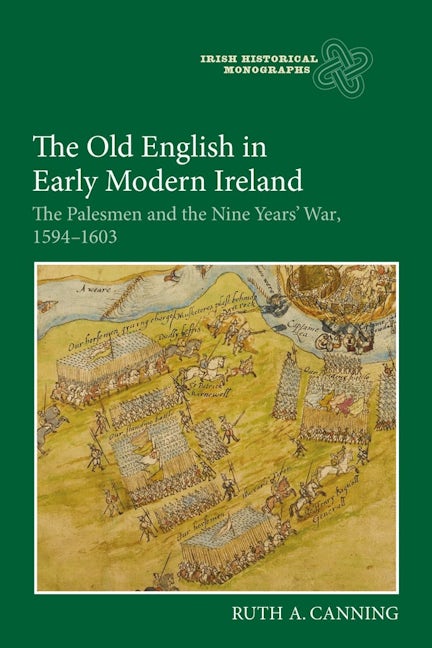
Examines the divided loyalties of the descendants of Ireland's Anglo-Norman conquerors during the wars against the Irish confederate rebels.
WINNER of the NUI Publication Prize in Irish History 2019
Descendants of Ireland's Anglo-Norman conquerors, the Old English had upheld the authority of the English crown in Ireland for four centuries. Yet the sixteenth century witnessed the demotion of this Irish-born and predominantly Catholic community from places of trust and authority in the Irish administration in favour of English Protestant newcomers. Political alienation and growing religious tensions strained crown-community relations and caused many Old Englishmen to reconsider their future in Ireland.
The Nine Years' War (1594-1603) presented them with an ideal opportunity to reassess their relationshipwith the crown when the Irish Confederates, led by Hugh O'Neill, Earl of Tyrone, sought their support. This book explores the role of the Old English during the Nine Years' War. It discusses the impact of divided loyalties, examines how they responded to political, social, religious, and military pressures, and assesses how the war shaped their sense of identity. The book demonstrates that despite the anxieties of English officials, the Old English remained loyal. More than that, they played a key role in defeating the Irish Confederacy through military and financial support. It argues that their sense of tradition and duty to uphold English rule in Ireland was central to their identity and that appeals to embrace a new Irish Catholic identity, in partnership with the Gaelic Irish, was doomed to failure.
RUTH CANNING is Lecturer in Early Modern History at Liverpool Hope University.
WINNER of the NUI Publication Prize in Irish History 2019
Descendants of Ireland's Anglo-Norman conquerors, the Old English had upheld the authority of the English crown in Ireland for four centuries. Yet the sixteenth century witnessed the demotion of this Irish-born and predominantly Catholic community from places of trust and authority in the Irish administration in favour of English Protestant newcomers. Political alienation and growing religious tensions strained crown-community relations and caused many Old Englishmen to reconsider their future in Ireland.
The Nine Years' War (1594-1603) presented them with an ideal opportunity to reassess their relationshipwith the crown when the Irish Confederates, led by Hugh O'Neill, Earl of Tyrone, sought their support. This book explores the role of the Old English during the Nine Years' War. It discusses the impact of divided loyalties, examines how they responded to political, social, religious, and military pressures, and assesses how the war shaped their sense of identity. The book demonstrates that despite the anxieties of English officials, the Old English remained loyal. More than that, they played a key role in defeating the Irish Confederacy through military and financial support. It argues that their sense of tradition and duty to uphold English rule in Ireland was central to their identity and that appeals to embrace a new Irish Catholic identity, in partnership with the Gaelic Irish, was doomed to failure.
RUTH CANNING is Lecturer in Early Modern History at Liverpool Hope University.

Price: $120.00
Pages: 240
Publisher: Boydell & Brewer Inc.
Imprint: Boydell Press
Publication Date:
15 March 2019
Trim Size: 9.21 X 6.14 in
ISBN: 9781783273270
Format: Hardcover
BISACs:
HISTORY / Europe / Ireland, European history, HISTORY / Modern / 17th Century, HISTORY / Europe / Great Britain / General, General and world history

[C]anning successfully analyzes the experience, involvement, and treatment of the Old English population living in the Irish Pale during the war. [...] As Canning states early on, "there remains a gap" in the field, and The Old English in Early Modern Ireland narrows that gap admirably
Pale Politics: An Old English Community and the Outbreak of War
Instruments of Sedition: Priests and the Pale
Secret Traitors and Crown Colluders: The Palesmen's Response to Patriotic Pressures
'Patriot Games': Old English Participation in the Crown's Military Enterprise
'Road to Perdition': The Impact of War on the Pale
Office and Influence: Defending a Tradition of Privilege
Epilogue
Bibliography
Index
Instruments of Sedition: Priests and the Pale
Secret Traitors and Crown Colluders: The Palesmen's Response to Patriotic Pressures
'Patriot Games': Old English Participation in the Crown's Military Enterprise
'Road to Perdition': The Impact of War on the Pale
Office and Influence: Defending a Tradition of Privilege
Epilogue
Bibliography
Index