


Some error occured while loading the Quick View. Please close the Quick View and try reloading the page.
WINNER, 2022 John Hope Franklin Prize, given by the American Studies Association
HONORABLE MENTION, 2022 Gloria E. Anzaldúa Book Prize, given by the National Women's Studies Association
Reveals the troubling intimacy between Black women and the making of US global power
The year 1968 marked both the height of the worldwide Black liberation struggle and a turning point for the global reach of American power, which was built on the counterinsurgency honed on Black and other oppressed populations at home. The next five decades saw the consolidation of the culture of the American empire through what Erica R. Edwards calls the “imperial grammars of blackness.”
This is a story of state power at its most devious and most absurd, and, at the same time, a literary history of Black feminist radicalism at its most trenchant. Edwards reveals how the long war on terror, beginning with the late–Cold War campaign against organizations like the Black Panther Party for Self-Defense and the Black Liberation Army, has relied on the labor and the fantasies of Black women to justify the imperial spread of capitalism. Black feminist writers not only understood that this would demand a shift in racial gendered power, but crafted ways of surviving it.
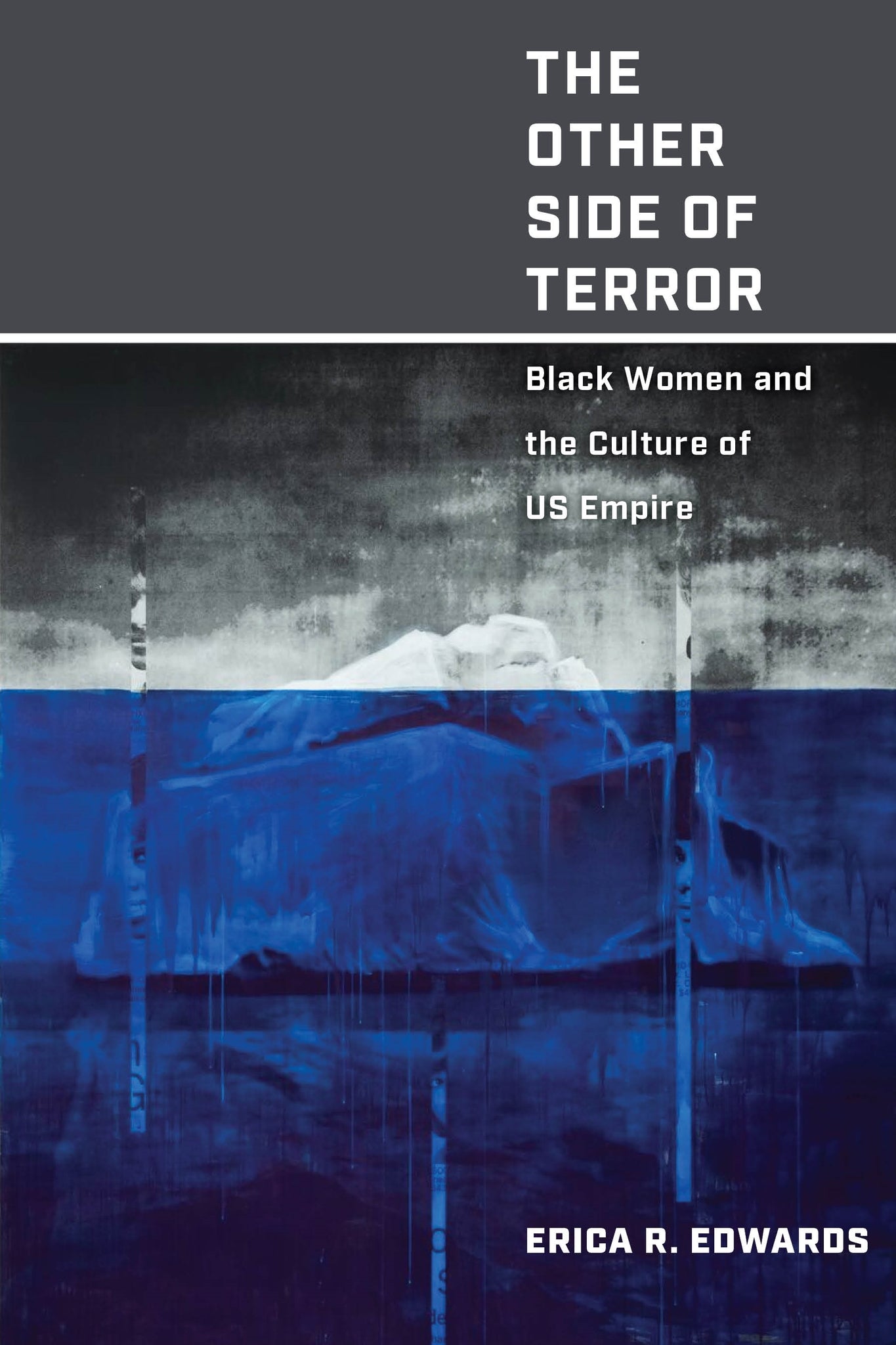
The Other Side of Terror offers an interdisciplinary Black feminist analysis of militarism, security, policing, diversity, representation, intersectionality, and resistance, while discussing a wide array of literary and cultural texts, from the unpublished work of Black radical feminist June Jordan to the memoirs of Condoleezza Rice to the television series Scandal. With clear, moving prose, Edwards chronicles Black feminist organizing and writing on “the other side of terror”, which tracked changes in racial power, transformed African American literature and Black studies, and predicted the crises of our current era with unsettling accuracy.


"In this highly informed and deeply researched interrogation of the global security state after 9/11, Erica Edwards asks us to read black women and black women’s expressive culture as both resistant to and complicit in American global power. To expose and critique the American security regime and the cultures of imperialism, Edwards turns to a tradition of black feminist radicalism and the insurgent texts of black feminists such as Alice Randall, June Jordan, Toni Cade Bambara, Gloria Naylor, and Nikki Finney. This is a brave and unsettling book, one that makes us think about black women not as fringe actors or minority figures, but as major players in the global arena."
"Erica R. Edwards presents a powerful analysis connecting politics and literature…This is a brilliant book that is likely to produce endless new insights."
"The book is an outstanding example of Black feminist historiography rooted in an interdisciplinary approach. Edwards, a literary historian, is in conversation with a variety of scholars and draws from a wide range of archives...[Her] deep and impressive knowledge of both large-scale and personal histories and use of this variety of sources shows the reader how to be a cultural historian."