


Some error occured while loading the Quick View. Please close the Quick View and try reloading the page.
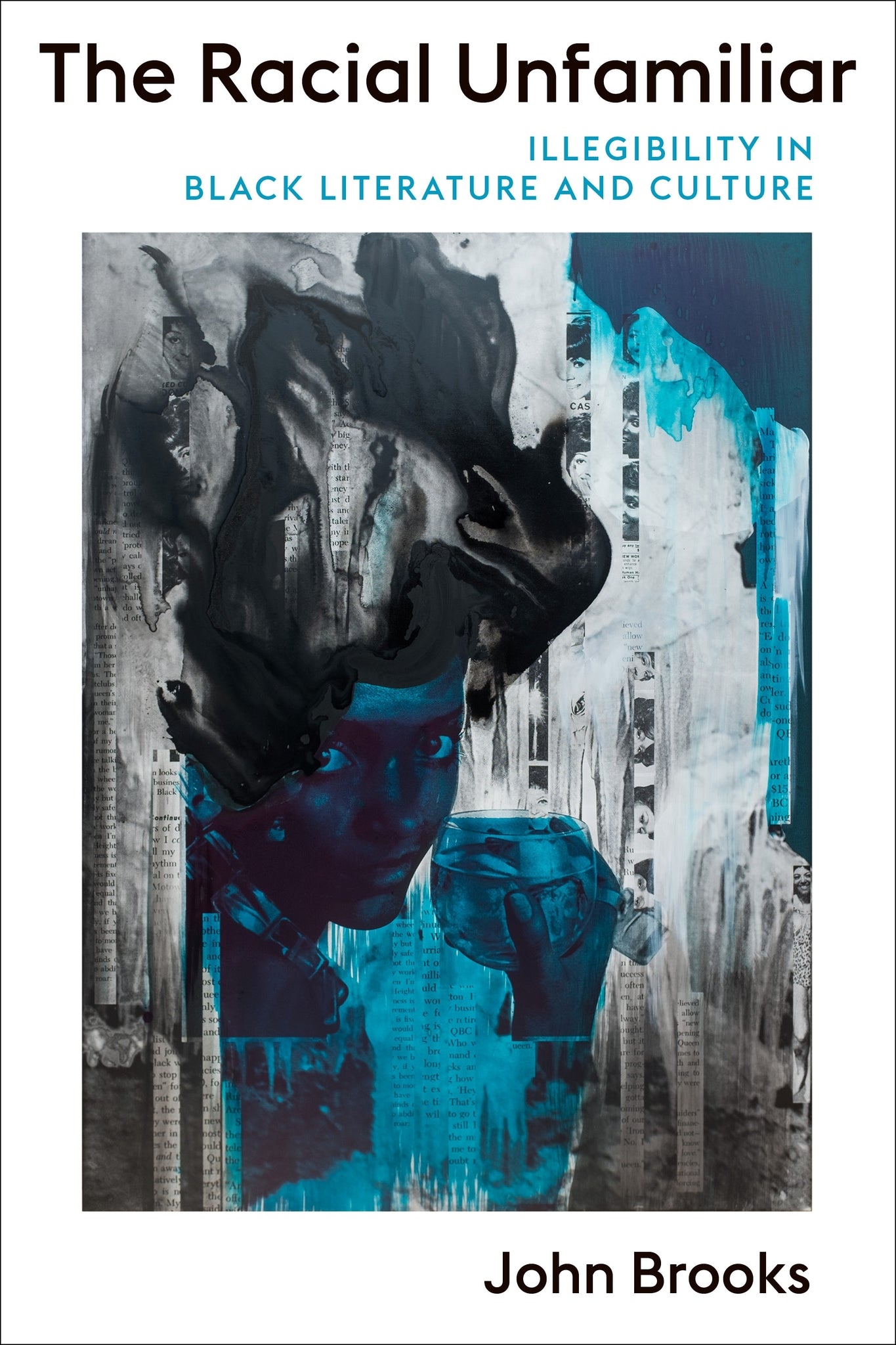
The works of African American authors and artists are too often interpreted through the lens of authenticity. They are scrutinized for “positive” or “negative” representations of Black people and Black culture or are assumed to communicate some truth about Black identity or the “Black experience.” However, many contemporary Black artists are creating works that cannot be slotted into such categories. Their art resists interpretation in terms of conventional racial discourse; instead, they embrace opacity, uncertainty, and illegibility.
John Brooks examines a range of abstractionist, experimental, and genre-defying works by Black writers and artists that challenge how audiences perceive and imagine race. He argues that literature and visual art that exceed the confines of familiar conceptions of Black identity can upend received ideas about race and difference. Considering photography by Roy DeCarava, installation art by Kara Walker, novels by Percival Everett and Paul Beatty, drama by Suzan-Lori Parks, and poetry by Robin Coste Lewis, Brooks pinpoints a shared aesthetic sensibility. In their works, the devices that typically make race feel familiar are instead used to estrange cultural assumptions about race. Brooks contends that when artists confound expectations about racial representation, the resulting disorientation reveals the incoherence of racial ideologies. By showing how contemporary literature and art ask audiences to question what they think they know about race, The Racial Unfamiliar offers a new way to understand African American cultural production.


— Glenda Carpio, author of Laughing Fit to Kill: Black Humor in the Fictions of Slavery
John Brooks’ The Racial Unfamiliar elegantly describes a cohort of contemporary Black artists whose abstractionist aesthetics unfix race from essentialized representation, privileging instead disorientation and illegibility. This is groundbreaking work that cogently articulates a critical Blackness that is not about countering stereotypes, but rather the power of illegibility to unmake race.
— Sheri-Marie Harrison, author of Jamaica’s Difficult Subjects: Negotiating Sovereignty in Anglophone Caribbean Literature and Criticism
In The Racial Unfamiliar, John Brooks makes a compelling case for "critical Blackness" as a term for appreciating the conceptual pressure artists put on blackness, as an idea, in their representational experiments. Deftly, aptly, beautifully, Brooks showcases a fluency across visual art, sound, and literature as he advances his argument about an aesthetics of abstraction and illegibility. His close readings are brilliant and inspiring and the result, this essential book, amplifies criticality as a defining dynamic of contemporary Black expressive traditions.
— Kevin Quashie, author of Black Aliveness, or A Poetics of Being
John Brooks joins the vanguard of scholars chronicling Black expressive culture. Spotlighting the ‘abstractionist aesthetics’ of artists such as Suzan-Lori Parks and Kara Walker, he dynamically enters the debate on what Blackness is and ain’t by forcefully rejecting essentialism in favor of the opaque, illegible, and variable.
— Harvey Young, author of Embodying Black Experience: Stillness, Critical Memory, and the Black Body
Acknowledgments
Introduction: Encountering Illegibility: The Enactment of Critical Blackness
Part I. Vision
1. Picturing Blackness in the Photography of Roy DeCarava
2. A Muse for Blackness: Kara Walker’s “Outlaw Rebel” Vision
Part II. Genre
3. Antiessentialist Form: The Bebop Effect of Percival Everett’s Erasure
4. Beyond Satire: The Humor of Incongruity in Paul Beatty’s The Sellout
Part III. History
5. The Politics of Inertia: Temporal Distortion in Suzan-Lori Parks’s 100 Plays for the First Hundred Days
6. Heretical Poetics in Robin Coste Lewis’s The Voyage of the Sable Venus
Afterword: Critical Blackness in Contexts
Notes
Bibliography
Index