


Some error occured while loading the Quick View. Please close the Quick View and try reloading the page.
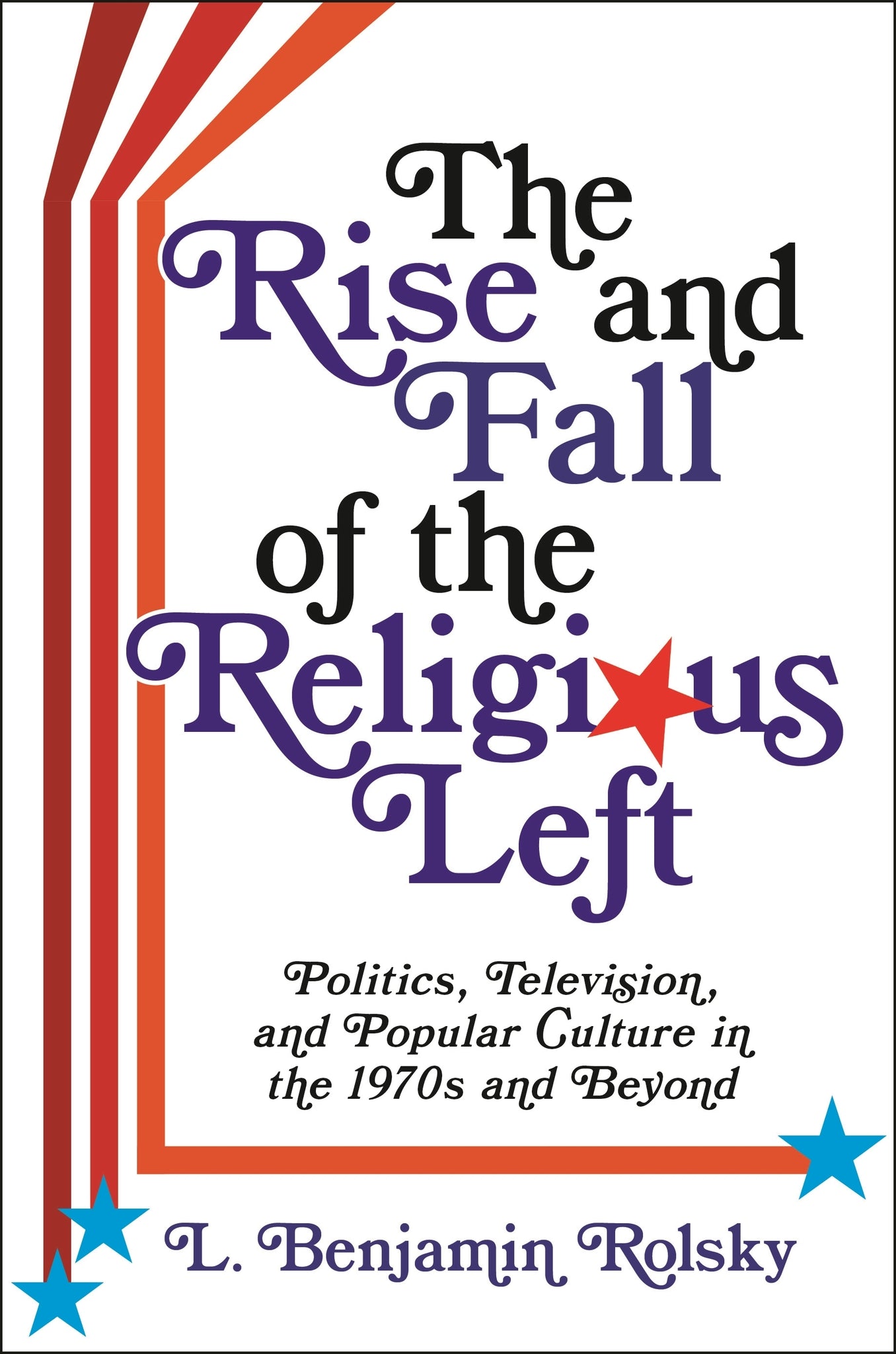
For decades now, Americans have believed that their country is deeply divided by “culture wars” waged between religious conservatives and secular liberals. In most instances, Protestant conservatives have been cast as the instigators of such warfare, while religious liberals have been largely ignored. In this book, L. Benjamin Rolsky examines the ways in which American liberalism has helped shape cultural conflict since the 1970s through the story of how television writer and producer Norman Lear galvanized the religious left into action.
The creator of comedies such as All in the Family and Maude, Lear was spurred to found the liberal advocacy group People for the American Way in response to the rise of the religious right. Rolsky offers engaged readings of Lear’s iconic sitcoms and published writings, considering them as an expression of what he calls the spiritual politics of the religious left. He shows how prime-time television became a focus of political dispute and demonstrates how Lear’s emergence as an interfaith activist catalyzed ecumenical Protestants, Catholics, and Jews who were determined to push back against conservatism’s ascent. Rolsky concludes that Lear’s political involvement exemplified religious liberals’ commitment to engaging politics on explicitly moral grounds in defense of what they saw as the public interest. An interdisciplinary analysis of the definitive cultural clashes of our fractious times, The Rise and Fall of the Religious Left foregrounds the foundational roles played by popular culture, television, and media in America’s religious history.


Rolsky’s work is a useful guide to where we’ve been as well as where we might be going; it encourages us to think about what kind of consensus we may be building, and who we might be including and excluding, along the way.
Rise and Fall should garner a wide and varied audience, and it appears intentionally so. It is self-consciously and transparently situated, adeptly self-described in relation to a number of subfields, scholars, and paradigmatic shifts.
— CARA BURNIDGE
Rolsky's study contributes immensely to our understanding of his work at the intersection of religion, culture, and politics in the United States during the 1970s and 1980s.
— David Mislin
For some who have taken a hiatus from politics and religion, The Rise and Fall of the Religious Left Politics, Television, and Popular Culture in the 1970s and Beyond by L. Benjamin Rolsky is a must read; a companion to the inevitable upheaval that is on the horizon. If there is one political book that you should read in 2020...it’s this one.
— Eraina Davis
Although the religious right looms large in histories of the 1970s, the struggle over religion, politics and culture didn’t unfold only on the right. In this lively and engaging study, Rolsky shows how Norman Lear and People for the American Way advanced a strong spiritual vision of civic life from the left.
— Kevin M. Kruse, author of One Nation Under God: How Corporate America Invented Christian America
Rolsky demonstrates how Norman Lear, the renowned television producer of classic shows like All in the Family, offers a window into the evolution of the religious left in the 1970s and its complex relationship with the moral majority. A fascinating and intriguing history of the intersection between popular culture, religion, and American politics.
— Julian E. Zelizer, coauthor of Fault Lines: A History of the United States Since 1974
L. Benjamin Rolsky intends to prod and provoke, and he does so through his sophisticated analysis of the effect of Lear’s work. This is a strong, important, and innovative work. The framing of Lear within the 'politics of religious liberalism,' the explanation of the creation and workings of a mainstream Protestantism that saw itself as a sort of caretaker of the nation, and the challenging and intellectually complex thesis pursued here all highly recommend this as an important work that should draw attention, discussion, and debate.
— Paul Harvey, author of Christianity and Race in the American South: A History
This exceptional, vividly argued book revises the history of religion and politics in the U.S. Rolsky pushes us to see politics as mediated spiritual warfare in which the winner is the one who makes the most accessible entertainment from social outrage. Highly recommended.
— Kathryn Lofton, author of Consuming Religion
A highly original examination of the role of television in the so-called culture wars of the 1970s . . . Rolsky’s great contribution is to turn our attention to media, especially television, as a site of religious and political contestation.
Acknowledgments
Introduction: Religious Liberalism, American Politics, and Public Life
1. Norman Lear, the Christian Right, and the Spiritual Politics of the Religious Left
2. All in the Family and the Spiritual Politicization of the American Sitcom
3. Norman Lear, the FCC, and the Holy War Over American Television
4. People for the American Way and Spiritual Politics in Late Twentieth-Century America
5. Liberalism as Variety Show: I Love Liberty and the Decline of the Religious Left
Conclusion: Religion, Politics, and the Public Square—2019
Notes
Bibliography
Index