


Some error occured while loading the Quick View. Please close the Quick View and try reloading the page.
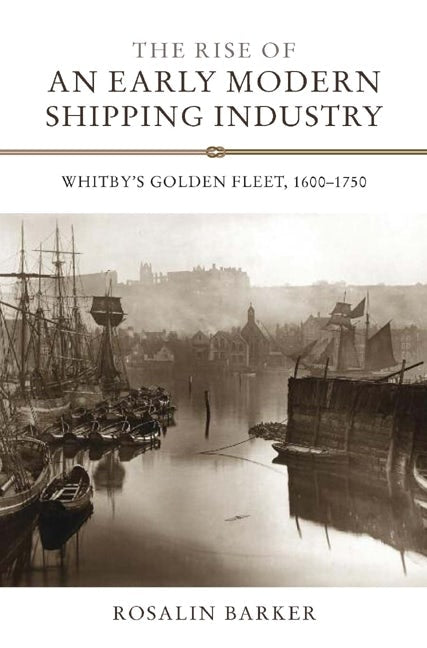
Provides a huge amount of detail about everyday maritime life in the important port of Whitby, home port of Captain Cook.
The ancient but isolated town of Whitby has made a huge contribution to the maritime history of Britain: Captain Cook learned sailing and navigation here; during the eighteenth century the town was a provider of an exceptionally large number of transport ships in wartime; and in the nineteenth century Whitby became a major whaling port. This book examines how it came to be such an important shipping centre.
Drawing on extensive maritime records, the author shows that it was commercial entrepreneurship which brought about the growth of Whitby's shipping industry, first in the export of local alum and carrying coal to London, then in northern European trades, alongside its very successful ship-building industry.
The book includes details from the financial accounts of voyages. These provide a fascinating insight into seafaring in the period with details of the hierarchical structure of crews,and of shipboard apprentices learning the trade. Overall, a very full picture emerges of every aspect of the shipping industry of this key port.
ROSALIN BARKER is an Honorary Fellow in the History Department at the University of Hull, and was formerly a tutor in adult education at the universities of Cambridge, Leeds and Hull and the Open University.
The ancient but isolated town of Whitby has made a huge contribution to the maritime history of Britain: Captain Cook learned sailing and navigation here; during the eighteenth century the town was a provider of an exceptionally large number of transport ships in wartime; and in the nineteenth century Whitby became a major whaling port. This book examines how it came to be such an important shipping centre.
Drawing on extensive maritime records, the author shows that it was commercial entrepreneurship which brought about the growth of Whitby's shipping industry, first in the export of local alum and carrying coal to London, then in northern European trades, alongside its very successful ship-building industry.
The book includes details from the financial accounts of voyages. These provide a fascinating insight into seafaring in the period with details of the hierarchical structure of crews,and of shipboard apprentices learning the trade. Overall, a very full picture emerges of every aspect of the shipping industry of this key port.
ROSALIN BARKER is an Honorary Fellow in the History Department at the University of Hull, and was formerly a tutor in adult education at the universities of Cambridge, Leeds and Hull and the Open University.

Price: $120.00
Pages: 212
Publisher: Boydell & Brewer Inc.
Imprint: Boydell Press
Series: Regions and Regionalism in History
Publication Date:
19 May 2011
Trim Size: 9.21 X 6.14 in
ISBN: 9781843836315
Format: Hardcover
BISACs:
HISTORY / Europe / Great Britain / General, European history, HISTORY / Modern / General, BUSINESS & ECONOMICS / Economic History, General and world history

A first-rate socio-economic history of an important and fascinating port.
Introduction: A Small Port in Yorkshire
Foundations
The Early Seventeenth Century
Upheaval
Stabilisation and Confidence
Overview of the Seventeenth Century
The Established Port
'They That go Down to the Sea in Ships'
Conclusion
Foundations
The Early Seventeenth Century
Upheaval
Stabilisation and Confidence
Overview of the Seventeenth Century
The Established Port
'They That go Down to the Sea in Ships'
Conclusion