


Some error occured while loading the Quick View. Please close the Quick View and try reloading the page.
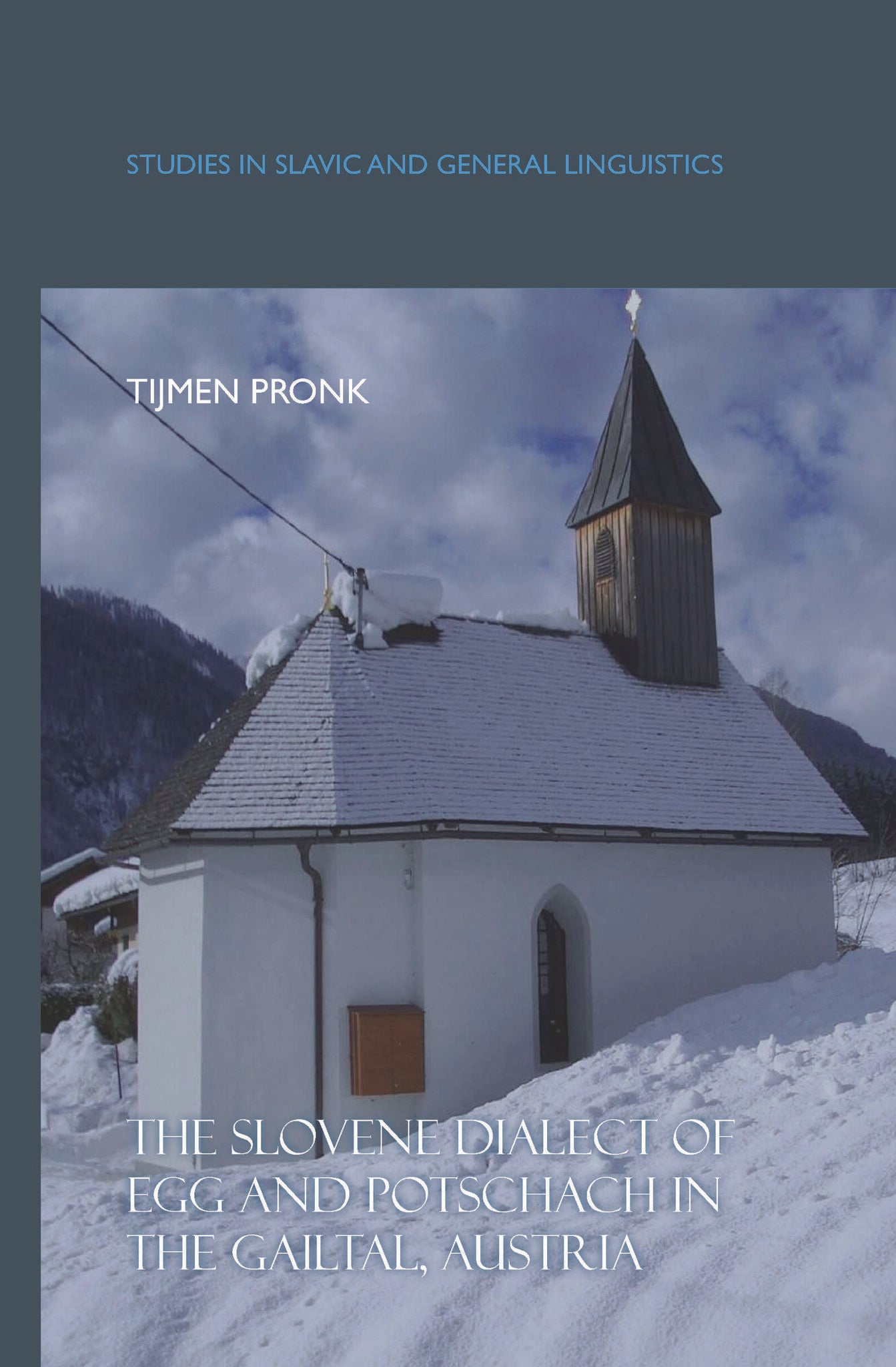
Slovene is one of the most dialectally diverse languages of Europe, consisting of 37 dialects. This book gives a detailed description of one of the most archaic dialects of Slovene: the dialect spoken in the Gail Valley (Gailtal) in the Austrian state of Carinthia (Kärnten). The Gailtal dialect is part of the Slovene minority language in Austria and is spoken by an ever decreasing number of speakers. The volume at hand describes the phonology, morphophonology, morphology, syntax and lexicon of the dialect. A separate chapter is devoted to the preservation and development of the common Slavic pitch accent in the Gailtal dialect and in Slovene in general. The book will be of interest to scholars in Slavic linguistics, language contact, historical linguistics, sociolinguistics, and typology.

Price: $138.00
Pages: 334
Publisher: Brill
Imprint: Brill
Series: Studies in Slavic and General Linguistics
Publication Date:
01 January 2009
ISBN: 9789042027749
Format: Hardcover

”[a] fine work. Pronk has succeeded admirably in providing a thorough synchronic description of the dialect of Potschach, together with an informative discussion of specific historical developments in the Gailtal and Resia dialects. The book has been carefully produced and edited …This volume will provide a wealth of valuable data for specialists in Slovene as well as for Slavists in general.” in: Slovenski jezik / Slovene Linguistic Studies 8 (2011)
Tijmen Pronk, PhD, is postdoc at Leiden University and specializes in South Slavic dialectology, Balto-Slavic accentology and comparative Indo-European linguistics.